
Most homeowners assume deck construction has a strict season and winter isn’t on it. Frozen ground, concrete problems, material damage… It sounds logical to wait.
But here’s the reality for those who are wondering can you build a deck in the winter: you can, and in many cases, it’s not just possible – it’s the smarter move.
Modern construction methods, improved materials, and experienced contractors have completely changed the rules for year-round deck construction. This guide breaks down when winter deck building works, when it doesn’t, and how professionals do it safely – so you can make a confident, informed decision.
Why Most Homeowners Assume Winter Deck Building Is a Bad Idea
The hesitation usually comes down to three common myths:
- Frozen ground makes construction impossible
- Concrete can’t be poured in cold weather
- Wood and decking materials will crack, warp, or fail
These assumptions were once valid. They’re now outdated.
Today’s deck builders use frost-line planning, alternative footing systems, cold-weather material handling, and adjusted sequencing to build structurally sound decks year-round. Winter doesn’t stop construction – it just changes how it’s done.
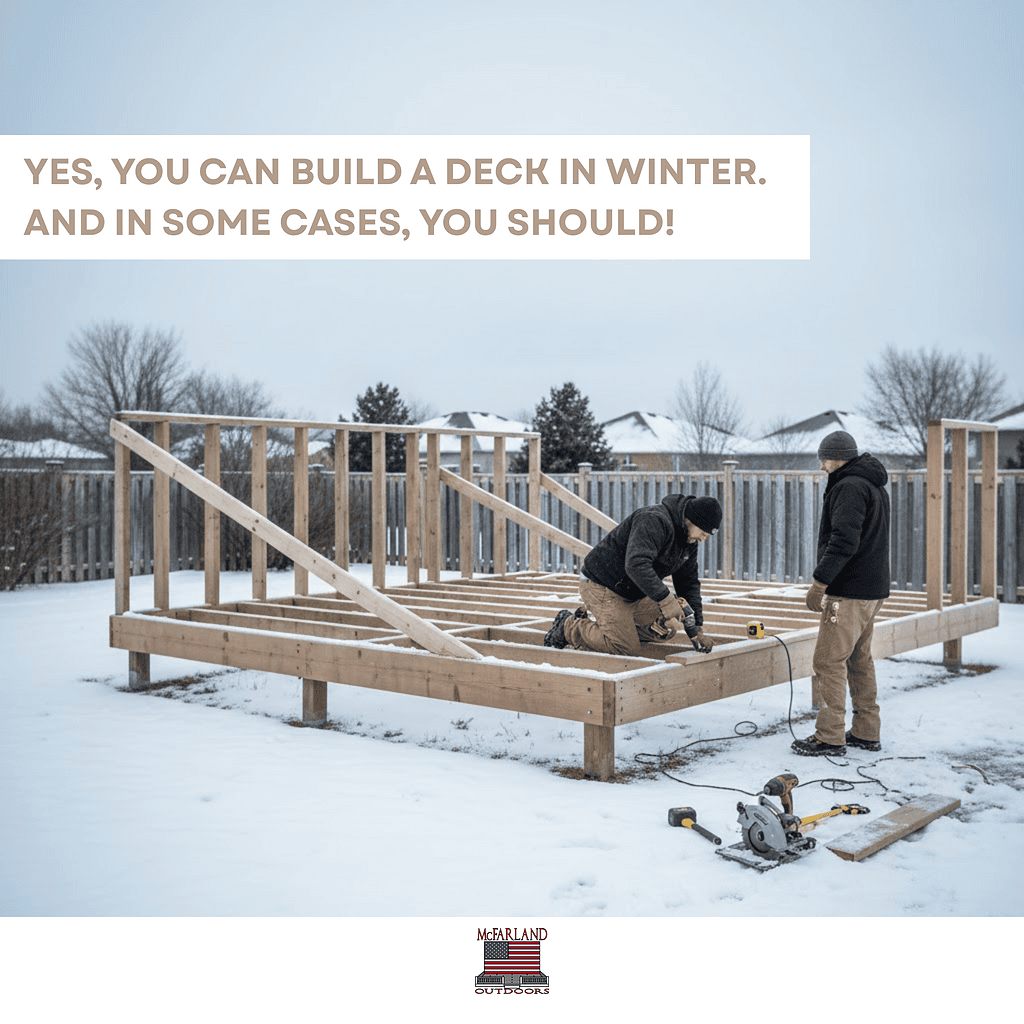
Yes, You Can Build a Deck in Winter – And in Some Cases, You Should
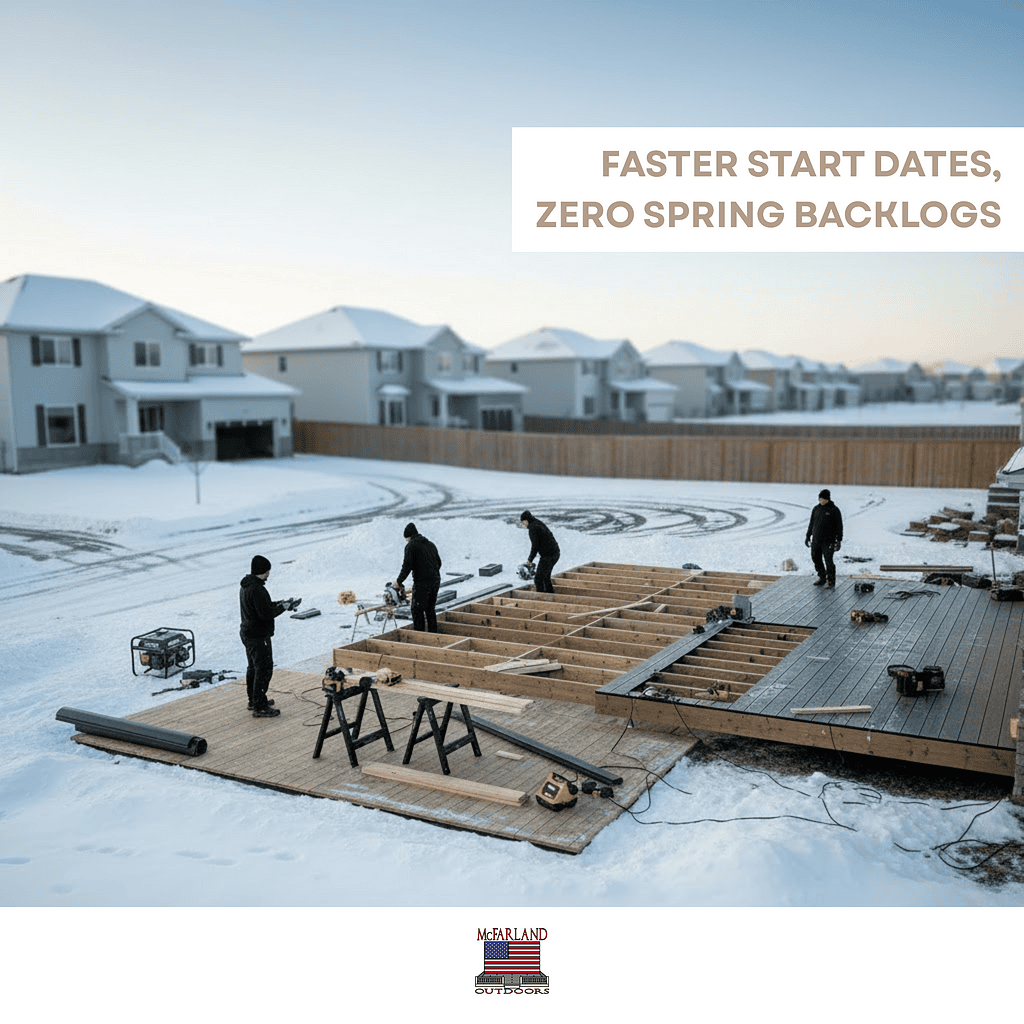
Reason #1 – Faster Start Dates, Zero Spring Backlogs
Spring is peak season. Schedules fill months in advance, and projects stack up quickly.
Winter? Contractors have availability, fewer overlapping jobs, and more time to focus on your build. That often means faster starts and smoother timelines.
Reason #2 – Potential Savings on Materials & Labor
Lower demand can translate into:
- Seasonal material pricing
- Reduced labor premiums
- Fewer last-minute rush costs
While savings aren’t guaranteed, winter often removes the “peak-season tax” homeowners pay in spring and summer.
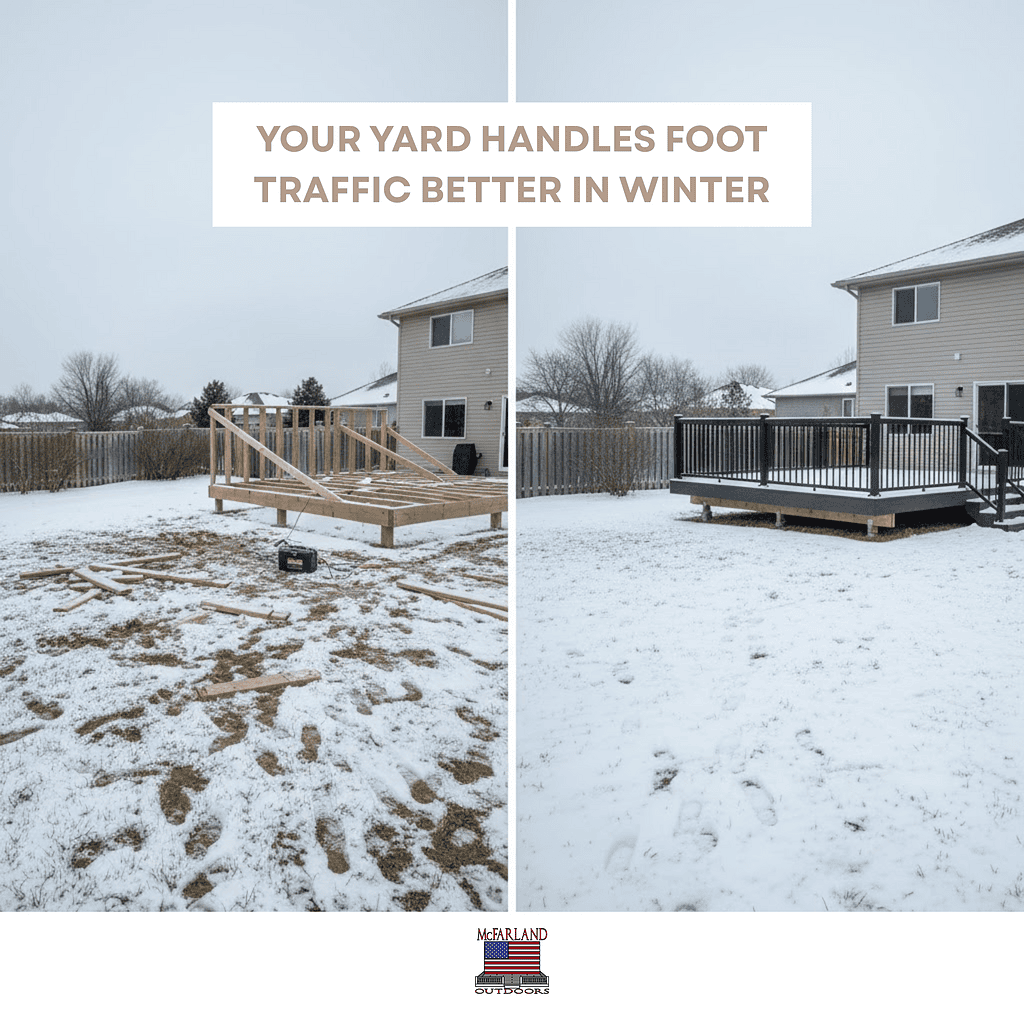
Reason #3 – Your Yard Handles Foot Traffic Better in Winter
Dormant grass, firmer soil, and frozen ground (when managed correctly) mean:
- Less rutting
- Less compaction
- Less post-build landscaping repair
Come spring, your lawn rebounds without the scars of heavy summer construction.
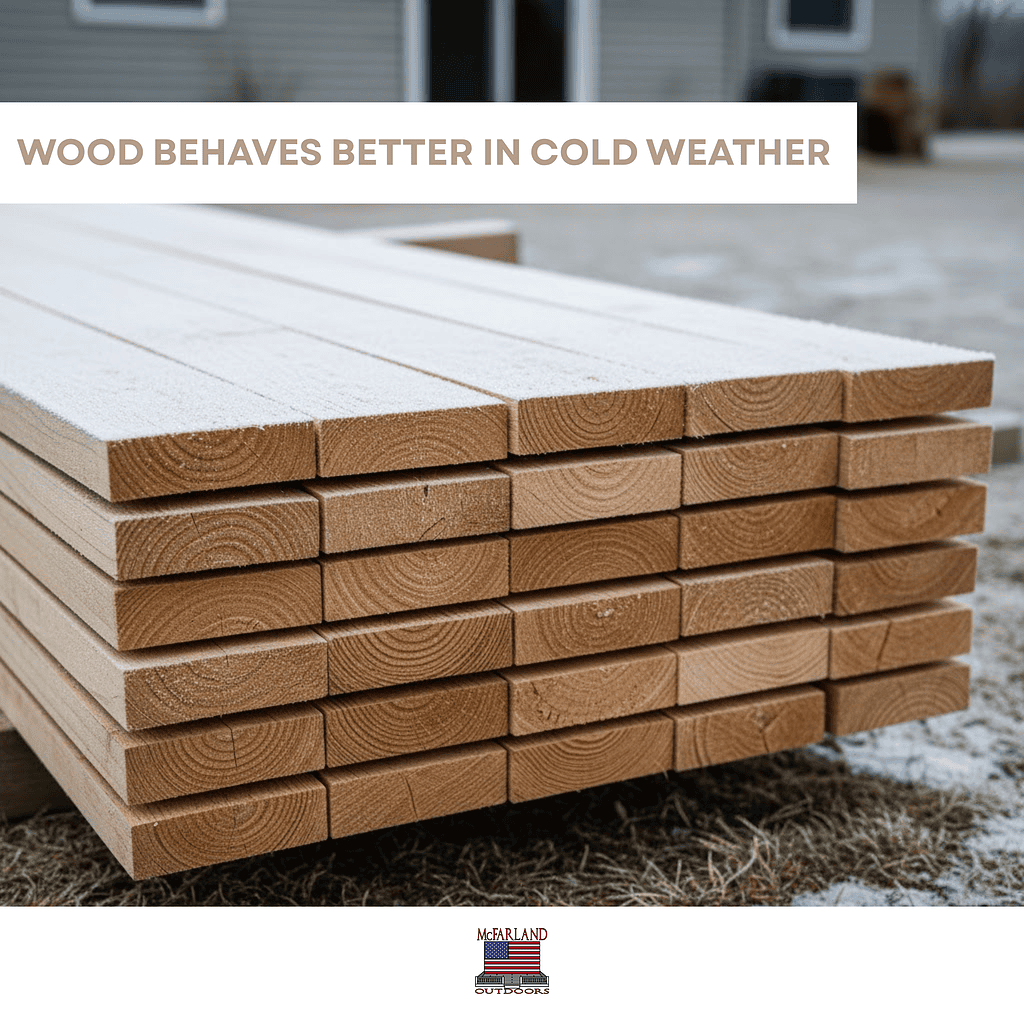
Reason #4 – Wood Behaves Better in Cold Weather
Heat and humidity cause wood to expand aggressively. Cold, drier winter air allows:
- More controlled moisture release
- Reduced swelling during installation
- Less risk of warping and twisting later
With proper acclimation, winter installs often result in more stable framing. This is especially true for homeowners choosing composite decking, which is designed to handle temperature swings with minimal movement.
Reason #5 – Your Deck Is Ready the Moment Warm Weather Arrives
Instead of waiting for construction to start in spring, your deck is already finished and structurally settled.
That means the first warm day equals a deck that’s fully ready to use – no delays, no scheduling bottlenecks, and no scrambling to get on a contractor’s calendar. You’re enjoying your outdoor space while others are still waiting for estimates and permits.
When Winter Deck Building Doesn’t Make Sense
Winter isn’t always the right answer. It’s a strategic decision – not a blanket recommendation. The best contractors don’t push winter builds at all costs; they know when to wait. Here are the situations where delaying the project is often the smarter move.
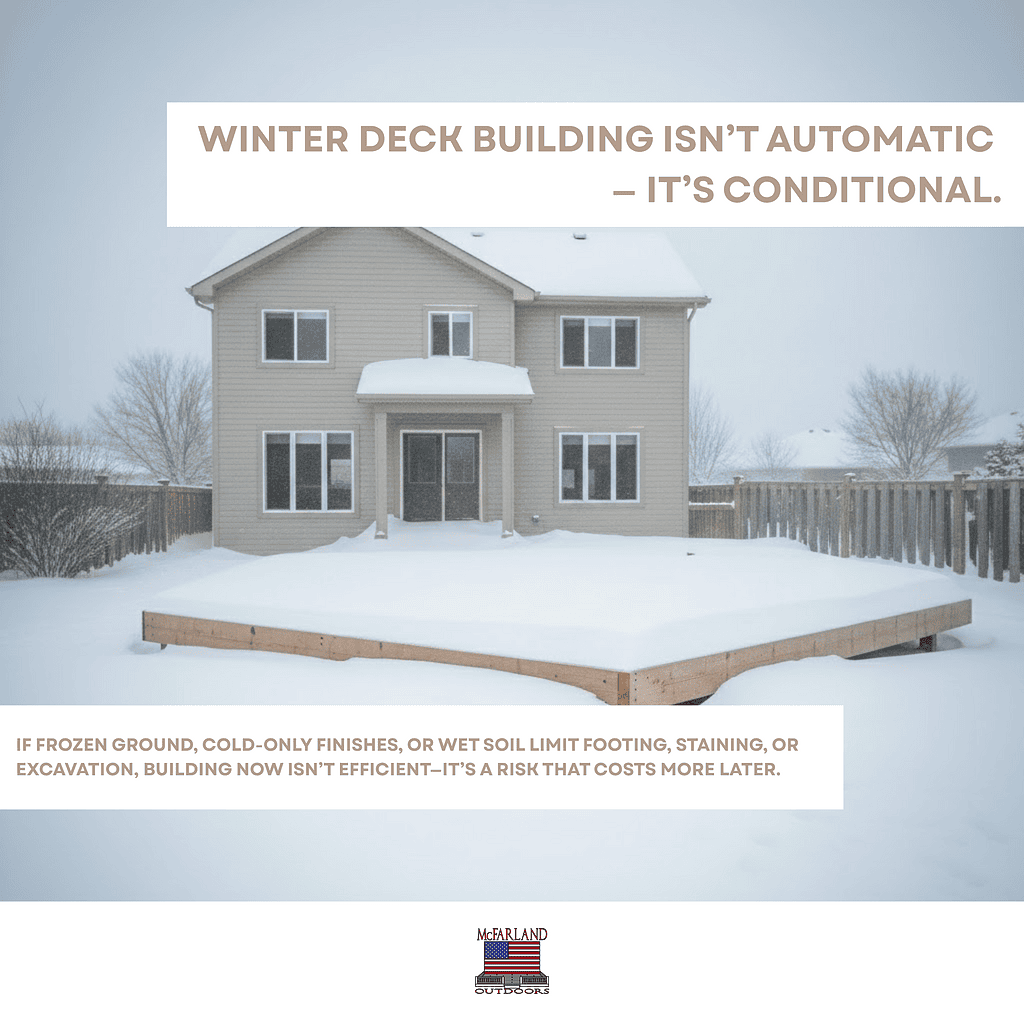
Extremely Frozen Ground With No Access to Helical Piles or Frost-Line Equipment
If a contractor can’t safely reach below the frost line – or lacks winter-rated footing systems – pausing the project is the responsible call.
In cold climates, frozen soil makes traditional excavation slow, inconsistent, and expensive. Without alternatives like helical piles or properly protected concrete systems, footings may be rushed, under-depth, or improperly cured. That creates long-term risks like frost heave, settling, and structural movement. A deck is only as strong as what it sits on, and winter isn’t the season to compromise on foundations.
If You Need Staining Immediately (Below 50°F Is a No-Go)
Most stains, sealers, and finishes require sustained temperatures above approximately 50°F to bond and cure properly. Below that threshold, adhesion becomes unreliable and failure rates increase dramatically.
Winter deck builds work best when structural construction is completed first and finishing is intentionally delayed until spring. If your timeline requires staining or sealing immediately after installation, winter construction may force rushed decisions that shorten the life of the finish and lead to peeling, blotching, or uneven absorption.
If Your Property Has Drainage or Structural Limitations That Require Dry Soil
Some properties depend on dry conditions for safe excavation, grading, or soil stabilization. Heavy clay soils, poor drainage, or sloped sites often require extended dry windows to ensure proper compaction and water management.
In these cases, winter moisture and freeze–thaw cycles can complicate access, delay progress, or introduce risks that don’t exist in warmer months. Projects involving significant regrading, drainage correction, or complex site prep are often better scheduled when soil conditions are predictable and consistently dry.
How Pros Build Decks Safely in Cold Weather (What Actually Changes)
Footings: Concrete vs. Helical Piles – Which Works Best in Winter
- Concrete can be used with heated mixes, additives, insulated forms, and curing blankets – but requires careful timing.
- Helical piles are often ideal in winter. They’re mechanically installed below the frost line, provide immediate load-bearing capacity, and aren’t affected by freezing temperatures.
The right choice depends on soil conditions, design loads, and site access.
Material Handling in Low Temperatures
Professionals adjust for thermal movement by:
- Allowing wood to acclimate before fastening
- Adjusting composite board spacing
- Using cold-rated fasteners and hardware
Winter doesn’t damage materials – improper handling does.
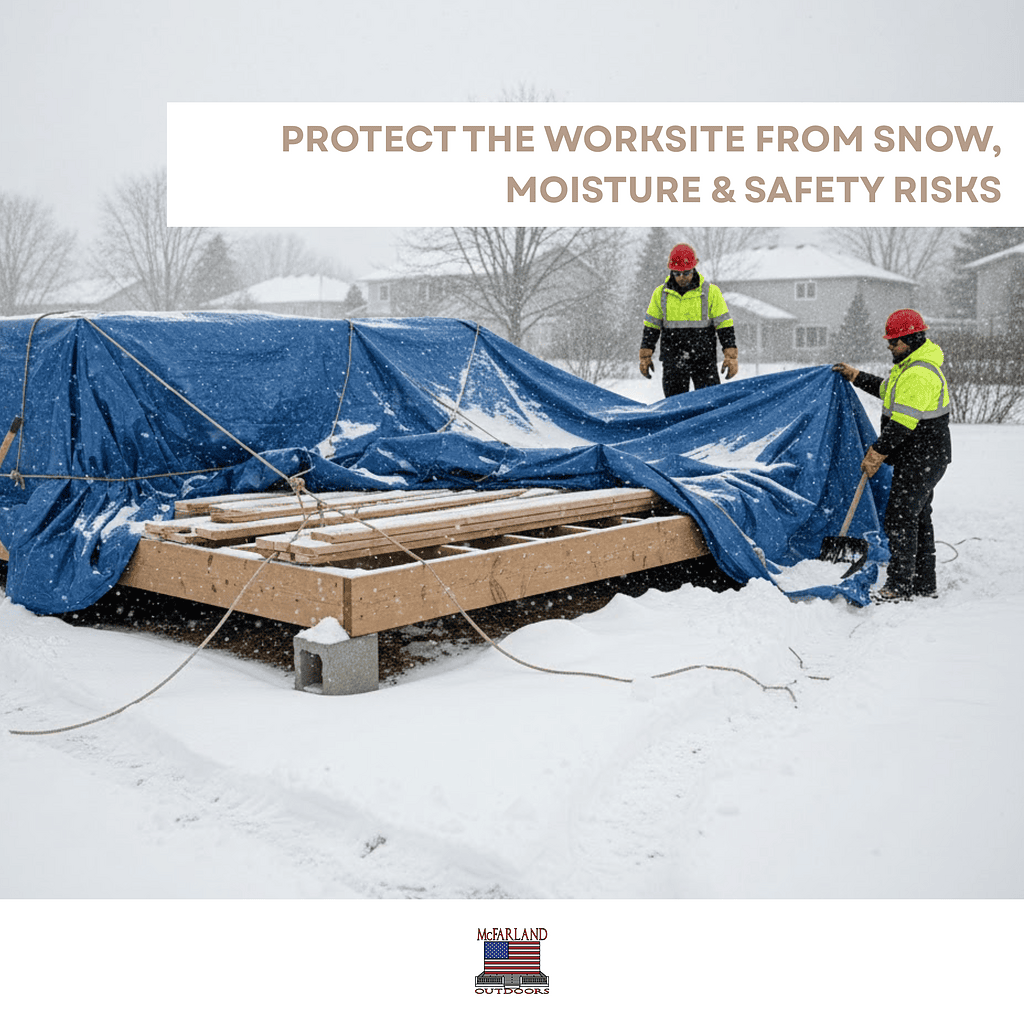
Protecting the Worksite From Snow, Moisture & Safety Risks
Experienced crews plan for:
- Covered material storage
- Snow removal protocols
- Slip prevention and jobsite safety
- Moisture management during framing
These same precautions also play a role in long-term durability, especially when paired with proper winter deck maintenance.
Adjusted Build Sequencing to Prevent Delays or Material Damage
Winter builds prioritize:
- Foundations first
- Structural framing during stable windows
- Surface installation timed to weather conditions
- Finishing deferred if needed
Sequencing – not speed – is what keeps winter projects on track.
What Homeowners Gain by Planning Their Deck in Winter
Faster Permit Approvals
Municipalities often process permits faster in winter due to lower demand, especially when homeowners understand local deck permit requirements in Indiana.
More Thorough Design Time
Winter allows space for:
- 3D renderings
- Design revisions
- Budget planning
- Material comparisons
Better planning = fewer surprises later.
Better Material Availability
Instead of competing during peak season, you’re choosing from full inventories with fewer substitutions.
Why Central Indiana Homeowners Choose Winter Deck Builds
Central Indiana’s freeze–thaw cycles make proper frost-depth planning critical – but also predictable.
- Winter permits are often easier to secure
- Soil conditions are well-understood locally
- Experienced local contractors build year-round using frost-rated methods
When handled correctly, winter deck construction fits Indiana’s climate extremely well.
Final Verdict – Should You Build Your Deck This Winter?
The answer to your question “can you build a deck in the winter” is YES – if it’s planned correctly and built by professionals who understand how winter construction actually works.
When handled the right way, winter deck projects are often faster, more efficient, and easier on your property than peak-season builds. They avoid spring backlogs, reduce unnecessary disruption to landscaping, and deliver a finished deck exactly when homeowners are ready to use it.
Winter doesn’t lower the standard – it raises it. Cold-weather construction demands better planning, tighter execution, and more experienced crews. When those conditions are met, winter becomes one of the smartest times to build, not a compromise.
If you’re considering a winter deck and want an honest assessment of whether it makes sense for your property, McFarland Outdoors builds decks year-round using methods designed specifically for Indiana conditions.

Proven business leader with a strong track record of founding, growing, and scaling successful small businesses. Experienced in building companies from the ground up, driving sustainable growth, and leading teams through all stages of development. In the past year, led the delivery of 45+ custom deck projects. Skilled in identifying new business opportunities, developing and mentoring talent, and managing the full scope of daily operations—from sales and pricing strategy to financial oversight and execution. Known for operational excellence, strong financial acumen, and a continuous-improvement mindset that drives performance across every area of the business.