
Choosing between the types of Trex decking isn’t about picking a color or chasing the cheapest board. That’s the mistake most homeowners make—and it’s why so many decks underperform, overheat, or wear out faster than expected.
Trex offers multiple decking lines because price tiers are not the same as use cases. Each line is engineered differently to handle specific levels of foot traffic, sun exposure, moisture, pets, furniture weight, and long-term wear. Ignore those factors, and even “premium” decking can become a regret.
This guide cuts through marketing language and lays out the real differences between the different types of Trex decking, so you can choose based on how your deck will actually be used—not how it looks in a showroom.
What Homeowners Get Wrong When Choosing Trex
Most people choose Trex decking based on:
- Color first
- Price second
- Everything else last
That’s backward.
What actually determines long-term performance:
- Foot traffic (daily use vs occasional use)
- Sun exposure (full sun vs shaded)
- Pets (especially dogs)
- Furniture weight and movement
- Budget vs expected lifespan
Every Trex line can look good on day one. Not every line still looks good after five Indiana winters and ten summers.
How Trex Decking Is Structured (Quick Overview)
All Trex boards are composite—but they are not built the same.
Trex decking uses a capped composite design, meaning a protective outer shell surrounds a structural core. What changes across product lines is how thick that shell is, what the core is made of, and how the board handles heat, impact, and moisture.
Key differences across the types of Trex composite decking include:
- Core composition: scalloped, solid, or PVC-based
- Cap thickness: affects scratch, stain, and UV resistance
- Heat performance: color and technology matter more than brand
- Scratch resistance: critical for pets and furniture
- Warranty realism: longer warranties ≠ better performance everywhere
Understanding this structure matters more than memorizing product names.
The 4 Main Types of Trex Decking Explained
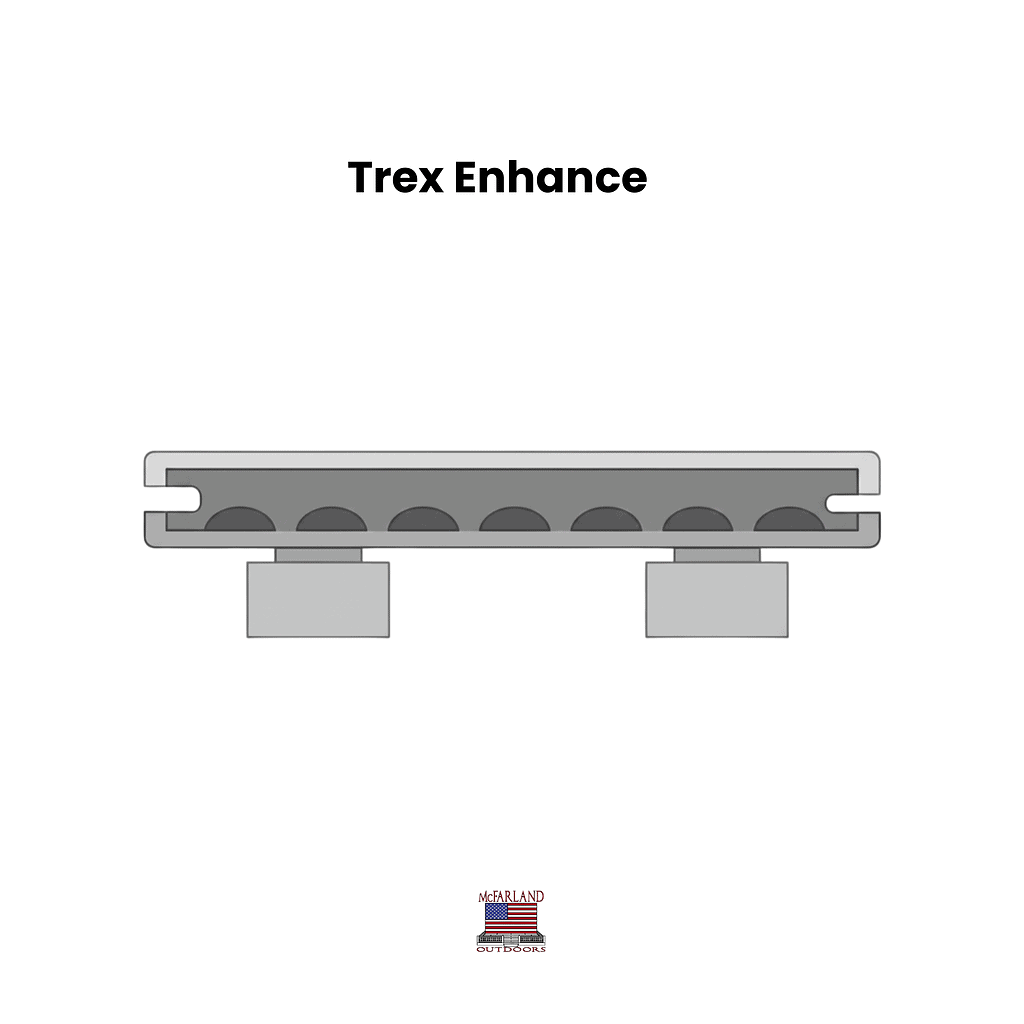
Trex Enhance (Basics & Naturals)
Who this is actually for
- Budget-conscious homeowners
- Light-to-moderate foot traffic
- Replacing pressure-treated wood
- Small or ground-level decks
Trex Enhance is the entry point into composite decking. It uses a scalloped core, which makes boards lighter and less expensive—but also less forgiving under stress.
Reality check
- Scalloped boards flex more
- Less impact resistance than higher lines
- Fine when expectations are realistic
Works well for
- Small decks
- Ground-level platforms
- Low-use spaces
Not ideal for
- Heavy furniture
- High-traffic entertaining decks
- Large elevated structures
Enhance Naturals adds multi-tonal color variation and looks better than Basics, but structurally they behave the same.
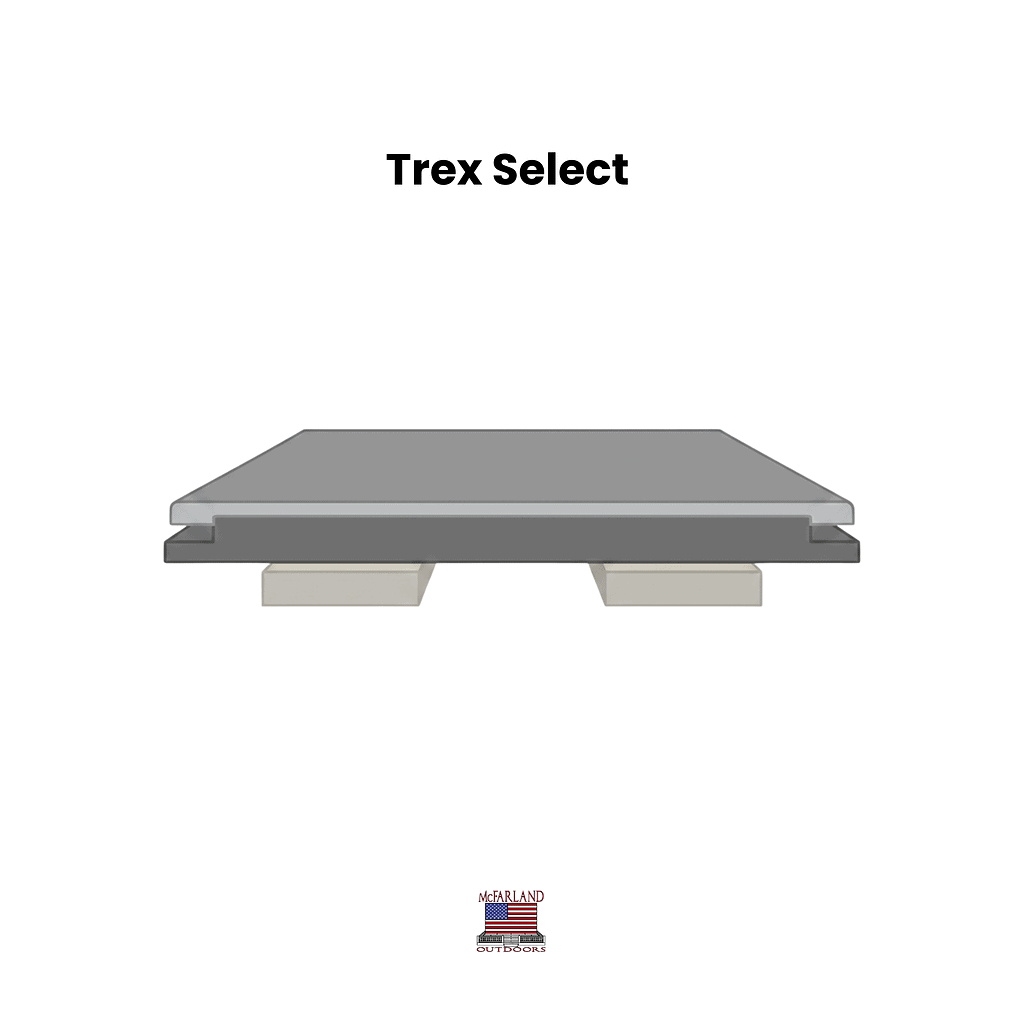
Trex Select
Who should choose this
- Homeowners who want solid boards
- Simple, uniform aesthetics
- Mid-range durability without premium cost
Trex Select uses a solid core, making it more stable and durable than Enhance. It’s a step up structurally, even though the visual upgrade is modest.
Tradeoffs
- Limited color depth
- No advanced heat-mitigating technology
- Less visual richness than premium lines
Select is often overlooked, but it fills a specific niche: homeowners who want better structure than Enhance without paying for premium aesthetics.
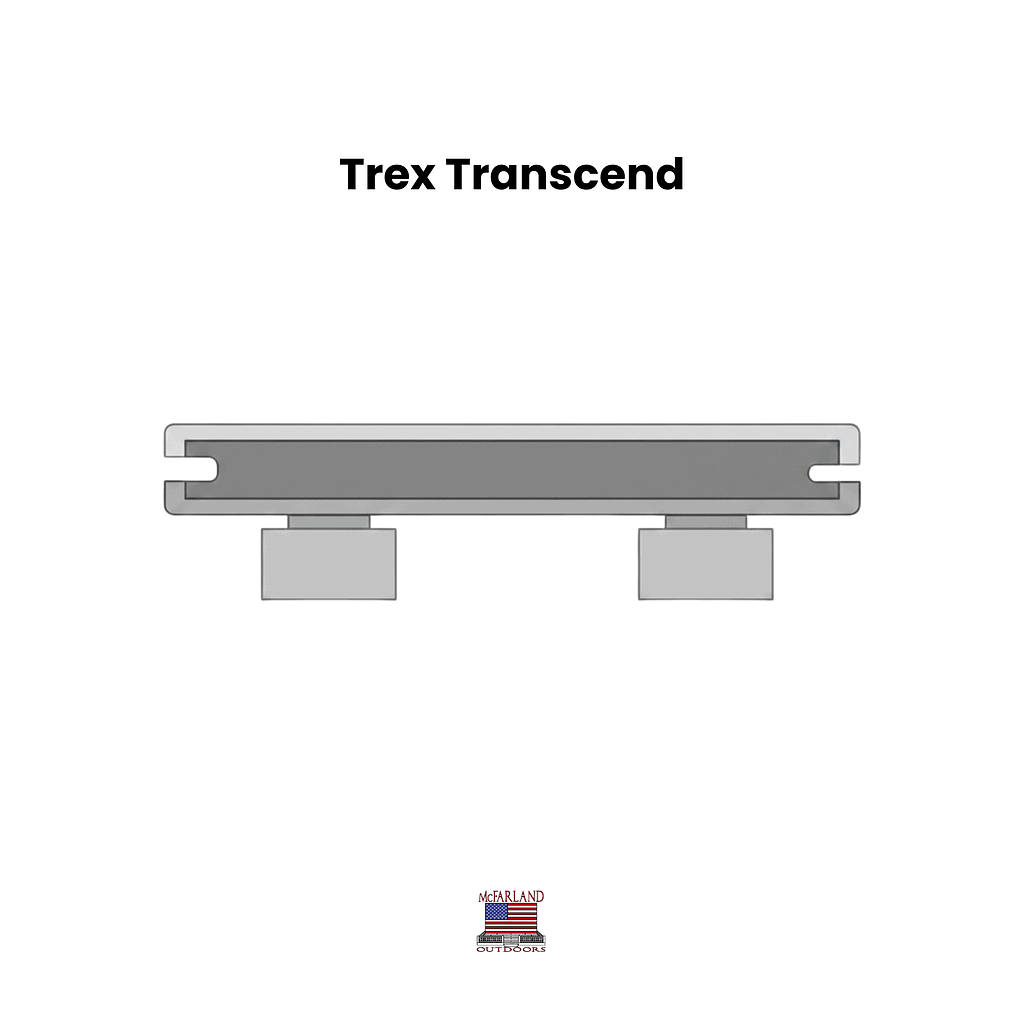
Trex Transcend (Including Lineage)
This is the workhorse: Trex Transcend is the most installed Trex line for a reason—it hits the best balance between durability, appearance, and long-term value.
Why builders prefer it
- Thicker protective shell
- Excellent resistance to scratching, staining, and UV exposure
- Handles pets, parties, and furniture far better than lower tiers
Lineage note: Transcend Lineage boards are engineered to stay cooler underfoot, making them a better choice for:
- Full-sun decks
- South- or west-facing yards
- Homes with minimal shade
If most Indiana decks were built with Transcend, callbacks would drop dramatically.
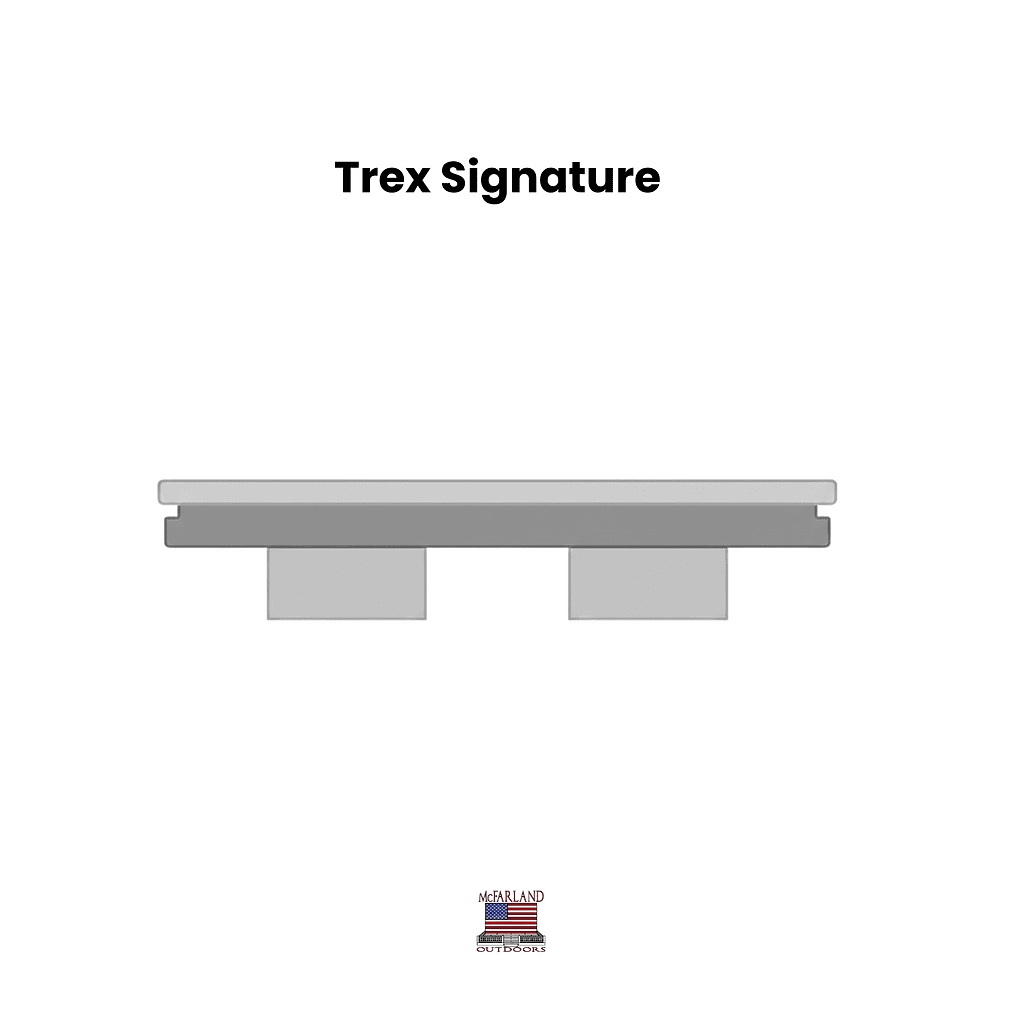
Trex Signature
Who this is for
- High-end custom builds
- Waterfront or harsh environments
- Homeowners who want PVC-style performance
Trex Signature uses an engineered polymer (PVC-based) construction with no wood content. That means:
- Maximum moisture resistance
- Superior dimensional stability
- Exceptional longevity
Hard truth
- Premium cost
- Overkill for many homes
Worth it when
- Moisture exposure is constant
- Longevity matters more than budget
- The deck is part of a luxury build
Signature isn’t better for everyone—but when conditions demand it, nothing else compares.
Trex Decking Comparison Chart
| Feature | Enhance | Select | Transcend | Signature |
| Price Tier | $ | $$ | $$$ | $$$$ |
| Core Type | Scalloped | Solid | Solid | PVC |
| Heat Performance | Fair | Fair | Good | Excellent |
| Scratch Resistance | Moderate | Good | Excellent | Excellent |
| Best For | Budget decks | Simple builds | Entertaining decks | Luxury / harsh climates |
| Warranty | 25 yrs | 35 yrs | 50 yrs | 50 yrs |
Which Type of Trex Decking Is Best for Indiana Homes?
Indiana decks deal with:
- Freeze–thaw cycles
- Hot, humid summers
- Mud, snow, salt, and furniture drag
Realistic recommendations
- Most homes: Trex Transcend
- Tight budgets: Enhance Naturals (with limits)
- Waterfront or extreme exposure: Trex Signature
Avoid Enhance Basics for
- Large elevated decks
- High-traffic family use
- Homes with dogs and heavy furniture
Climate punishes weak structural decisions. Indiana decks need margin—not minimums.
Common Mistakes Homeowners Make Choosing Trex
- Choosing the cheapest line for large decks
- Ignoring sun exposure and heat buildup
- Assuming all Trex performs the same
- Letting color drive structural decisions
Color fades slower than regret—but regret lasts longer.
Is Trex Worth It Compared to Wood?
Pressure-treated lumber looks cheaper upfront, but long-term reality includes:
- Sanding and staining
- Warping and splintering
- Board replacement
- Lower resale value
Over a 20–30 year span, Trex typically wins on:
- Lifetime cost
- Maintenance savings
- Consistent appearance
- Buyer appeal at resale
Wood is a short-term solution. Trex is a long-term system.
How a Deck Builder Helps You Choose the Right Trex Line
Deck boards don’t exist in isolation.
A professional builder understands:
- How joist spacing affects board performance
- Why some Trex lines require tighter framing
- How board choice impacts railing, stairs, and transitions
This isn’t just a DIY decision—it’s a system decision. At McFarland Outdoors, Trex board selection is tied directly to framing design, load paths, and long-term durability—not just aesthetics.
Final Verdict: Which Type of Trex Decking Should You Choose?
Choose based on:
- Budget: upfront vs lifetime
- Use: traffic, pets, furniture
- Exposure: sun, moisture, climate
- Longevity: how long you plan to stay
For most homeowners, Trex Transcend delivers the best balance. Enhance works when expectations are realistic. Signature excels when conditions demand it.
The wrong Trex line doesn’t fail immediately—it disappoints slowly. Choose once. Choose correctly.

Proven business leader with a strong track record of founding, growing, and scaling successful small businesses. Experienced in building companies from the ground up, driving sustainable growth, and leading teams through all stages of development. In the past year, led the delivery of 45+ custom deck projects. Skilled in identifying new business opportunities, developing and mentoring talent, and managing the full scope of daily operations—from sales and pricing strategy to financial oversight and execution. Known for operational excellence, strong financial acumen, and a continuous-improvement mindset that drives performance across every area of the business.