
If you are asking how long does it take to install a paver patio, you are asking the right question at the right time. Timeline misunderstandings are one of the most common reasons homeowners feel frustrated during outdoor projects.
Here is the realistic expectation: most professionally installed paver patios take several days, not a single weekend and not several weeks. The timeline depends on size, site conditions, and design complexity, but when installed correctly, a paver patio follows a deliberate construction sequence that cannot be rushed without consequences.
This guide focuses on professional paver patio installation, not DIY weekend projects. The goal is to give you a clear, honest timeline so you can plan with confidence and avoid surprises.
Short Answer: Typical Paver Patio Timeline
For homeowners who want a quick, clear answer, here is what most projects look like in practice.
- Small and simple paver patios typically take between 2 and 4 days to complete.
- Average residential paver patios usually take between 3 and 7 days from excavation to final cleanup.
- Large or highly complex paver patios often take one to two weeks or longer, depending on features and conditions.
This timeline includes excavation, base preparation, paver installation, edging, joint sand, and final compaction.
This timeline does not include pre-construction phases such as design development, permitting, or material backorders.
What Affects How Long a Paver Patio Takes to Build?
No two properties are the same, and no two patio timelines are identical. Several key factors determine how long the installation process will take.
Patio Size and Layout
The overall size of the patio plays a major role, but the layout matters just as much.
- A square or rectangular patio installs faster than a curved or irregular layout.
- A single-level patio installs faster than a multi-level or terraced design.
- Larger patios require more excavation, more base material, and more paver placement, which increases total time.
A smaller patio with curves and borders can take longer than a larger patio with a simple layout.
Site Conditions and Preparation Work
The condition of the yard before construction begins has a major impact on the schedule.
- Sloped yards require additional grading and elevation correction, which adds time.
- Poor drainage conditions require extra base preparation to prevent long-term settling or water issues.
- Existing concrete, asphalt, or old patios must be demolished and removed before new work can begin.
In regions like Indiana, soil conditions and freeze–thaw cycles make proper preparation non-negotiable and often extend timelines slightly for long-term durability.
Base Depth and Compaction Requirements
The base is the most time-intensive phase of a paver patio installation and the most important for long-term performance.
- Proper excavation depth typically ranges from six to ten inches, depending on soil and use.
- Base material must be installed in compacted layers rather than all at once.
- Each layer must reach proper density before additional material is added.
Rushing base preparation saves time upfront but leads to sinking, shifting, and uneven pavers later.
Design Complexity
The more detailed the design, the longer the installation process will take.
- Patterns such as herringbone or intricate layouts require more cutting and alignment time.
- Borders, inlays, and color transitions slow installation due to precision requirements.
- Steps, landings, and elevation changes introduce additional construction phases.
Design complexity does not just add labor; it adds checkpoints where accuracy matters more than speed.
Added Features and Structures
Additional features extend both the timeline and the scope of work.
- Fire pits require separate foundations and heat-rated materials.
- Seat walls and retaining walls require footings and structural alignment.
- Walkways tied into the patio add excavation and base preparation beyond the main area.
Each added feature introduces its own installation sequence and inspection points.
Typical Paver Patio Installation Timeline (Day by Day)
A professionally managed project follows a predictable sequence.
Day 1–2: Excavation and Site Preparation
- The patio layout is marked and verified for accuracy.
- Soil is excavated to the required depth across the entire footprint.
- The grade is adjusted to ensure proper drainage away from structures.
This phase determines the final shape and slope of the patio.
Day 2–3: Base Installation
- Aggregate base material is installed in compacted lifts.
- Mechanical compaction is performed at each stage to prevent future settling.
- A screeded bedding layer is prepared to create a flat, consistent surface.
This phase provides the structural foundation of the patio.
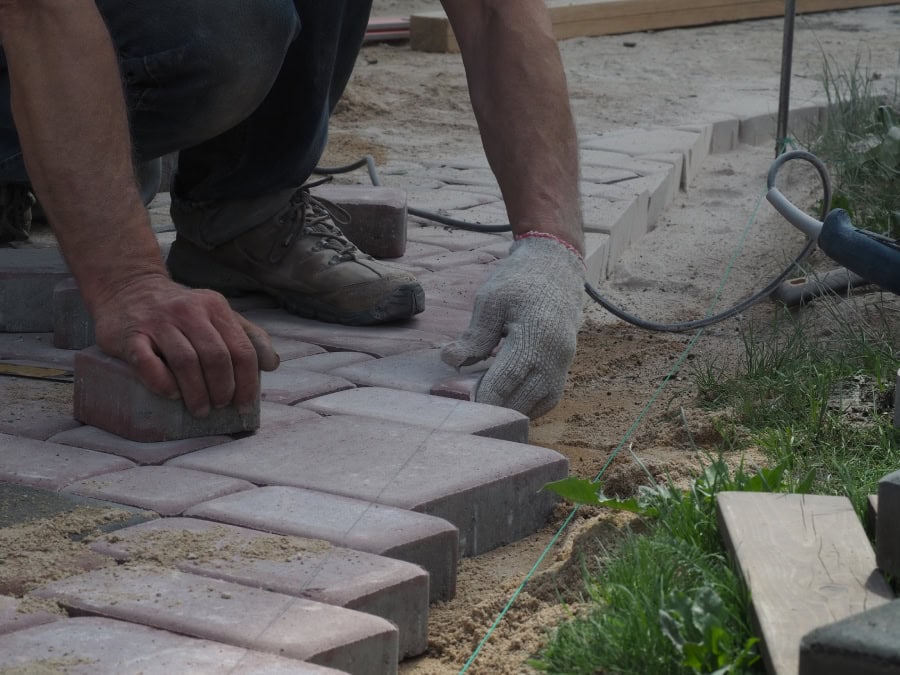
Day 3–5: Paver Installation
- Pavers are laid according to the approved pattern and design.
- Edge cuts are made to ensure a clean and precise perimeter.
- Alignment is checked continuously to maintain consistent spacing and pattern integrity.
This is the most visible phase, but precision still outweighs speed.
Final Day: Edging, Joint Sand, and Cleanup
- Edge restraints are installed to lock the patio in place.
- Polymeric joint sand is applied and compacted into the joints.
- The site is cleaned, and a final walkthrough is completed.
At this stage, the patio is structurally complete and ready for normal use after curing.
Does Weather Delay Paver Patio Installation?
Weather can delay installation, but experienced contractors manage this strategically.
- Heavy rain can delay excavation and compaction because saturated soil cannot be properly compacted.
- Cold temperatures can slow or prevent proper curing of polymeric sand.
- Excessively wet or frozen conditions may pause work to protect long-term performance.
Reputable contractors pause work when conditions are unsuitable instead of rushing and compromising the build.
DIY vs Professional Installation Timelines
Installation time varies dramatically depending on who performs the work.
DIY Installation Timelines
- DIY paver patio installations often take one to two weeks or longer when spread across evenings and weekends.
- Mistakes during excavation or base preparation frequently require rework, which resets progress.
- Tool rentals, learning curves, and physical fatigue slow overall completion time.
Professional Installation Timelines
- Professional crews work in continuous phases across consecutive days.
- Experienced installers control variables such as layout, compaction, and sequencing.
- Fewer mistakes mean fewer delays and no need to redo completed work.
In most cases, professionals compress timelines because they eliminate uncertainty.
How to Keep Your Paver Patio Project on Schedule
Homeowners can take specific steps to prevent unnecessary delays.
- Finalizing the design early prevents mid-project changes that slow progress.
- Choosing materials with reliable local availability avoids supply delays.
- Addressing drainage issues upfront prevents redesign during construction.
- Working with a contractor experienced in local soil and climate conditions reduces surprises.
Clear planning before construction begins is the most effective way to protect your timeline.
Final Thoughts: Planning Your Paver Patio Timeline
So, how long does it take to build a paver patio when done correctly?
Most professional installations take between three and seven days, with larger or more complex projects extending beyond that range. Quality paver patios are not rushed. They are planned, compacted, and installed in deliberate stages to ensure long-term performance.
Setting realistic expectations now helps ensure the finished patio performs and looks the way it should for years to come.
If this guide helped clarify your planning process, consider sharing it or exploring related resources on patio design, drainage planning, and outdoor living spaces.
Looking to build a deck in Indianapolis? If you want it done right the first time — solid structure, clean finishes, no shortcuts — McFarland Outdoors is the team to call. We design and build custom decks that actually last, not contractor-grade afterthoughts.

Proven business leader with a strong track record of founding, growing, and scaling successful small businesses. Experienced in building companies from the ground up, driving sustainable growth, and leading teams through all stages of development. In the past year, led the delivery of 45+ custom deck projects. Skilled in identifying new business opportunities, developing and mentoring talent, and managing the full scope of daily operations—from sales and pricing strategy to financial oversight and execution. Known for operational excellence, strong financial acumen, and a continuous-improvement mindset that drives performance across every area of the business.