
If you’re asking what to put under deck for moisture, you’re already ahead of most homeowners. Moisture problems under decks rarely show up right away—but when they do, they’re expensive.
Here’s the first thing almost every article gets wrong: there are two completely different moisture problems people confuse.
One is moisture on the ground under the deck.
The other is moisture inside the deck structure itself.
They require different solutions. Treating only one while ignoring the other is how decks rot, fasteners corrode, and framing fails years earlier than it should.
This guide breaks both problems down clearly and shows you how professionals actually prevent moisture damage—without brand hype or shortcuts.
Why Moisture Under a Deck Causes Long-Term Damage
Moisture doesn’t need dramatic flooding to destroy a deck. Slow, repeated exposure is worse.
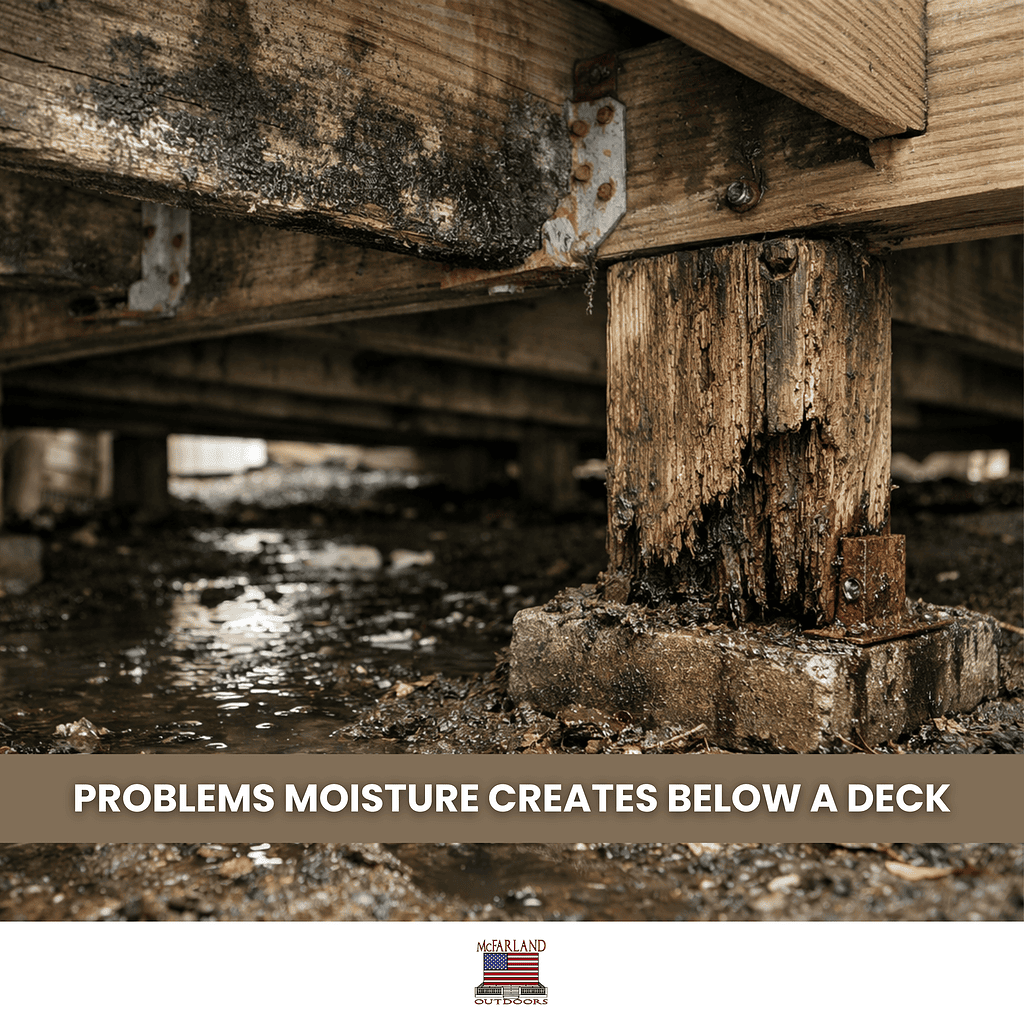
Problems Moisture Creates Below a Deck
When water collects under a deck, it sets off a chain reaction:
Standing water and soil erosion slowly wash away supporting soil, destabilizing footings and posts. Persistent dampness encourages mold, mildew, mosquitoes, and rodents, especially in shaded areas with little airflow. Over time, moisture that isn’t redirected away from the home increases the risk of foundation damage, particularly in climates with freeze–thaw cycles.
These problems often stay invisible until structural movement or odor makes them obvious—and costly.
Problems Moisture Creates Inside Deck Framing
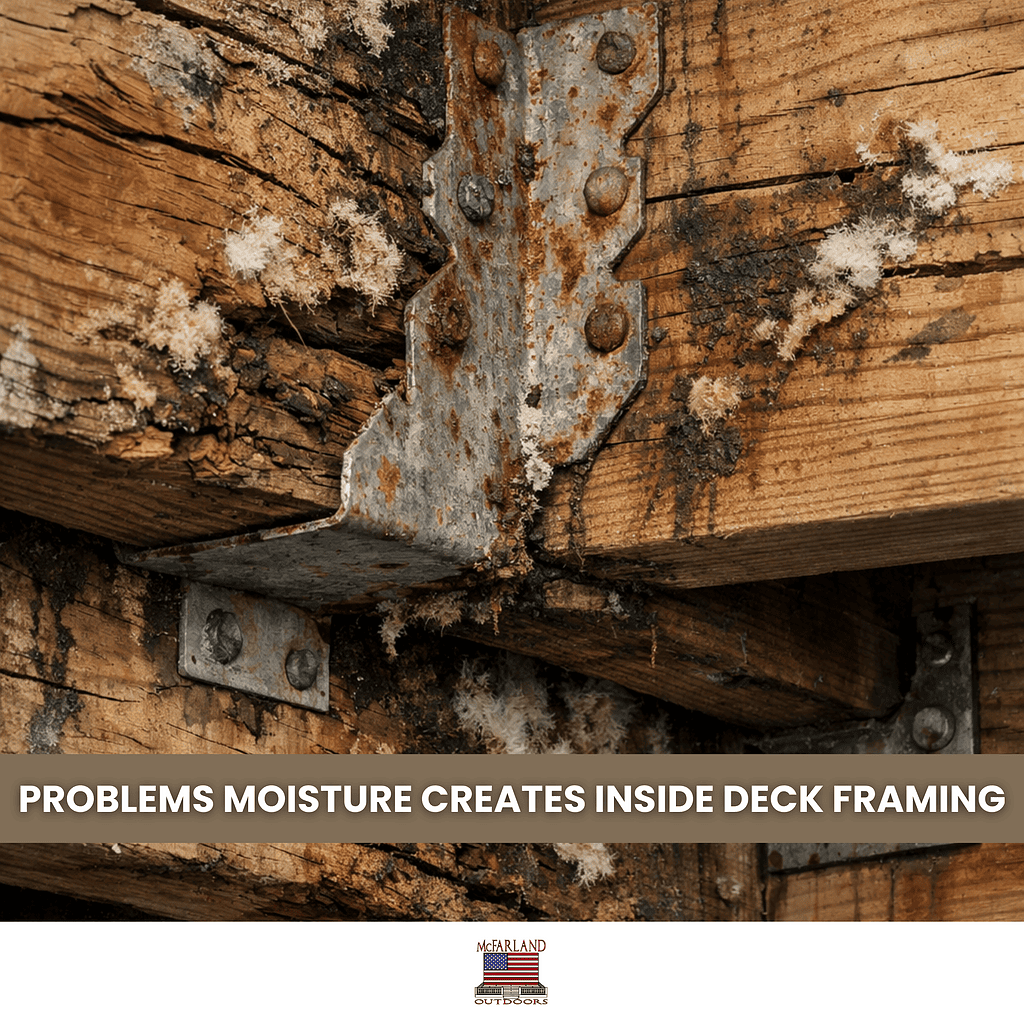
Even if the ground under the deck looks dry, decks often fail from above:
Deck boards allow rain and snowmelt to drip directly onto joists and beams. Trapped moisture leads to wood rot, especially on horizontal framing members. Metal fasteners corrode faster when moisture lingers, weakening connections. Together, these issues significantly shorten the lifespan of the entire deck structure.
This is why ground moisture control alone is never enough.
Best Materials to Put Under a Deck for Moisture Control (Ground-Level Solutions)
Gravel and Landscape Fabric (Most Common Choice)
For many raised decks, gravel combined with landscape fabric is the most practical and cost-effective option.
Gravel works when water exposure is light to moderate and the soil beneath the deck is properly graded. It allows water to drain instead of pooling and helps reduce mud and splash-back onto framing.
Landscape fabric matters more than people realize. Without it, gravel sinks into soil over time, weeds grow through the stones, and drainage performance declines. A permeable fabric lets water pass through slowly while stabilizing the base.
This setup is often enough when water flows naturally away from the house and does not collect.
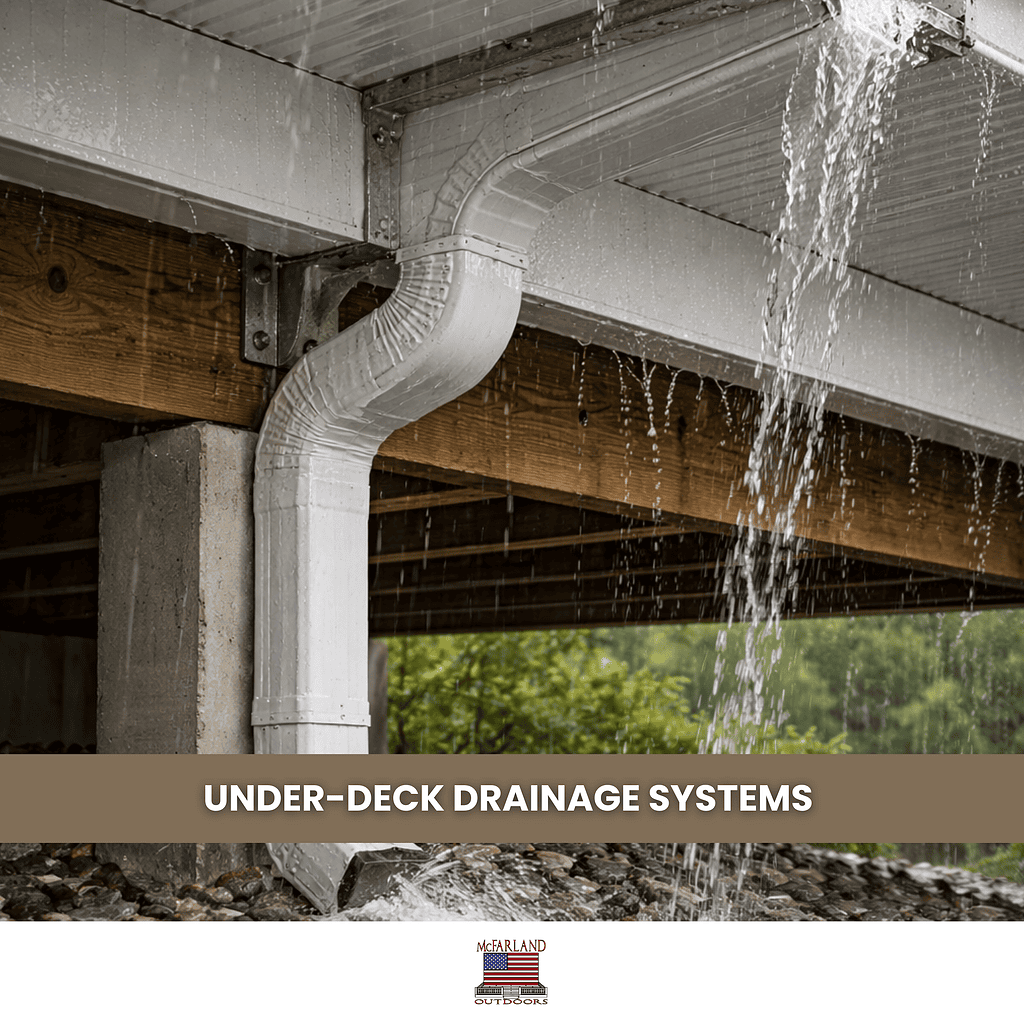
Under-Deck Drainage Systems (For Heavy Water Flow)
Gravel alone fails when water volume is high or drainage paths are poor.
Under-deck drainage systems are designed to redirect water away from the foundation before it can pool. These systems collect runoff and channel it to safe discharge points, protecting both soil stability and structural supports.
An added benefit is usability. Proper drainage can create dry storage or sheltered living space beneath the deck—something gravel alone cannot reliably provide.
These systems are most effective when planned during deck construction, but they can also be retrofitted with professional help.
Concrete or Pavers (Permanent, High-Cost Option)
Concrete slabs or paver systems under decks are sometimes used when homeowners want a finished patio or outdoor kitchen beneath the structure.
Concrete makes sense when:
- The deck is high enough for full use below
- Proper slope directs water away from the home
- The cost is justified by long-term use
However, concrete is not always ideal. Poor grading or cracking can trap water against the foundation. It’s also permanent—mistakes are expensive to fix.
Deck Moisture Barrier Options That Protect the Structure
What a Deck Moisture Barrier Actually Is
A deck moisture barrier protects the framing, not the ground.
Most deck failures happen because water repeatedly hits joists, beams, and ledgers from above. Ground moisture is only part of the problem.
A moisture barrier under deck framing is designed to shed water before it sits on structural wood.
Moisture Barrier Under Deck Framing Components
Critical areas that need protection include joists, ledger boards, and beams—especially horizontal surfaces where water naturally rests.
Professionals use moisture barrier concepts such as:
- Protective layers that deflect water away from framing
- Drainage channels that prevent pooling on joists
- Barriers that separate wood from metal fasteners
The goal is simple: keep water moving, not trapped.
This distinction—structural moisture versus ground moisture—is the difference between decks that last 10 years and decks that last 30.
What NOT to Put Under a Deck for Moisture
Some materials make moisture problems worse, even though they look convenient.
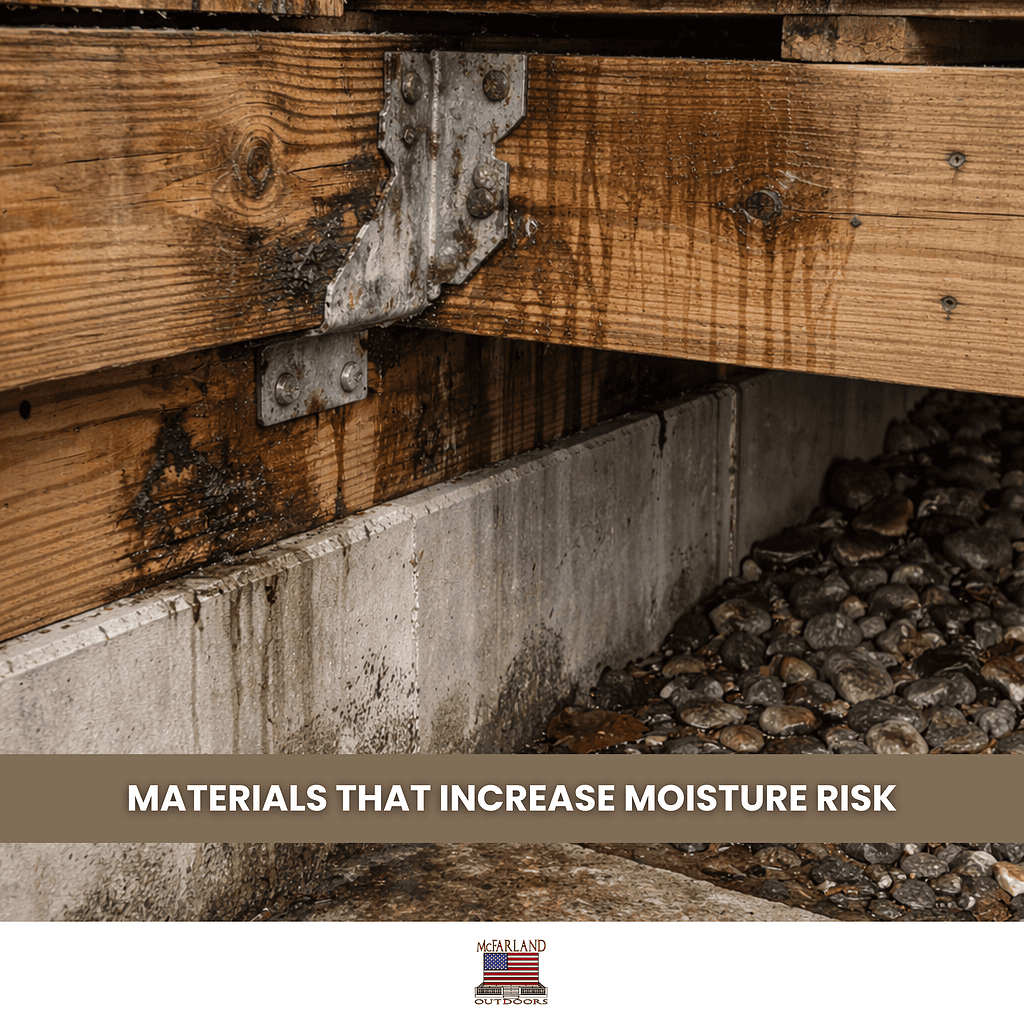
Materials That Increase Moisture Risk
Mulch holds water, encourages insects, and decomposes quickly. Bare soil turns into mud, erodes easily, and promotes weeds and pests. Plastic sheeting without drainage traps water and creates stagnant pools. Sand in wet climates erodes quickly and retains moisture when saturated.
These materials often lead to hidden rot and recurring maintenance issues.
How to Choose the Right Moisture Barrier Under Your Deck
Key Factors That Should Drive the Choice
There is no universal solution. The right approach depends on real conditions, not trends.
Climate and rainfall patterns determine how aggressively water must be managed. Deck height and ventilation affect how quickly moisture dries. Soil slope and grading decide whether water flows away or collects. Intended use of the space—storage, living area, or unused—changes the level of protection required.
In many cases, the best solution combines ground-level moisture control with a structural deck moisture barrier.
DIY vs Professional Installation: When It Matters
When DIY Works
DIY solutions can work when water exposure is light, grading is correct, and the deck structure is easily accessible. Gravel, fabric, and minor grading are often manageable for experienced homeowners.
When Mistakes Get Expensive
Professional help matters when water consistently pools, when structural framing needs protection, or when drainage must be redirected away from the home. Errors in slope, barrier placement, or ventilation can lead to rot that costs far more than proper installation.
Building codes such as the International Building Code increasingly emphasize moisture protection and inspection of waterproofing systems—another reason precision matters.
Conclusion
The most important takeaway is this:
Ground moisture and structural moisture are not the same problem.
Gravel, fabric, drainage systems, and concrete address water below the deck. Deck moisture barriers protect the framing above. Long-lasting decks use both strategies together, based on climate and design—not shortcuts.
If this guide helped clarify what to put under deck for moisture, consider sharing it or exploring related resources on deck safety and outdoor protection.
Proven business leader with a strong track record of founding, growing, and scaling successful small businesses. Experienced in building companies from the ground up, driving sustainable growth, and leading teams through all stages of development. In the past year, led the delivery of 45+ custom deck projects. Skilled in identifying new business opportunities, developing and mentoring talent, and managing the full scope of daily operations—from sales and pricing strategy to financial oversight and execution. Known for operational excellence, strong financial acumen, and a continuous-improvement mindset that drives performance across every area of the business.