
If you own a wood deck in Indiana, you’re fighting three enemies every year: moisture, ultraviolet radiation, and freeze–thaw cycles. Sunlight breaks down wood fibers. Humidity and rain soak into unprotected boards. Winter freezes expand trapped moisture and slowly split the grain from the inside out.
That’s why the debate around deck sealing vs staining matters more than most homeowners realize.
People often ask:
- What’s the difference between deck stain vs sealer?
- Is staining and sealing a deck the same thing?
- Do you need to seal a deck after staining?
The short answer is that sealing and staining are not identical, and choosing the wrong approach can cost you years of deck life. The long answer is below — and it’s what protects your investment long term.
Deck Stain vs Sealer: What’s the Difference?
The difference comes down to depth of protection and UV defense.
A deck sealer primarily protects against water intrusion. A deck stain protects against water and ultraviolet damage while also changing or enhancing the wood’s color. That distinction is critical because in the Midwest, UV exposure and freeze–thaw cycles do as much damage as rain.
Let’s break down what each product actually does.
What a Deck Sealer Actually Does
A clear deck sealer creates a protective barrier that sits mostly on the surface of the wood. Its main purpose is to repel water. When properly applied, it helps prevent moisture from soaking into the boards, reducing the risk of swelling, warping, and mold growth.
A typical sealer:
- Forms a surface-level barrier.
- Provides strong moisture resistance.
- Leaves the wood’s natural appearance largely unchanged.
- Offers little to minimal UV protection.
- Typically lasts 6–12 months on horizontal surfaces.
Because most clear sealers do not contain significant pigment, they cannot effectively block ultraviolet radiation. That means your deck can still turn gray within a single summer, even if water is beading on the surface.
Sealers are helpful, but they are limited in scope.

What Deck Stain Actually Does
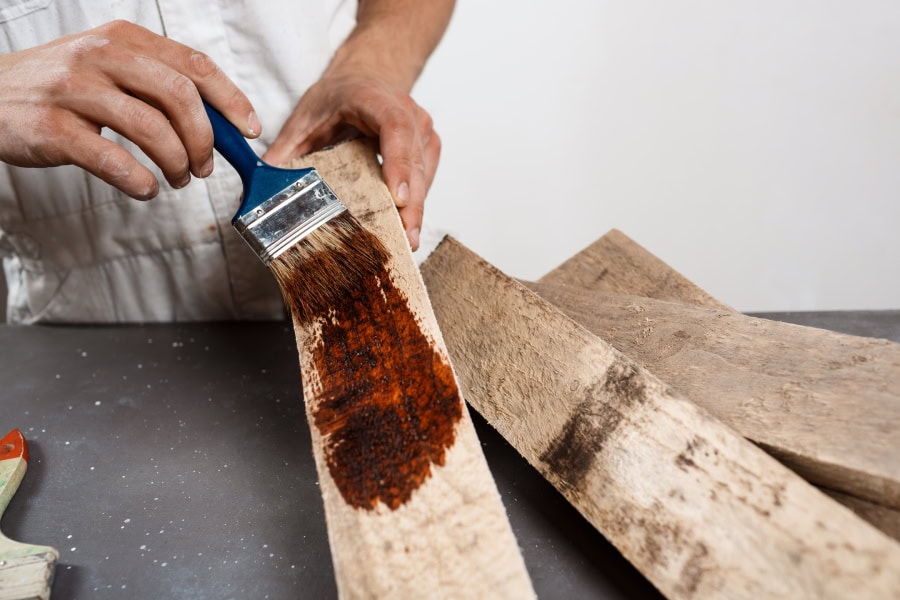
Deck stain penetrates into the wood fibers rather than simply coating the surface. This penetration allows it to protect from within. Most exterior stains also contain pigment, which acts as a shield against UV rays.
A quality deck stain:
- Penetrates wood fibers for deeper protection.
- Contains pigment to block UV radiation.
- Repels moisture.
- Reduces surface checking and splintering.
- Lasts significantly longer than clear sealers.
Depending on opacity, lifespan typically falls into these ranges:
- Transparent stain: 1–3 years.
- Semi-transparent stain: 2–4 years.
- Solid stain: 3–5+ years.
The pigment in the stain is what makes the difference. UV radiation breaks down lignin, the natural binder that holds wood fibers together. Once lignin deteriorates, boards become brittle, gray, and prone to cracking. Stain slows that process dramatically.
Is Staining and Sealing a Deck the Same Thing?
This is where confusion often starts.
Technically, staining and sealing are not the same process. However, many modern exterior deck stains are formulated with water-repellent additives. That means they both stain and seal at the same time.
So when homeowners ask, “Is staining and sealing a deck the same?” the accurate answer is: no, but many high-quality stains already include sealing properties.
The real difference lies in pigment. Clear sealers focus on water resistance. Stains focus on both water and UV protection.
Do You Need to Seal a Deck After Staining?
In most cases, no.
If you are using a high-quality exterior stain designed for decks, it already contains moisture-resistant components. Adding a separate sealer on top can create problems, including:
- Trapping moisture beneath the surface.
- Causing peeling or flaking.
- Interfering with proper curing.
- Shortening the lifespan of the finish.
Manufacturers generally recommend following their system exactly as directed. Unless the product specifically calls for an additional topcoat, sealing after staining is usually unnecessary and sometimes harmful.
Performance Comparison: Stain vs Sealer
When evaluating deck sealing vs staining, performance data makes the difference clear.
| Factor | Clear Sealer | Transparent Stain | Semi-Transparent | Solid Stain |
| UV Protection | Low | Moderate | High | Very High |
| Moisture Resistance | High | High | High | High |
| Lifespan | 6–12 months | 1–3 years | 2–4 years | 3–5+ years |
| Maintenance Frequency | Annual | Every 2–3 years | Every 3–4 years | Every 4–5 years |
Moisture resistance is similar across products. UV protection and longevity are where staining stands apart.
What Happens If You Don’t Stain or Seal a Deck?
Wood begins deteriorating immediately when left unprotected.
Within months:
- UV graying becomes visible.
- Surface fibers weaken.
- Water absorption increases.
Within a few years:
- Boards begin checking and splitting.
- Fasteners loosen as wood expands and contracts.
- Mold and mildew develop in shaded areas.
- Structural integrity gradually declines.
Deck replacement in Indiana often costs between $15,000 and $35,000 depending on size and materials. Routine maintenance costs a fraction of that.
Protection is not cosmetic — it is structural insurance.
Which Option Is Better for Indiana Climate?
Indiana’s climate makes staining the stronger choice for most homeowners.
High Humidity and Freeze–Thaw Cycles
Water that penetrates wood expands when frozen. Repeated freeze–thaw cycles create micro-fractures that widen over time. Stain’s deeper penetration helps reduce that moisture infiltration.
Heavy Summer UV Exposure
Midwestern summers bring strong UV levels that break down lignin quickly. Pigmented stains block this radiation far more effectively than clear sealers.
Snow and Ice Impact
Snow can sit on horizontal deck boards for weeks. When it melts and refreezes, moisture damage accelerates. Stain provides more durable, long-term protection against this cycle.
For most Indiana homeowners, semi-transparent or solid stain offers the best balance of durability and maintenance interval.
Cost Comparison Over 10 Years
Clear sealer must typically be applied annually. Over a 10-year period, that may require 10 applications.
Semi-transparent stain, applied every 3–4 years, may require only 3 or 4 applications during the same timeframe.
While stain may cost slightly more per gallon, labor frequency dramatically affects total cost of ownership. Fewer applications generally mean lower long-term expense and less disruption.
When a Sealer Makes Sense
Sealer is appropriate in limited scenarios:
- Brand-new pressure-treated lumber that is still drying.
- Homeowners who prefer natural weathering.
- Temporary protection before renovation.
Sealer is short-term protection. It is not typically a long-term preservation strategy in Midwest climates.
When Staining Is the Smarter Investment
Staining is typically the better option when:
- The deck receives full sun.
- The wood is older or beginning to gray.
- You want longer maintenance intervals.
- You care about preserving property value.
- The deck sees heavy foot traffic.
In most cases, stain offers better long-term performance.
How to Know What Your Deck Needs Right Now
Use this simple evaluation checklist:
- Perform a water bead test. If water soaks in immediately, protection has failed.
- Check for fading or silvery-gray color.
- Inspect for surface cracking or checking.
- Identify what product was previously applied.
If UV damage is visible and water absorption is high, staining is generally the stronger corrective step.
Professional vs DIY Staining & Sealing
Application quality determines performance lifespan.
Professional crews typically:
- Measure moisture content before application.
- Sand failing coatings properly.
- Apply thin, even coats.
- Back-brush for deeper penetration.
- Follow manufacturer temperature guidelines.
Common DIY mistakes include:
- Over-application.
- Staining damp wood.
- Ignoring forecast conditions.
- Applying incompatible products.
Improper application can reduce product lifespan by years.

Final Verdict: Deck Sealing vs Staining
The real difference in deck sealing vs staining is protection depth and longevity.
Sealers provide moisture resistance but minimal UV defense. Stains provide both moisture protection and UV blocking while lasting significantly longer.
In Indiana’s humid summers and freeze–thaw winters, staining is usually the better long-term investment. Sealing alone makes sense in specific short-term or aesthetic scenarios, but it rarely outperforms stain over time.
If your goal is durability, structural preservation, and lower maintenance frequency, staining typically wins.

Proven business leader with a strong track record of founding, growing, and scaling successful small businesses. Experienced in building companies from the ground up, driving sustainable growth, and leading teams through all stages of development. In the past year, led the delivery of 45+ custom deck projects. Skilled in identifying new business opportunities, developing and mentoring talent, and managing the full scope of daily operations—from sales and pricing strategy to financial oversight and execution. Known for operational excellence, strong financial acumen, and a continuous-improvement mindset that drives performance across every area of the business.