
A deck can completely transform a backyard. It adds living space, boosts resale appeal, and creates a place where mornings start slower and evenings last longer. But there’s one detail that separates a “nice deck” from a professionally finished outdoor space: what happens underneath it.
If you’ve ever looked at a raised deck and seen exposed joists, dirt, weeds, or worse—animals nesting below—you’ve already felt why this matters.
So, what is deck skirting?
Deck skirting is the material installed around the perimeter of a deck to enclose the open space between the deck surface and the ground. It hides the structural framing, improves aesthetics, and can add practical benefits like storage and pest control. When designed properly, it makes a deck look intentional and complete.
But skirting is not just decorative trim. And it’s not always the right choice. This guide breaks down everything you need to know before adding it to your deck.
What Is Deck Skirting?
At its core, deck skirting is an enclosure system. It wraps around the bottom of a deck and closes off the underside.
It’s important not to confuse it with fascia. Fascia boards cover the outer rim joists and the edges of deck boards. Skirting, on the other hand, extends from the bottom of the deck structure down toward the ground.
Skirting is not structural. It does not support weight or reinforce the frame. However, it can protect the structure from debris accumulation, limit animal access, and reduce visual clutter.
It’s most commonly used on:
- Raised decks (1–8 feet above grade)
- Walk-out basement decks
- Elevated composite decks
- Homes where curb appeal matters
For very low decks that sit close to the ground, skirting often creates more problems than it solves. We’ll come back to that.
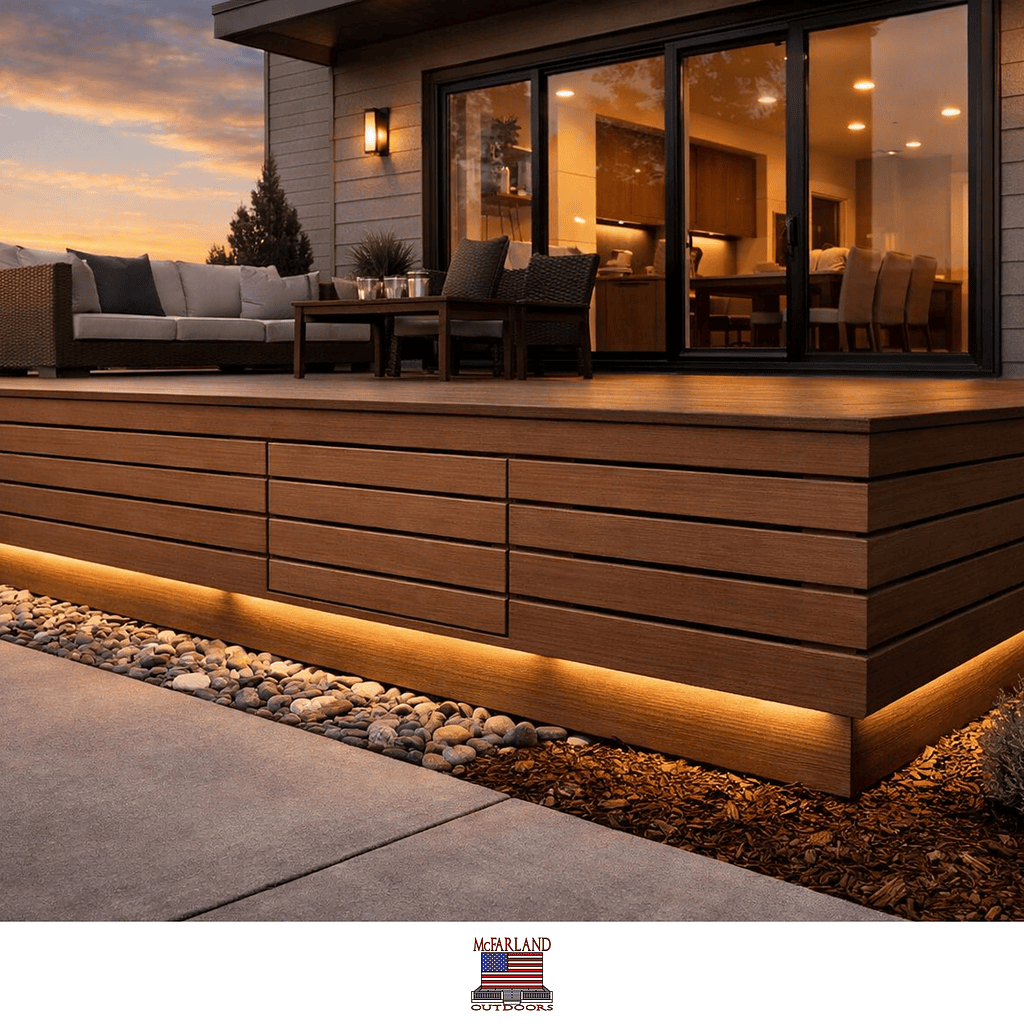
Why Add Skirting to a Deck?
Many homeowners add skirting for appearance alone. That’s understandable. Exposed framing can make even an expensive deck look unfinished.
But the benefits go beyond aesthetics.
It improves visual appeal.
Deck skirting gives your deck architectural weight. It frames the structure and creates a cohesive transition between house, deck, and landscape.
It hides framing and utilities.
Ledger boards, beams, posts, and wiring disappear behind clean panels.
It helps block animals.
Raccoons, opossums, stray cats, and rodents love open deck cavities. While no system is completely animal-proof, properly installed skirting significantly reduces nesting access.
It creates usable storage.
Add a framed access door and you instantly gain sheltered storage space for tools, outdoor cushions, toys, or seasonal décor.
It supports resale value.
According to the National Association of Realtors’ Remodeling Impact Report, outdoor living improvements consistently rank high in buyer appeal. A finished deck appearance reinforces perceived quality.
That said, poorly installed skirting can trap moisture and shorten a deck’s lifespan. The key is choosing the right material and installing it correctly.
What to Use for Deck Skirting
If you’re wondering what to use for deck skirting, the answer depends on four things: durability, ventilation, aesthetics, and budget.
Here’s how the most common materials compare.
Wood Lattice
Wood lattice is one of the most traditional options. It’s affordable and provides excellent airflow.
It works well for cottage-style homes or lower-budget projects. However, it requires staining or sealing and tends to warp over time.
- Durability: 5–10 years
- Maintenance: High
- Cost Level: Low
Vinyl Lattice
Vinyl lattice offers a similar appearance with less maintenance. It resists rot and does not require painting.
However, in extreme cold climates, vinyl can become brittle and crack.
- Durability: 10–15 years
- Maintenance: Low
- Cost Level: Low to Mid
Composite Boards
Composite skirting uses the same material as many modern deck boards. It creates a seamless look and resists rot, insects, and fading.
It costs more upfront but requires very little long-term maintenance.
- Durability: 25+ years
- Maintenance: Very Low
- Cost Level: Mid to High
Horizontal or Vertical Deck Boards
Using standard decking boards as skirting—installed horizontally or vertically—creates a clean, modern look.
Horizontal boards elongate the appearance of the deck. Vertical boards add visual height.
Ventilation gaps must be built into the design.
- Durability: 15–30 years (material dependent)
- Maintenance: Medium to Low
- Cost Level: Mid
Hardie Board (Fiber Cement)
Fiber cement panels are extremely durable and weather resistant. They’re paintable and long-lasting but heavier and more complex to install.
- Durability: 30+ years
- Maintenance: Low
- Cost Level: High
Stone Veneer
Stone veneer creates a premium architectural look. It’s durable and visually striking but requires proper foundation support and carries higher installation costs.
- Durability: 30+ years
- Maintenance: Low
- Cost Level: Premium
Decorative Metal Panels
Metal panels with laser-cut designs are popular for modern homes. They offer excellent ventilation and durability when powder-coated.
- Durability: 20+ years
- Maintenance: Low
- Cost Level: Mid to High
Each material has trade-offs. The best choice depends on your climate, budget, and how you plan to use the space underneath.
How to Put Skirting on a Deck
If you want to know how to put skirting on a deck correctly, pay attention to airflow and ground clearance. This is where most mistakes happen.
Here’s the proper approach:
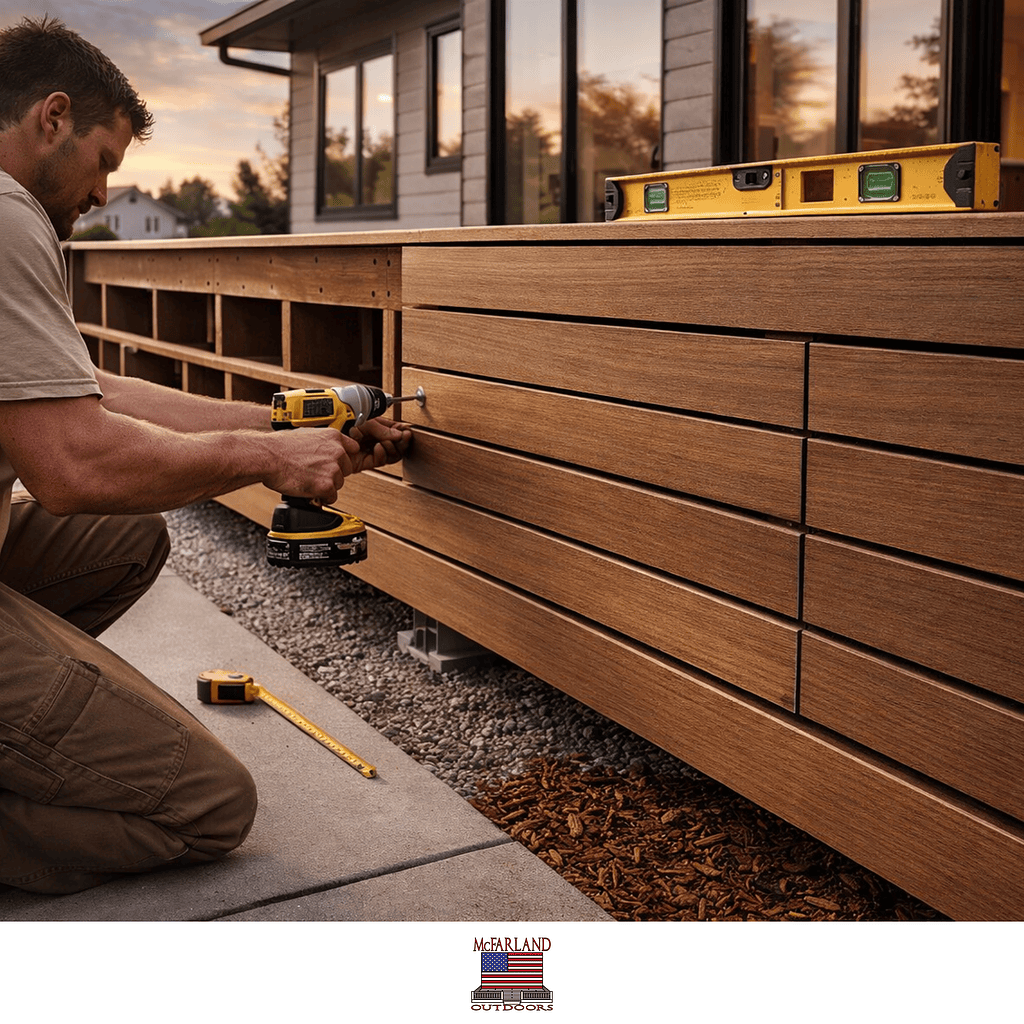
- Measure deck height at multiple points. Account for slope and uneven grade.
- Install framing support if needed. Many decks require additional 2×4 framing between posts to attach panels securely.
- Maintain at least 2–3 inches of ground clearance to prevent moisture wicking.
- Leave ventilation gaps. Solid panels require vent grilles. Slatted designs need spacing between boards.
- Install an access panel if you plan to use the space for storage.
- Use corrosion-resistant fasteners.
- Ensure soil slopes away from the deck at roughly 5% (about 6 inches per 10 feet).
- Seal cut wood edges with weatherproofing if using lumber.
- Check local building codes before fully enclosing the underside.
Improper ventilation is the number one reason skirting leads to structural damage.
Deck Skirting Cost
Cost varies widely depending on material and labor complexity.
Installed cost per linear foot typically ranges:
- Wood lattice: $15–$25
- Vinyl lattice: $20–$35
- Composite boards: $40–$70
- Framed composite panels: $60–$90
- Stone veneer: $80–$150+
For a standard 16×20 deck (approximately 72 linear feet):
- Lattice may cost $1,000–$1,800
- Composite board skirting may range from $2,800–$5,000
- Stone veneer can exceed $6,000
Custom access doors, complex framing, and uneven grade increase pricing.
Ventilation & Moisture Considerations
This is the section most homeowners skip—and it’s the most important.
Fully sealing the underside of a deck traps moisture. Moisture leads to mold, wood rot, sagging joists, and insect problems.
In colder climates, freeze-thaw cycles expand trapped water and damage framing.
Best practices include:
- Maintaining airflow across the entire underside.
- Avoiding soil contact with panels.
- Installing gravel or landscape fabric below decks.
- Using vent panels when installing solid materials.
Deck failures almost always begin underneath.
When You Should NOT Install Deck Skirting
There are situations where skirting is not advisable.
You should reconsider if:
- The deck sits less than 12 inches above ground.
- The yard has chronic drainage problems.
- The area floods seasonally.
- Soil slopes toward the house.
- Crawlspace ventilation depends on airflow below the deck.
In some cases, leaving the space open is safer for the structure long term.
Deck Skirting Ideas & Design Options
Modern composite slats create a sleek architectural finish.
Traditional white lattice pairs beautifully with colonial homes.
Stone veneer adds weight and texture to rustic designs.
Decorative metal panels deliver a bold contemporary look.
Mixed-material designs—like composite boards with stone column bases—add visual depth and upscale appeal.
Final Thoughts
So, what is deck skirting?
It’s more than a cosmetic upgrade. It’s a finishing system that enhances appearance, controls access, and can extend usability—if installed properly.
Choose materials based on longevity, not just looks. Prioritize airflow. Maintain ground clearance. Plan for drainage.
Done right, skirting elevates the entire deck. Done wrong, it can quietly damage it from below.
If you’re planning a deck project, use this guide as your foundation. The underside of your deck deserves as much attention as the surface above it.

Proven business leader with a strong track record of founding, growing, and scaling successful small businesses. Experienced in building companies from the ground up, driving sustainable growth, and leading teams through all stages of development. In the past year, led the delivery of 45+ custom deck projects. Skilled in identifying new business opportunities, developing and mentoring talent, and managing the full scope of daily operations—from sales and pricing strategy to financial oversight and execution. Known for operational excellence, strong financial acumen, and a continuous-improvement mindset that drives performance across every area of the business.