
Choosing between TimberTech vs Trex is one of the most common decisions homeowners face when building a composite deck. Both brands dominate the North American decking market and are widely trusted by contractors, architects, and outdoor living designers.
At first glance, Trex and TimberTech look very similar. Both produce durable boards made from recycled materials that promise decades of low-maintenance performance. Both brands offer rich wood-like colors, long warranties, and resistance to rot, insects, and fading.
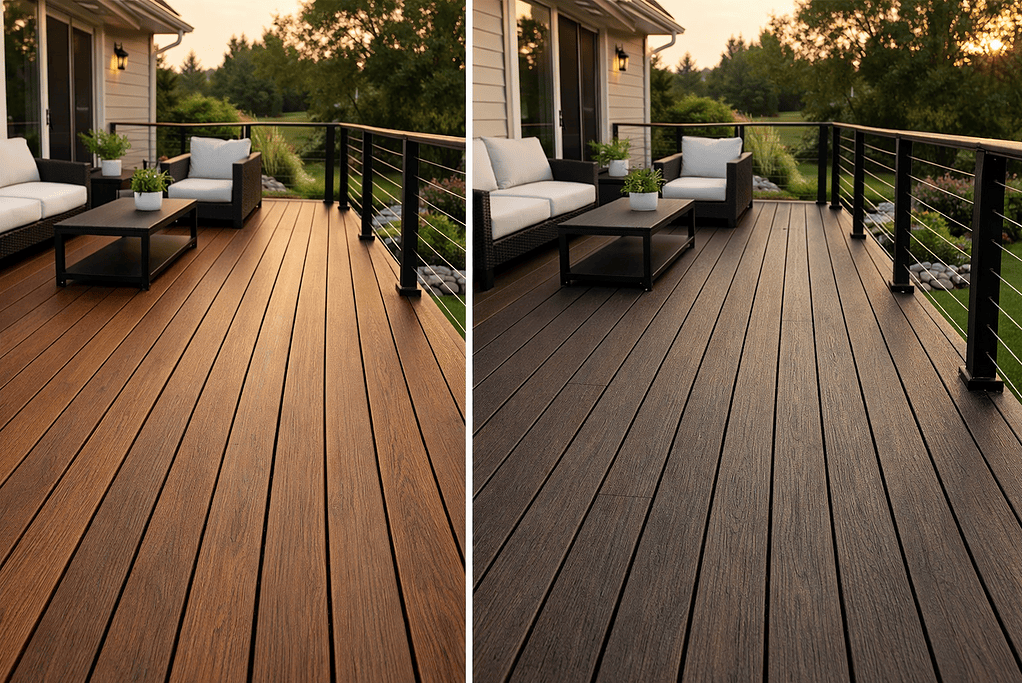
However, once you start comparing Timbertech vs Trex decking, the differences become clearer. The brands approach materials, moisture protection, scratch resistance, and design aesthetics in slightly different ways. Those differences can affect how your deck performs over time—especially in climates with humidity, intense sunlight, or freeze-thaw cycles.
This guide breaks down the difference between Trex and TimberTech using real-world installation knowledge, material science, and cost considerations so you can confidently choose the best decking for your home.
TimberTech vs Trex: Quick Comparison
Before diving into the details, here is a high-level comparison of the two brands.
| Feature | Trex Decking | TimberTech Decking |
| Core Material | Wood fiber + recycled plastic composite | Composite or fully synthetic PVC |
| Cap Style | Usually capped on top and sides (3-sided) | Often fully wrapped (4-sided cap) |
| Warranty | 25–50 years fade & stain protection | Up to 50 years fade & stain |
| Scratch Resistance | Excellent on premium lines | Very good |
| Heat Performance | Moderate depending on color | Often slightly cooler |
| Moisture Protection | Very good | Excellent |
| Sustainability | Up to 95% recycled content | High recycled content (varies by line) |
Both brands outperform traditional wood decks in durability and maintenance. The real decision usually comes down to cost, climate, aesthetics, and performance priorities.
What’s the Real Difference Between TimberTech and Trex?
The difference between Trex and TimberTech starts with how the boards are constructed.
Both companies manufacture composite decking using a combination of recycled wood fibers and plastic. This composite core provides strength while the outer shell protects the board from UV rays, stains, and moisture.
However, the structure of that protective shell differs slightly.
Trex Decking Construction
Trex boards are typically capped on three sides—the top surface and both edges. The bottom side is left uncapped, allowing airflow and helping the board release any moisture that may accumulate.
This approach allows the decking to “breathe,” which can be beneficial when decks have proper ventilation beneath them.
TimberTech Decking Construction
TimberTech offers two primary product types:
- Composite decking similar to Trex
- AZEK PVC decking, which is fully synthetic
Many TimberTech boards feature four-sided capping, meaning the protective shell wraps completely around the board.
This creates a stronger moisture barrier and makes TimberTech particularly appealing in areas with:
- high humidity
- coastal environments
- poolside decks
- frequent rain exposure
Density and Weight
Trex composite boards tend to be slightly heavier because of their dense recycled material composition. TimberTech’s PVC boards are lighter and often easier to handle during installation.
Weight differences may not affect homeowners directly, but contractors notice them during installation and framing.
TimberTech vs Trex Cost (Installed Price Breakdown)
One of the most searched questions about timbertech vs trex cost is how much each material actually costs when installed.
Deck pricing varies depending on board tier, railing systems, labor costs, and accessories such as lighting. However, the following ranges provide a realistic overview.
Entry-Level Composite Decking
Typical installed price:
$6 – $10 per square foot
Common examples include:
- Trex Enhance Basics
- TimberTech Edge Prime+
These boards offer solid durability but more limited color selection and simpler grain patterns.
Mid-Tier Composite Decking
Typical installed price:
$8 – $12 per square foot
Popular options include:
- Trex Select
- Trex Enhance Naturals
- TimberTech Terrain
- TimberTech Reserve
For most homeowners, this tier delivers the best balance between cost, appearance, and performance.
Premium Composite and PVC Decking
Typical installed price:
$12 – $18 per square foot
Examples include:
- Trex Transcend Lineage
- Trex Signature
- TimberTech AZEK Vintage
- TimberTech Landmark
Premium boards offer deeper grain textures, richer colors, and longer warranties.
Fastener Systems
Hidden fastener systems are common with composite decks and can add approximately:
- $1 – $2 per square foot
These systems create a clean appearance without visible screws.
Railing Costs
Deck railing often surprises homeowners because it can significantly increase the total cost of a project.
Composite railing systems typically cost:
- $70 – $200 per linear foot
depending on material, design, and lighting integration.
Example Midwest Deck Cost
For a typical 16 × 20 deck (320 sq ft) in Indiana or the Midwest:
| Deck Tier | Estimated Installed Cost |
| Entry Composite | $8,000 – $11,000 |
| Mid-Range Composite | $11,000 – $16,000 |
| Premium Composite / PVC | $16,000 – $24,000 |
Factors influencing price include stairs, framing complexity, and accessibility of the construction site.
Scratch Resistance & Surface Durability
Decks experience daily wear from pets, furniture, grills, and foot traffic. Surface durability is therefore a critical factor when comparing timbertech vs trex decking.
Trex Scratch Resistance
Trex’s premium lines—especially Transcend and Signature—have developed a reputation among contractors for strong scratch resistance. Their surface caps are engineered to handle heavy use, making them ideal for households with:
- large dogs
- outdoor dining furniture
- high-traffic entertaining spaces
TimberTech Surface Durability
TimberTech boards also offer excellent scratch resistance. However, their surface cap can sometimes show minor scratches slightly more easily than Trex’s hardest composite surfaces.
In practice, these marks are usually cosmetic and tend to blend into the wood grain texture over time.
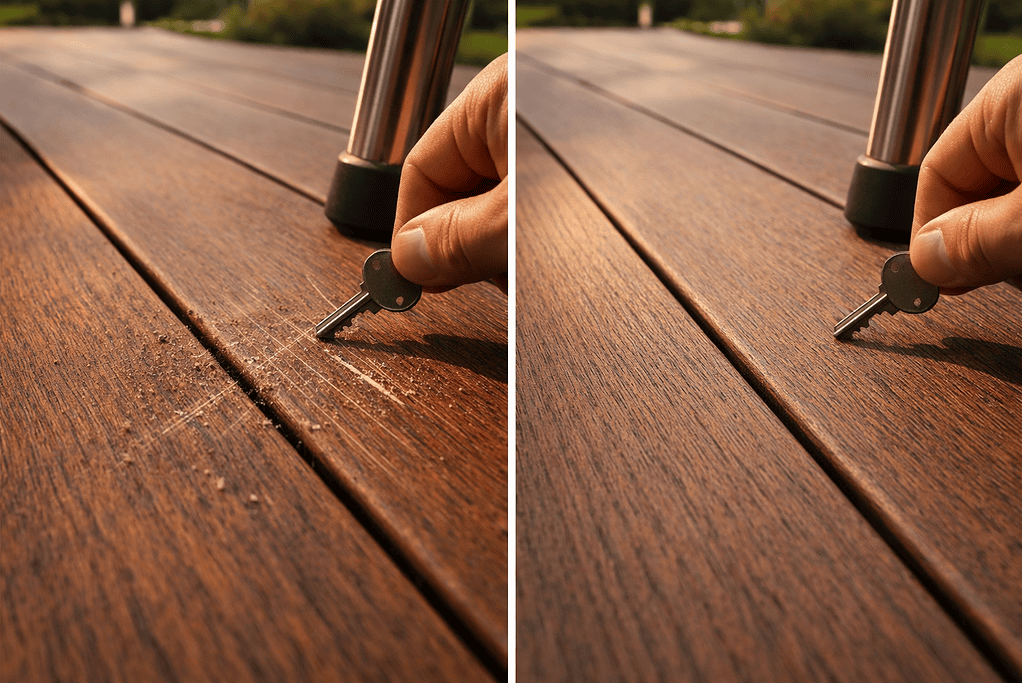
What Scratches Actually Look Like
When scratches do occur, they typically appear as:
- light streaks
- faint surface lines
- dull patches
They rarely affect structural performance and often fade as the deck naturally weathers.
Expansion & Contraction Differences
One topic rarely explained in decking guides is thermal movement.
Composite boards expand and contract as temperatures change. This movement is especially noticeable in climates with dramatic seasonal swings.
Seasonal Movement
During hot summer months, boards expand slightly. In colder months, they contract.
Proper installation ensures this movement does not cause issues.
Why Spacing Matters
Manufacturers specify precise spacing between boards and at the ends of deck boards.
Incorrect spacing can lead to:
- buckling
- tight seams
- drainage problems
Midwest Freeze–Thaw Cycles
In regions like Indiana, winter temperatures can fall below freezing while summer temperatures exceed 90°F.
Professional installers account for these seasonal changes when planning board spacing and fastening methods.
Heat Retention in Midwest Summers
Another common concern when comparing Trex vs TimberTech is how hot the boards become in direct sunlight.
Composite decking naturally absorbs heat because of its density.
However, temperature varies depending on several factors:
- board color
- sun exposure
- airflow beneath the deck
Dark vs Light Boards
Darker colors absorb more heat, while lighter colors remain cooler underfoot.
Popular cooler tones include:
- weathered gray
- sand
- light oak
Airflow Matters
Decks with good airflow beneath the structure stay cooler than decks built directly over concrete or enclosed spaces.
Barefoot Expectations
Even cooler composite boards can become warm during peak summer sun. Many homeowners improve comfort by adding:
- pergolas
- shade sails
- outdoor umbrellas
Moisture, Mold & Freeze-Thaw Performance
Composite decking is designed to resist moisture far better than traditional wood.
Mold Growth
Mold rarely grows inside composite boards themselves. Instead, it appears on organic debris such as leaves or pollen that accumulate on the deck surface.
Routine cleaning prevents buildup.
Snow and Ice
Both Trex and TimberTech tolerate snow accumulation well. Plastic shovels are recommended to prevent scratching.
Airflow Under the Deck
Good airflow reduces moisture buildup and improves long-term deck performance.
Structural Feel & Board Deflection
Deck stability depends on both the decking boards and the framing structure.
Joist Spacing
Most composite decking manufacturers recommend:
- 16 inches on center for standard installations
- 12 inches on center for diagonal layouts
Tighter spacing improves stiffness and reduces bounce.
Stair Treads
Stair treads experience concentrated loads and may require additional framing support for optimal stability.
Aesthetics: Which Looks More Like Real Wood?
Appearance is often the deciding factor when comparing which is better TimberTech or Trex.
Trex Design Style
Trex decking typically features consistent grain patterns and contemporary color palettes. The result is a clean, modern look that works well in many backyard designs.
TimberTech Design Style
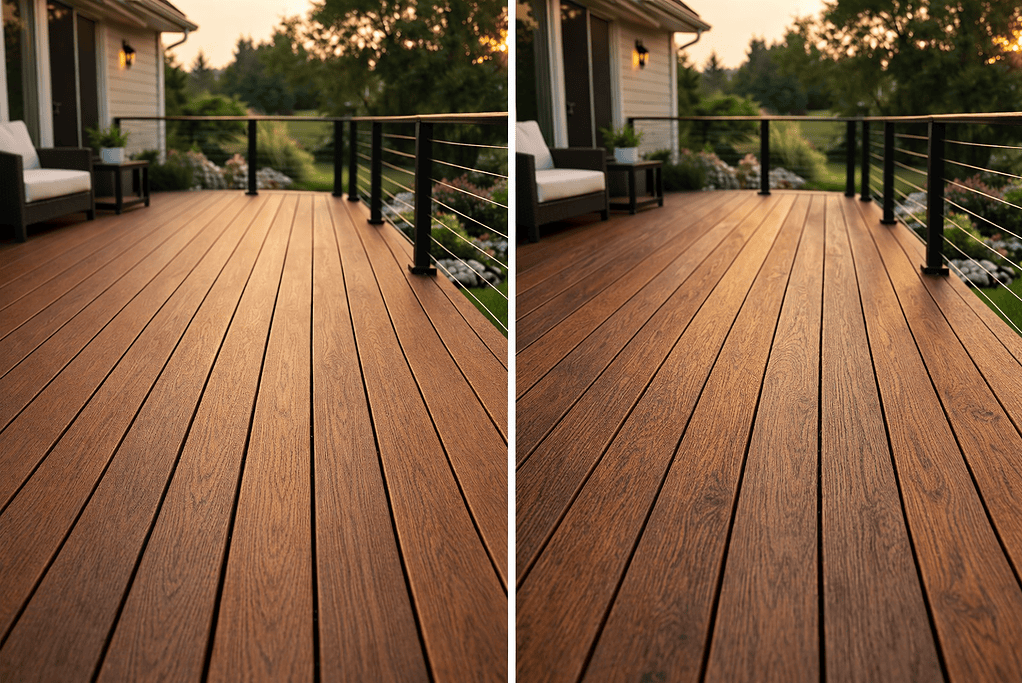
TimberTech is widely known for its highly realistic wood textures.
Many lines feature:
- wire-brushed finishes
- multi-tonal color streaking
- matte surfaces that mimic hardwood
Homeowners seeking a more natural wood aesthetic often prefer TimberTech.
Warranty Differences (What Actually Matters)
Both brands offer impressive warranty coverage.
| Brand | Structural Warranty | Fade & Stain Warranty |
| Trex | 25 years | Up to 50 years |
| TimberTech | Lifetime on some lines | Up to 50 years |
However, homeowners should note several important details:
- warranties usually cover materials only
- labor costs are rarely included
- improper installation can void coverage
Regular cleaning and proper installation are essential to maintain warranty protection.
TimberTech vs Trex Pros and Cons
| Category | Trex | TimberTech |
| Cost | Generally more affordable | Premium lines cost more |
| Scratch Resistance | Excellent | Very good |
| Heat Performance | Moderate | Often cooler |
| Moisture Resistance | Very good | Excellent |
| Aesthetic Variety | Modern and consistent | Highly realistic wood look |
| Sustainability | Industry leader in recycled materials | High recycled content |
| Warranty | 25–50 years | Up to lifetime |
Which Is Better: TimberTech or Trex for You?
The best decking brand ultimately depends on your priorities.
Choose Trex If
- budget is a major factor
- scratch resistance is important
- you prefer consistent modern aesthetics
- sustainability is a priority
Choose TimberTech If
- you want a highly realistic wood appearance
- moisture protection is critical
- longer structural warranties matter
- cooler surface performance is desirable
Both brands produce excellent composite decking. In many cases, installation quality and framing design influence long-term performance more than brand selection.
FAQs
Is TimberTech better than Trex?
Neither brand is universally better. Trex offers strong value and scratch resistance, while TimberTech excels in moisture protection and realistic wood aesthetics.
Which lasts longer?
Both Trex and TimberTech decks can last 25–35 years or more with proper installation and maintenance.
Which decking stays cooler?
Lighter colors stay cooler overall. Some TimberTech PVC boards are engineered to reduce heat absorption slightly more than traditional composites.
Which scratches less?
Trex premium lines such as Transcend and Signature are often considered among the most scratch-resistant composite boards.
Which costs more?
TimberTech’s premium PVC boards generally cost more than Trex composite boards.
Can you mix TimberTech and Trex?
It is possible, but mixing brands may affect warranties and installation requirements.
Which increases resale value more?
A well-designed composite deck from either brand can significantly increase curb appeal and outdoor living value
Conclusion
When comparing TimberTech vs Trex, it becomes clear why these brands dominate the composite decking market. Both provide long-lasting materials that outperform traditional wood in durability, maintenance, and weather resistance.
Trex often appeals to homeowners seeking excellent value and scratch resistance. TimberTech attracts buyers who want a premium aesthetic and stronger moisture protection.
Ultimately, the best decking decision combines material quality, professional installation, and thoughtful design to create an outdoor space that lasts for decades.
Proven business leader with a strong track record of founding, growing, and scaling successful small businesses. Experienced in building companies from the ground up, driving sustainable growth, and leading teams through all stages of development. In the past year, led the delivery of 45+ custom deck projects. Skilled in identifying new business opportunities, developing and mentoring talent, and managing the full scope of daily operations—from sales and pricing strategy to financial oversight and execution. Known for operational excellence, strong financial acumen, and a continuous-improvement mindset that drives performance across every area of the business.