
The best under deck drainage system depends on whether you’re building a new deck or upgrading an existing one. A properly designed system protects the structural framing from moisture, directs rainwater away from the house, and keeps the space beneath your deck dry and usable.
Many homeowners install elevated decks without realizing how much usable space exists below them. When left unprotected, rainwater falls through the deck boards, soaking the ground, furniture, and framing below. But when drainage is integrated into the deck design, the area underneath can become a covered outdoor living space.
For homeowners in Indiana and across the Midwest, climate conditions make drainage planning even more important. Freeze–thaw cycles, heavy spring rains, and snow runoff can all place additional stress on deck framing and drainage systems. Choosing the right system from the beginning helps prevent rot, moisture damage, and costly repairs later.
This guide explains how under-deck drainage systems work, the difference between new-build and retrofit solutions, realistic cost ranges, and the factors that determine what is the best under deck drainage system for your home.
What Is an Under Deck Drainage System?
An under deck drainage system is designed to capture rainwater that passes between deck boards and redirect it away from the structure. Without drainage, water drips directly onto the ground below and repeatedly wets the framing members supporting the deck.
Over time, this constant exposure to moisture can lead to structural problems such as wood rot, mold growth, and fastener corrosion. A drainage system solves this problem by channeling water toward a gutter or downspout before it reaches the area below.
Most modern systems fall into two categories:
- Above-joist drainage systems
- Below-joist ceiling drainage systems
Although both methods keep the space under the deck drier, they function very differently and serve different situations.
What Is the Best Under Deck Drainage System for a New Deck?
When building a new deck, above-joist drainage systems are widely considered the best option. These systems are installed during the framing stage before the decking boards are attached.
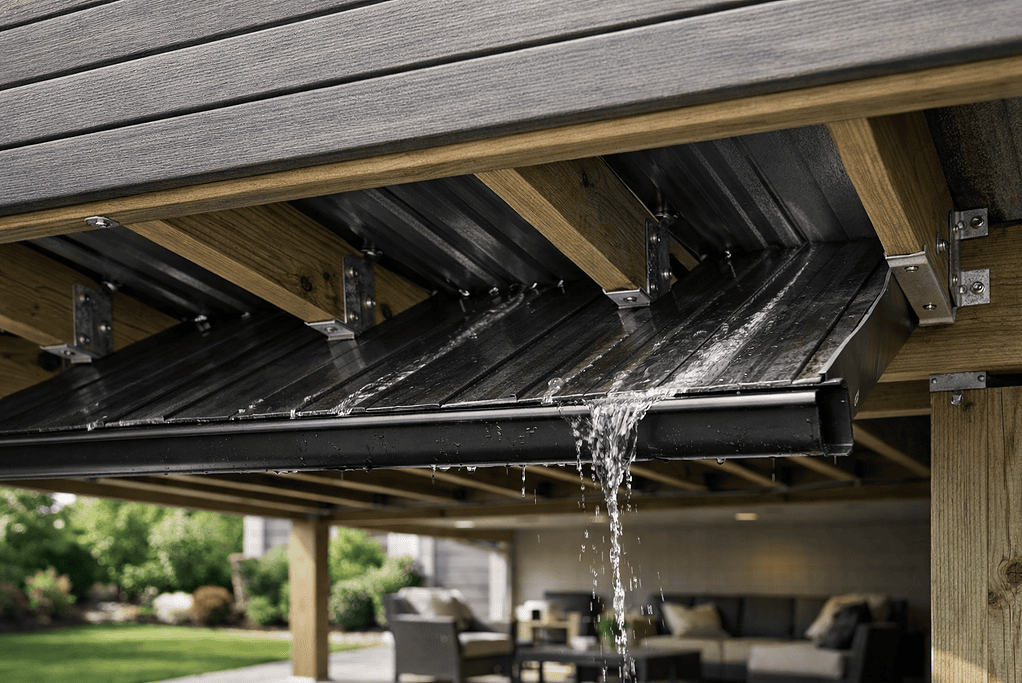
Above-joist systems typically use waterproof membranes or plastic troughs that sit directly on top of the joists. As rainwater passes through the deck boards, it immediately enters these troughs and flows toward a gutter mounted at the edge of the deck.
Because water never touches the structural framing, this method offers the highest level of protection.
Why Above-Joist Systems Work Best During Construction
Above-joist systems offer several advantages when installed during the deck build.
- They are installed before decking boards are attached, making installation easier and more precise.
- They prevent water from reaching joists and beams, which significantly reduces the risk of rot and structural damage.
- They allow for cleaner installation of ceiling systems later, since the framing remains dry.
- They extend the lifespan of the deck, especially in climates with heavy rain or snow.
Many builders prefer installing drainage during framing because it eliminates the need for complex retrofits later. Integrating drainage early often saves homeowners both time and money over the life of the deck.
What Is the Best Under Deck Drainage System for an Existing Deck?
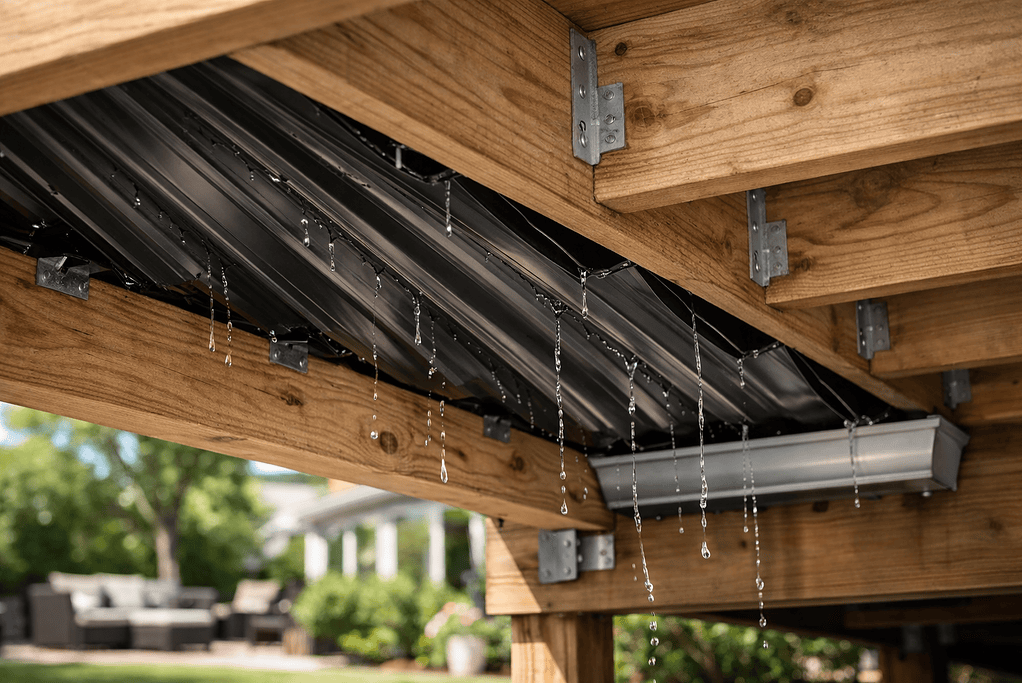
When the deck is already built, the best solution is usually a below-joist drainage system, sometimes called an under-deck ceiling system.
Instead of stopping water at the top of the framing, these systems install beneath the joists using sloped panels or gutters. The panels catch rainwater dripping through the deck boards and direct it toward a gutter at the edge of the deck.
This method allows homeowners to waterproof the space below an existing deck without removing the deck boards.
Advantages of Below-Joist Systems
Retrofit drainage systems are popular because they offer practical benefits for existing structures.
- They can be installed without removing deck boards.
- Installation is typically faster and less invasive.
- Many systems double as finished ceiling panels, improving the appearance of the space below.
- They are DIY-friendly, making them appealing for homeowners tackling small projects.
Limitations Homeowners Should Understand
- While retrofit systems are convenient, they do come with trade-offs.
- Water still comes into contact with the joists before entering the drainage panels.
- Ventilation beneath the deck may be reduced, which can trap humidity if the system is sealed too tightly.
- Ceiling panels can reduce headroom slightly, especially on lower decks.
- Structural issues may be hidden, which is why framing inspection should always happen before installation.
A retrofit drainage system can create a comfortable covered patio, but it does not provide the same level of structural protection as above-joist systems.
Indiana Climate Factors Most Homeowners Overlook
Climate plays a major role in determining which drainage system performs best. Many homeowners choose systems based on price or convenience without considering how regional weather affects deck structures.
In the Midwest, several factors deserve special attention.
- Freeze–thaw cycles can cause trapped water inside deck framing to expand and damage wood fibers over time.
- Snowmelt surges in late winter can overwhelm drainage systems that are not properly sloped.
- Ice buildup may occur inside drainage troughs if water cannot flow freely toward the gutter.
- Gutter capacity is another overlooked issue. The drainage system must connect to a gutter that can handle runoff from both the deck and nearby roof areas.
- Ledger board flashing is also critical. Improper flashing can allow water to seep behind the ledger board where the deck attaches to the house. This is one of the most common causes of deck structural failure.
Taking these factors into account helps ensure that the drainage system continues performing reliably year after year.
Under Deck Drainage System Cost (Realistic Ranges)
One of the most common questions homeowners ask is about under-deck drainage system cost. Prices vary widely depending on system type, deck size, and installation complexity.
Above-Joist Systems (New Deck Construction)
Most above-joist systems installed during new deck construction cost approximately:
$8 – $15 per square foot installed
Costs depend on several factors, including deck size, drainage slope design, and integration with existing gutter systems.
Because installation happens during framing, labor costs are generally lower than retrofit installations.
Below-Joist Retrofit Systems
Retrofit drainage systems typically cost slightly more.
$10 – $20 per square foot installed
These systems require careful installation beneath the deck and may include ceiling panels or integrated lighting.
Finished Under-Deck Living Spaces
Some homeowners go a step further and turn the area under their deck into a fully finished outdoor room.
Typical project costs range from:
$3,000 to $12,000 or more
The final price depends on features such as:
- ceiling panels
- recessed lighting
- ceiling fans
- electrical wiring
- outdoor entertainment systems
Although the investment can be significant, it often adds usable living space that increases the home’s overall appeal.
Common Problems With Poor Drainage Installation
Even the best under deck drainage system can fail if installed incorrectly. Poor installation is one of the most common reasons drainage systems stop working properly.
Some of the most frequent problems include:
- Improper slope, which causes water to pool instead of draining.
- Poor gutter connections, allowing water to spill at the deck edge.
- Moisture trapped near the ledger board, leading to hidden structural damage.
- Fastener corrosion, caused by constant exposure to moisture.
- Mold and mildew growth, particularly when airflow is limited.
- Rot hidden behind ceiling panels, which can go unnoticed for years.
- Ice dams form in drainage troughs during winter months.
- Electrical hazards if lighting and wiring under the deck are not sealed properly.
Proper installation and occasional inspections are essential for preventing these issues.
Do You Even Need an Under Deck Drainage System?
Not every deck requires a drainage system. In some cases, the investment may not provide meaningful benefits.
You may not need a drainage system if:
- the deck sits close to ground level
- there is no usable space beneath the deck
- your budget would be better spent on structural upgrades
However, many homeowners find drainage systems extremely valuable when the deck is elevated.
You should strongly consider installing one if:
- the deck sits above a walk-out basement patio
- you want a covered seating area below
- you plan to install an outdoor kitchen or lounge
- you need protected outdoor storage
When designed properly, a drainage system can turn unused space into one of the most comfortable outdoor areas on the property.
Best Under Deck Drainage System for Composite Decks
Composite decking materials from brands such as Trex, TimberTech, and Deckorators work especially well with above-joint drainage systems.
Composite boards are typically installed with hidden fasteners and consistent spacing between boards. This allows rainwater to flow evenly into drainage troughs.
Because composite decking resists moisture, mold, and rot, pairing it with an above-joist drainage system creates a deck assembly that requires far less maintenance than traditional wood decks.
For homeowners planning a composite deck build, integrating drainage during framing often provides the most durable long-term solution.
Final Recommendation: Choosing the Right System for Your Deck
Choosing the best under deck drainage system ultimately depends on the structure of the deck and the homeowner’s long-term goals.
For new deck construction, above-joist drainage systems usually offer the best performance because they prevent water from reaching the framing and simplify future ceiling installation.
For existing decks, below-joist systems are often the most practical option because they can be installed without removing deck boards.
Other important factors to consider include:
- the structural condition of the deck
- the homeowner’s budget
- how the space below the deck will be used
- climate exposure and seasonal weather patterns
If you are building a new elevated deck, integrating drainage during the framing stage is typically more cost-effective than retrofitting it later.
A well-designed drainage system protects your investment, extends the lifespan of your deck, and transforms the space beneath it into a dry and functional outdoor living area.

Proven business leader with a strong track record of founding, growing, and scaling successful small businesses. Experienced in building companies from the ground up, driving sustainable growth, and leading teams through all stages of development. In the past year, led the delivery of 45+ custom deck projects. Skilled in identifying new business opportunities, developing and mentoring talent, and managing the full scope of daily operations—from sales and pricing strategy to financial oversight and execution. Known for operational excellence, strong financial acumen, and a continuous-improvement mindset that drives performance across every area of the business.