
Most homeowners are surprised to learn that the actual construction of their new deck is often the shortest part of the entire process. The planning, permitting, and scheduling that happen before a single board gets laid? That’s where the time really goes.
So let’s cut through the vague answers you’ve probably already found online and give you a straight, honest breakdown of what the deck-building process actually looks like from start to finish.
How Long Does It Take to Build a Deck? (Typical Timeline)
Here’s the answer most people are looking for: construction alone takes 1–3 weeks for most decks. But the full project — from your first design consultation to stepping onto your finished deck — typically runs 6 to 12 weeks, and custom or complex builds can stretch to 16 weeks or more.
That gap surprises a lot of homeowners. You’re not waiting 12 weeks for someone to nail boards together. You’re waiting on designers, permit offices, contractor schedules, inspectors, and material deliveries — all before construction even starts.
Understanding that distinction is the single most useful thing you can take away from this guide.
| Phase | Typical Duration |
| Hiring a contractor | 1–10 weeks |
| Design & planning | 1–8 weeks |
| Permits & approvals | 1–6 weeks |
| Construction | 3 days–3 weeks |
| Final inspection & walkthrough | 2–7 days |
| Total | 6–16+ weeks |
How Long Does It Take to Build a Small Deck?
Small decks move faster at every stage — less to design, less to permit, less to build.
A simple ground-level deck (under 200 sq ft, rectangular, no special features) can be framed and finished in 3 to 7 days once construction begins. With a streamlined permitting process and an available contractor, you could go from first call to finished deck in as little as 3–4 weeks total.
A small elevated deck — say, a 10×12 platform off a back door with basic railings and a set of stairs — typically adds another week of construction time, putting you at 1–2 weeks for the build phase. Total project timeline runs closer to 4–6 weeks.
What makes a small deck genuinely faster:
- Fewer structural calculations required
- Simpler permit applications (faster approvals)
- Less material to source and stage
- Smaller crews can complete it in one continuous push
What doesn’t automatically speed things up: permit wait times (these are largely fixed by your municipality regardless of deck size) and contractor availability (especially during spring and summer peak season).
Deck Construction Timeline Breakdown (Step-by-Step)
Planning & Design: 1–8 Weeks
Before any permit gets filed, you need a design. For a simple rectangular deck, a good contractor can sketch out plans within a few days. Custom decks — multiple levels, built-in seating, pergolas, outdoor kitchens — may require multiple design revisions and even structural engineering review.
If you’re working with an HOA, add another 1–3 weeks for their review process on top of the design phase. HOA approvals are separate from city or county building permits, and some associations only meet monthly.
Pro tip: Many experienced deck builders use 3D design software that lets you visualize and approve the deck before any permits are pulled. This catches design changes early — before they become expensive mid-construction change orders.
Permits & Approvals: 1–6 Weeks
Every deck requires a building permit. No exceptions.
The timeline for permit approval varies significantly by location:
- Fast-track municipalities: 3–5 business days
- Typical processing: 1–2 weeks
- Busy or complex jurisdictions: 4–6 weeks
Your permit application needs accurate construction drawings, including structural details, footing depths, and compliance with local setback requirements. Incomplete applications get sent back — which adds weeks to your timeline. An experienced local contractor who knows your municipality’s requirements can dramatically reduce back-and-forth delays.
Some jurisdictions also require mid-construction inspections — typically after post holes are dug but before concrete is poured, and again after framing is complete. These aren’t optional, and you can’t move forward until the inspector signs off.
Scheduling Wait Time: 1–8+ Weeks
This is the phase nobody talks about enough. You’ve approved your design. You have your permits. Now you wait for your contractor’s schedule to open up.
During peak season (spring through early summer), in-demand deck builders are often booked 4–10 weeks out. The best contractors have the longest waitlists — it’s a feature, not a bug.
The practical fix: book early. Homeowners who start the planning process in late winter are far more likely to have a crew on-site by Memorial Day than those who call in April.
Construction Phase: 3 Days–3 Weeks
Once the crew shows up and materials are on-site, things move quickly. Here’s a typical construction sequence:
- Footings & foundation (2–5 days): Post holes are dug — always call 811 before digging to check for underground utilities — concrete is poured, and footings cure. Cold weather slows concrete curing; muddy conditions can halt work entirely.
- Framing (3–7 days): Beams, joists, and the structural skeleton go up — this structural framing phase is where the deck’s load capacity and long-term stability are established. Quality contractors protect joists with flashing tape at this stage — a small step that dramatically extends the life of your deck by preventing moisture infiltration and rot.
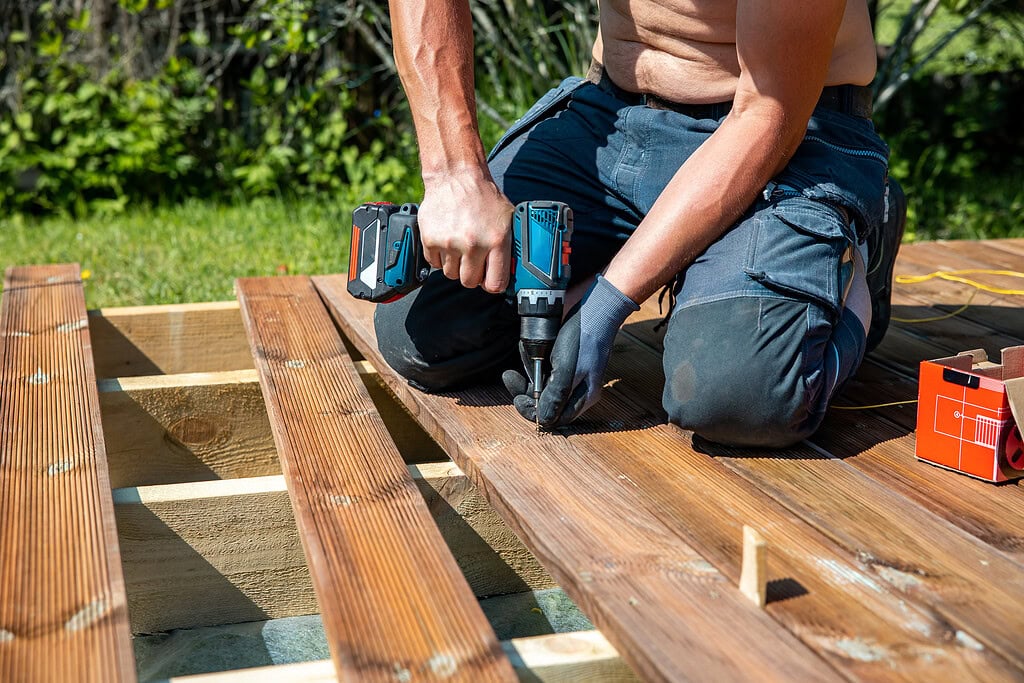
- Decking installation (2–4 days): Boards go down. Composite decking takes slightly more time to install than wood due to the hidden fastener systems most composites use, but it requires no staining or sealing afterward — which saves time later.
Railings, stairs & finishing (2–5 days): This phase varies most based on design complexity. Basic railings go fast. Custom cable railings or glass panels take longer. Multiple stair runs add time, and ensuring each run meets local stair code requirements is essential before the final inspection.
Final Touches & Inspection: 2–7 Days
Most municipalities require a final inspection before the deck can be used. Schedule this as soon as construction wraps — inspector availability can add a few days to a week of wait time. After the inspection, your contractor should walk through the finished project with you, address any punch list items, and do a thorough site cleanup.
Why Deck Projects Take Longer Than Expected
If your project is running long, it’s almost always one of these five reasons:
- Contractor backlog. Peak season demand means your chosen builder may not start for weeks after you sign a contract. This isn’t a problem with the contractor — it’s supply and demand.
- Permit bottlenecks. Municipal permit offices can be overwhelmed, especially in spring. Some areas require physical site inspections as part of the permit process, which adds scheduling complexity.
- Inspection scheduling gaps. Mid-build inspections — post holes, framing, final — each require a scheduled visit. If the inspector is booked out a week, your crew may sit idle waiting.
- Design changes mid-project. Changing your decking color, railing style, or adding a feature mid-construction creates a change order. Every change order takes time — revised plans, revised quotes, sometimes revised permits.
- Material delays. Composite decking, exotic hardwoods, and specialty railing systems can have lead times of 2–6 weeks. Order early or choose materials that are in stock locally.
What Affects Your Deck Timeline the Most
Size and layout. Straightforward rectangular decks build faster than L-shapes, multi-level platforms, or angled sections. Every non-standard cut adds fitting time.
Height off the ground. A ground-level deck skips the complex post and beam work that an elevated deck requires. The higher the deck, the more structural engineering goes into the framing.
Material choice. Pressure-treated wood is typically in stock and cuts fast. Composite decking may have longer lead times but eliminates post-build staining. Exotic hardwoods like Ipe may need to be specially ordered and require acclimation time before installation.
Custom features. Every upgrade extends the timeline: a pergola or shade structure adds 1–2 weeks; a screened porch or covered roof adds 1–3 weeks; a built-in outdoor kitchen adds 2–4 weeks; electrical and lighting work requires a subcontractor and scheduling coordination.
Site conditions. Sloped yards require additional posts or grading. Sandy soil needs deeper footings. Rocky terrain slows excavation. A thorough site assessment before finalizing your design is essential.
Small vs. Standard vs. Custom Deck: Timeline at a Glance
| Deck Type | Construction Time | Total Project Time |
| Small (under 200 sq ft, simple) | 3–7 days | 3–6 weeks |
| Standard (200–500 sq ft) | 1–2 weeks | 6–10 weeks |
| Large or custom (500+ sq ft, multi-level) | 3–6+ weeks | 10–16+ weeks |
Wood vs. Composite Decking: Which Takes Longer to Build?
During construction, pressure-treated wood typically installs slightly faster. Boards can be face-screwed quickly, and the material is easy to cut and fit. Composite decking uses hidden fastener clips, which adds installation time per board — though experienced crews minimize this difference.
After construction, wood decks require staining or sealing before use, and again every 2–3 years thereafter. Composite decks are ready to enjoy immediately after the final inspection.
For material availability, wood is almost always in stock locally. Some composite lines — particularly premium or specialty colors — may require a 2–6 week order lead time.
If you haven’t settled on a product yet, comparing top composite decking brands early can help you factor lead times into your project schedule.
The net result: wood may save a few days during installation; composite saves weeks of finishing time and years of maintenance time down the road.
DIY vs. Hiring a Contractor: The Honest Timeline Comparison
A professional crew can complete a standard deck in 1–2 weeks. They bring specialized tools, experience, and efficient workflows — and they’ve solved every problem your deck will present many times before.
A DIY builder working weekends might complete the same deck in 4–12 weeks, depending on skill level, available help, and how many unexpected trips to the hardware store the project generates. Mistakes in layout, gapping, or framing can set you back significantly — and some errors, like incorrectly placed footings, require starting over entirely.
For reference: a standard 12×24 deck requires approximately 100–150 man-hours to complete. That’s 6–10 full working days for a two-person professional crew, or a lot of weekends for one motivated homeowner.
How to Speed Up Your Deck Project (Without Cutting Corners)
Finalize your design before you start anything else. Design changes during permitting or construction are the single biggest source of delays. Get to a design you love, then commit.
Apply for permits as early as possible. Don’t wait until you’ve hired a contractor to file paperwork. Many homeowners and contractors start the permit process in parallel with contractor vetting.
Order materials early. If you’ve chosen a specific composite line or specialty material, order it the moment you sign a contract. Discovering your decking is 4 weeks out in the morning construction is supposed to start is a painful and avoidable delay.
Build in the off-season. In fact, the best time of year to build may surprise you. Fall and winter deck builds are real — most professional contractors work year-round. You’ll face shorter waitlists, faster permit processing, and often better pricing.
Choose an experienced local contractor. A builder who knows your municipality’s permit requirements, inspection scheduling, and local building codes will navigate the administrative phases far faster than someone new to your area.
The Real Tradeoff: Speed vs. Quality
There’s a reason professional deck builders resist being rushed — the consequences of cutting corners show up years later, not days later.
Rushing the foundation and framing phase leads to unlevel surfaces, inadequate load capacity, and structural movement over time. Skipping or rushing concrete cure time undermines footing integrity. Poorly installed flashing and moisture barriers on joists and ledger boards lead to rot — often invisible until the deck needs to be torn out completely.
A deck built correctly in 10 weeks will last 25–30 years. A deck rushed through in 5 may need significant repairs within a decade.
The time before construction starts has real value. Design review, engineering checks, permit approval, and thorough site assessment all reduce the chance of expensive problems downstream. Patience at the planning stage pays off every year you enjoy the finished deck.
Conclusion: What You Should Actually Expect
Here’s the honest summary:
Most homeowners underestimate the pre-construction timeline. The wait for design, permits, and contractor scheduling is usually longer than the build itself — and that’s completely normal.
The actual build is usually fast. A skilled crew can complete most decks in 1–3 weeks once they’re on-site with materials in hand.
Delays happen before and between phases, not usually during active construction.
Your realistic expectations by project type:
- Simple small deck → 3–6 weeks total, roughly 1 week of actual construction
- Standard deck → 6–10 weeks total, 1–2 weeks of construction
- Custom or multi-level deck → 10–16+ weeks total, 3–6 weeks of construction
The best thing you can do is start planning earlier than feels necessary. Call contractors, get design conversations started, and understand your local permitting timeline before you’re mentally “ready” to build. The homeowners relaxing on their new decks by the Fourth of July are almost always the ones who started planning in January.

Proven business leader with a strong track record of founding, growing, and scaling successful small businesses. Experienced in building companies from the ground up, driving sustainable growth, and leading teams through all stages of development. In the past year, led the delivery of 45+ custom deck projects. Skilled in identifying new business opportunities, developing and mentoring talent, and managing the full scope of daily operations—from sales and pricing strategy to financial oversight and execution. Known for operational excellence, strong financial acumen, and a continuous-improvement mindset that drives performance across every area of the business.