
Most articles about under deck storage ideas focus on appearance rather than performance. They show drawers, cabinets, and sheds without explaining whether those solutions will still function after a few seasons of rain, humidity, snow, or freeze–thaw cycles.
The reality is simple:
under-deck storage only works when moisture, drainage, and airflow are addressed first.
This guide combines the best deck storage ideas, storage under deck ideas, under deck stairs storage ideas, and outdoor deck storage ideas—then improves them by explaining when each option works, when it fails, and how to choose the right solution for your deck and climate.
Before You Add Under-Deck Storage, Check These Limits
Minimum clearance needed for usable storage
Clearance determines what type of storage is realistic:
- Under 24 inches: Storage is limited to rolling bins or shallow slide-out trays. Enclosures almost always fail due to trapped moisture and lack of access.
- 30–36 inches: This is the minimum height for practical under-deck storage. Drawers, racks, and basic compartments work well.
- 36–60 inches: Allows cabinets, bike storage, and firewood racks with proper ventilation.
- 60+ inches: Makes it possible to create enclosed storage rooms or sheds beneath the deck.
Trying to force large built-ins into low-clearance spaces is one of the most common causes of mold and rot under decks.
Drainage, slope, and standing water risks
Water does not just fall vertically. It runs, splashes, and evaporates upward from the soil.
Before adding storage, confirm that:
- The ground beneath the deck slopes away from the home.
- There is no standing water after heavy rain.
- Deck runoff is not pooling beneath joists or stairs.
If drainage is poor, storage should remain open and elevated, or drainage improvements should be made first.
Climate factors: rain, snow, humidity, freeze–thaw
Climate determines how forgiving your storage system will be.
- Humid regions require airflow above all else. Fully sealed storage traps moisture.
- Cold climates create condensation inside tight enclosures as temperatures fluctuate.
- Snow-heavy areas need stronger framing and corrosion-resistant hardware.
What works in a dry, mild climate can fail quickly in wet or cold regions.
Why some decks should not have storage underneath
Not every deck is a good candidate for under-deck storage. Storage should be avoided if:
- Clearance is extremely low.
- Soil stays wet year-round.
- Deck framing is untreated or already deteriorating.
In these cases, freestanding outdoor storage often performs better and lasts longer.
Best Under Deck Storage Ideas by Deck Type
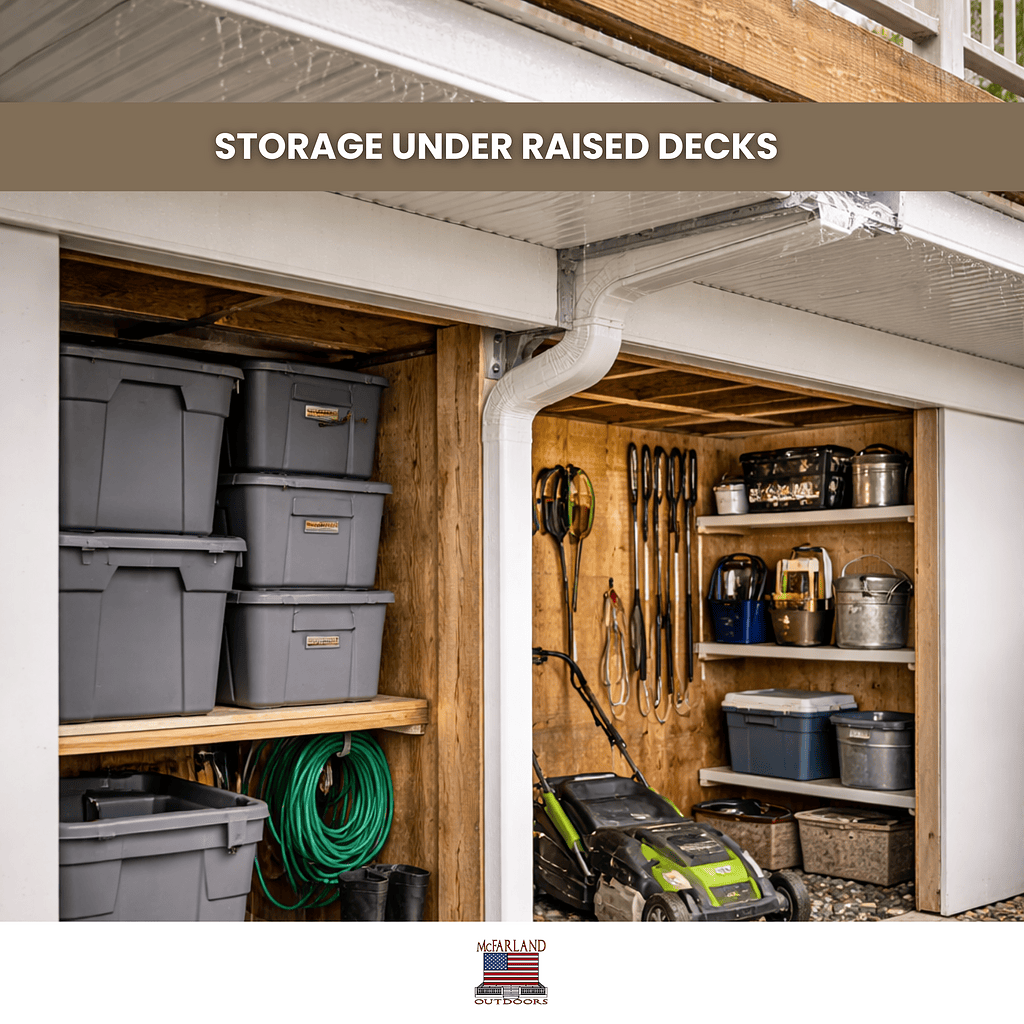
Storage Under Raised Decks
Raised decks offer the most flexibility and are ideal for under-deck storage when designed correctly.
Open storage zones such as racks and shelving allow air to circulate freely. These are excellent for tools, firewood, pool equipment, and grills.
Enclosed storage zones should only be added after water is actively diverted away from the storage area. Drainage systems that channel water toward the deck perimeter are far more reliable than flat panels that trap moisture overhead.
Items best suited for raised-deck storage include:
- Lawn and garden tools
- Bicycles
- Pool supplies
- Weather-rated furniture and cushions stored in vented bins
Under Deck Stairs Storage Ideas
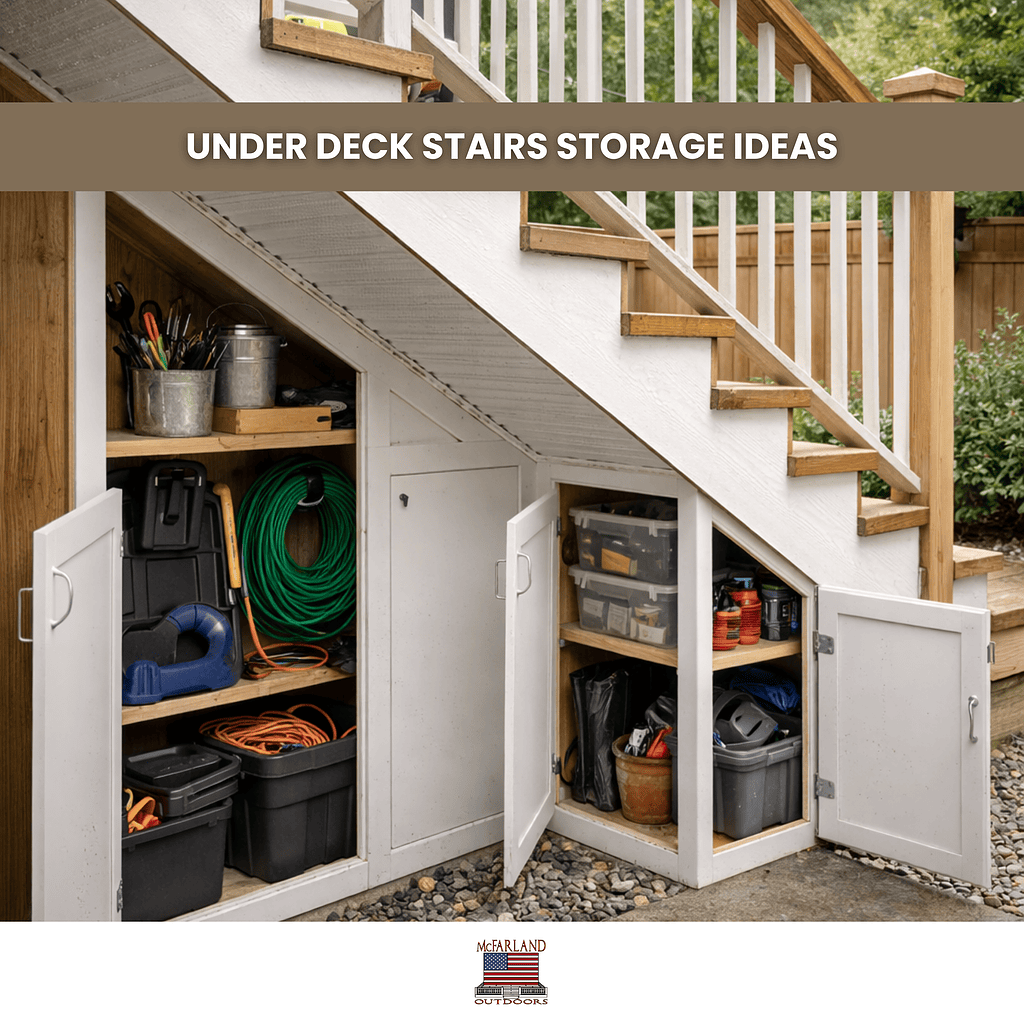
The space beneath deck stairs is often overlooked, yet it is one of the most accessible areas for storage.
Built-in stair drawers and hinged compartments work well for:
- Hand tools
- Sports equipment
- Small seasonal items
Firewood storage is also effective under stairs, provided the design allows airflow. Slatted racks perform better than sealed boxes, keeping wood dry while preventing mold.
Clearance and access are critical. Doors and drawers should open fully without blocking walkways or stair use.
Storage Ideas for Low-Clearance Decks
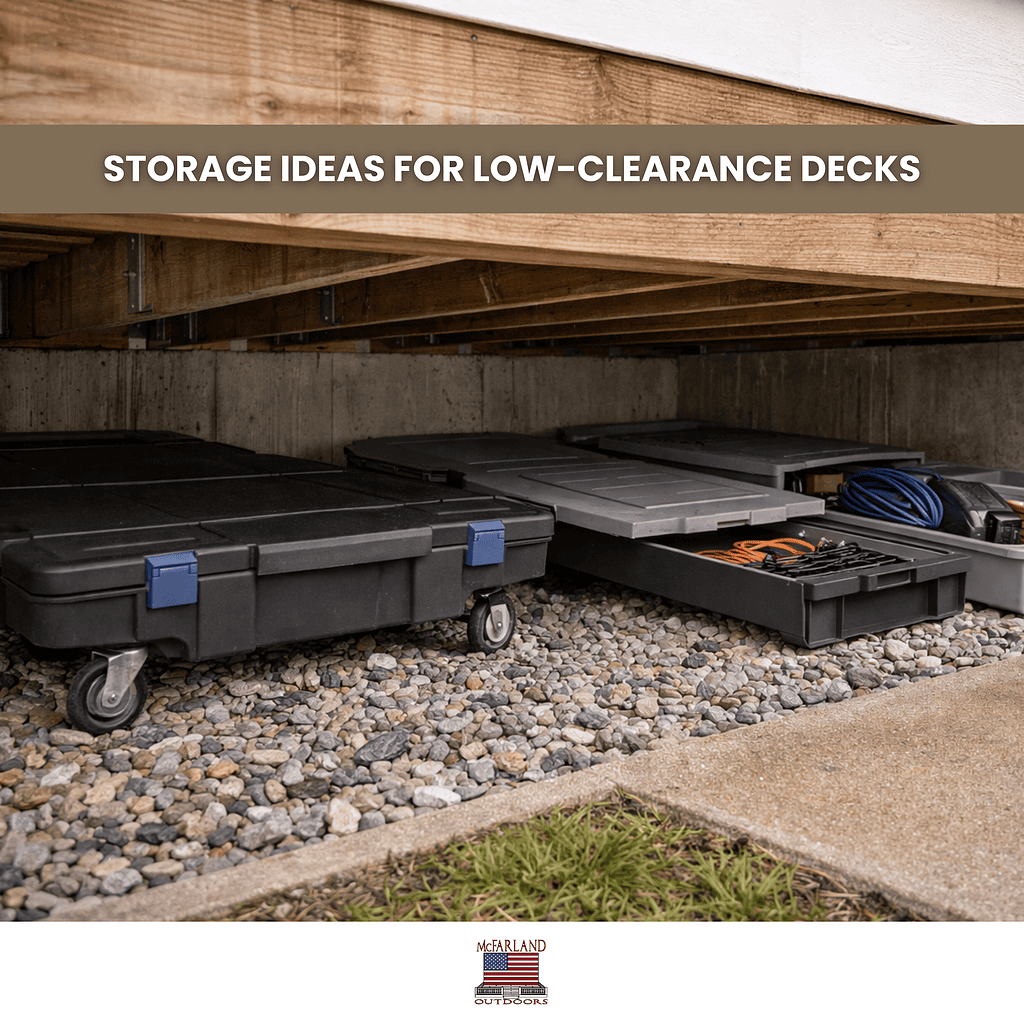
Low-clearance decks require restraint.
The most reliable solutions include:
- Slide-out drawers that allow access without crawling
- Rolling storage bins made from weather-resistant materials
- Low-profile deck boxes positioned on pavers or rails
Fully enclosed rooms almost always fail in low-clearance environments due to poor airflow and trapped humidity.
Outdoor Deck Storage Ideas That Handle Moisture
Moisture-resistant storage is not the same as waterproof storage.
Open-air racks are ideal for items that can tolerate exposure, while sealed bins work best for cushions and fabrics—only when those bins include vents or breathable materials.
In many cases, movable storage outperforms permanent built-ins because it allows seasonal repositioning and easier maintenance.
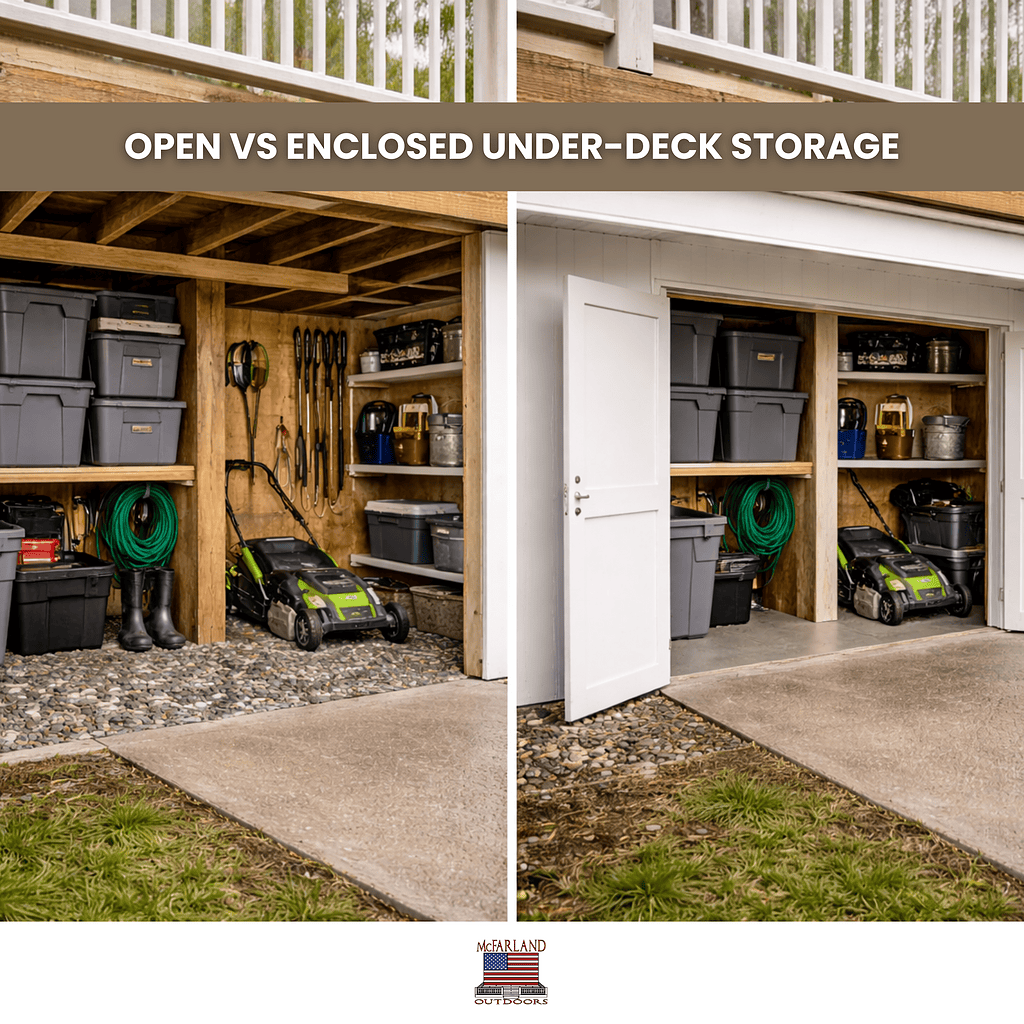
Open vs Enclosed Under-Deck Storage
Enclosed storage offers visual appeal and added security, but it comes with tradeoffs.
Pros:
- Cleaner appearance
- Better concealment
- Improved organization
Cons:
- Higher cost
- Greater mold risk
- Requires ongoing inspection and ventilation
Vent placement, screened openings, and elevated floors are essential for enclosed spaces to function properly.
What to Store (and What Not to Store) Under a Deck
Items that tolerate moisture and temperature swings include:
- Firewood (properly racked)
- Bikes
- Hoses and irrigation gear
- Grills and lawn equipment
Items that should never be stored under a deck include:
- Cardboard or paper goods
- Electronics
- Unsealed fabrics
- Chemicals sensitive to heat or cold
Group frequently used items near access points and store seasonal items deeper inside.
Common Under-Deck Storage Mistakes to Avoid
- Blocking airflow with solid skirting and no vents
- Ignoring natural drainage paths beneath the deck
- Overbuilding storage without planning access
- Assuming waterproof systems require no maintenance
Most failures stem from poor planning, not poor materials.
When to DIY vs When to Call a Contractor
DIY projects are well-suited for:
- Rolling bins
- Open shelving
- Drawer kits
- Basic racks
Professional help is recommended for:
- Drainage system installation
- Enclosed storage rooms
- Structural modifications
- Electrical or lighting additions
Guidelines from the International Residential Code often influence clearance, ventilation, and structural requirements, so local regulations should always be reviewed.
Conclusion
The best under deck storage ideas are the ones that acknowledge reality. Water moves. Air matters. Access determines whether storage is useful or frustrating.
By choosing solutions that match your deck height, climate, and maintenance tolerance, the space under your deck can become one of the most practical storage areas on your property.

Proven business leader with a strong track record of founding, growing, and scaling successful small businesses. Experienced in building companies from the ground up, driving sustainable growth, and leading teams through all stages of development. In the past year, led the delivery of 45+ custom deck projects. Skilled in identifying new business opportunities, developing and mentoring talent, and managing the full scope of daily operations—from sales and pricing strategy to financial oversight and execution. Known for operational excellence, strong financial acumen, and a continuous-improvement mindset that drives performance across every area of the business.