
Winter is the season that quietly destroys more decks than any other. Freeze–thaw cycles force moisture deep into wood fibers. Composite boards become brittle in extreme temperatures. Ice expands between boards, pushing them apart. And most homeowners don’t realize the damage until spring – when repairs are expensive and preventable.
At McFarland Outdoors, we build and maintain decks that survive Indiana winters year after year. This guide breaks down the real winter deck maintenance tips you need, supported by building science, industry best practices, and on-site experience.
If you follow the steps below, your deck will stay safe, stable, and beautiful through even the toughest winter.
Why Winter Deck Maintenance Matters More Than You Think
Winter is brutal on decking materials for three key reasons:
Freeze–Thaw Cycles
When water penetrates boards or hardware areas, it freezes → expands → and forces fibers apart. Over an entire winter, this cycle can:
- Split wood
- Warp boards
- Loosen fasteners
- Damage composite caps
Moisture Traps
Snow, ice, debris, rugs, and planters trap moisture against the surface. Result?
- Mold
- Mildew
- Tannin stains
- Early rot
Material Differences: Wood vs. Composite
- Wood decks absorb water → susceptible to rot, swelling, splitting.
- Composite decks resist moisture but are vulnerable to cold-weather brittleness and surface scratching.
- PVC decks handle moisture well but still scratch easily if snow removal is done incorrectly.
Essential Winter Deck Maintenance Tips: Clear Debris Before Snow Locks It In
Leaves, pine needles, sticks, and dirt are winter’s perfect storm:
- They hold moisture against the surface
- They create tannin stains
- They trap water between boards
- They accelerate rot in hidden areas
Key spots most homeowners miss:
- Board gaps
- Joist spacing beneath stair treads
- Ledger board area
- Corners of low-airflow decks
Quick Tip:
Use a leaf blower for speed and thoroughness.
Inspect the Structure Before Temperatures Drop
Winter punishes every flaw you ignore.
A professional-level inspection should include:
Ledger Board
The #1 failure point for decks. Look for:
- Soft wood
- Rusted fasteners
- Poor flashing
Water intrusion here becomes catastrophic when freezing expands it.
Joists & Beams
Check for:
- Splitting
- Sagging
- Mold
- Early rot
Fasteners & Hardware
Indiana winters accelerate corrosion – especially when homeowners have used ice melt in past years. Replace any:
- Rusting joist hangers
- Corroded screws
- Loose structural bolts
A 2023 NADRA (North American Deck & Railing Association) study showed that over 90% of deck failures begin with connection failure – not the boards. This is the inspection that prevents yours.
Surface Protection: Seal Wood & Maintain Composite the Right Way
For Wood Decks
Unsealed wood is defenseless in winter.
Seal in late summer or early fall – never during winter, when cold prevents proper curing.
A high-quality penetrating sealant:
- Blocks water absorption
- Reduces freeze-thaw damage
- Prevents splitting
- Preserves deck life
If you haven’t sealed yet and temperatures are below 50°F, do not attempt it – wait for spring.
For Composite Decks
“Low maintenance” ≠ “no maintenance.”
Composite decks still need:
- Regular sweeping
- Mold/mildew removal
- Gentle winter cleaning
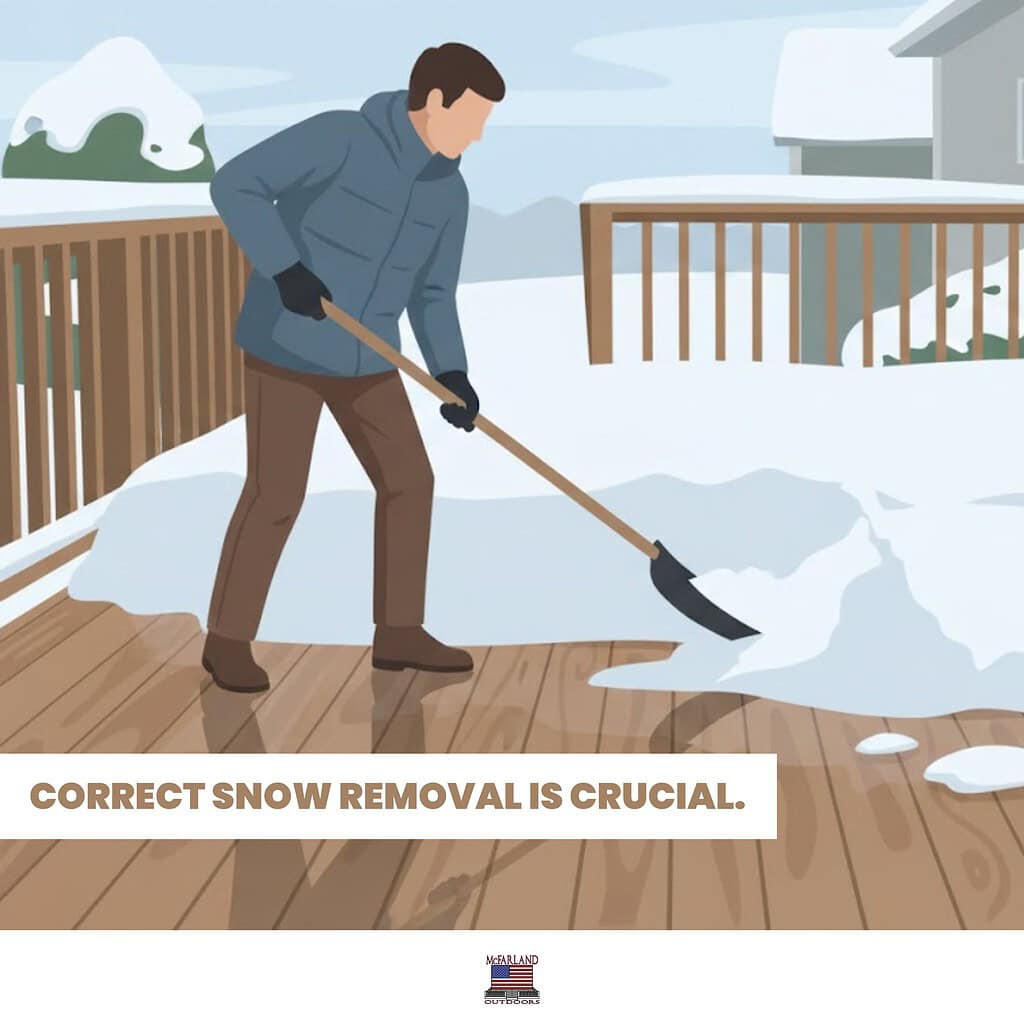
Composite caps become more brittle in freezing temperatures, making correct snow removal crucial.
Remove Furniture, Rugs & Planters
Anything that sits flat on a deck in winter traps moisture.
What gets damaged:
- Wood → rot rings, mold, discoloration
- Composite → trapped debris stains, mildew patches
- Metal furniture → rust leaches into boards
Store indoors or use breathable covers.
Avoid plastic covers directly against deck boards – they trap moisture underneath.
Winter Deck Maintenance Tips for Snow Removal
Here’s the truth: most snow removal damage happens because of the tool, not the snow.
How Homeowners Destroy Their Deck Without Realizing It?
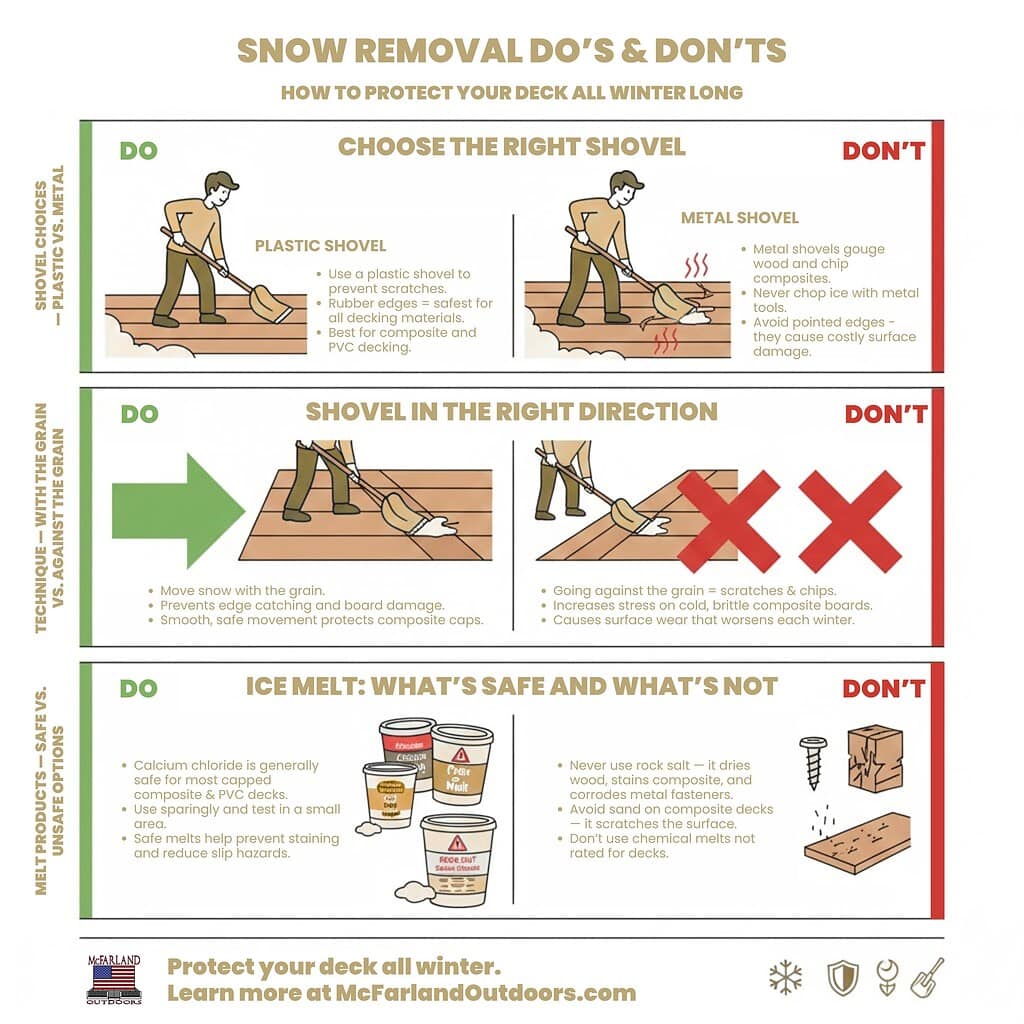
Correct Method
✔ Use a plastic shovel (rubber edge if possible)
✔ Move snow with the grain of the boards
✔ Sweep light, powdery snow with a broom or leaf blower
✔ Remove snow before it compacts and freezes
Never Do This
✘ Use metal shovels (they gouge wood & composite)
✘ Chop ice with picks or axes
✘ Drag snow sideways across boards
What About Ice Melt?
This is where most online guides contradict each other. Here’s the unified, expert-backed truth:
- Rock salt (sodium chloride): NEVER use it – damages wood fibers, stains composite, corrodes fasteners.
- Calcium chloride:
- Safe for most capped composites and PVC decks
- NOT safe for wood
- Always test a small area first
- Sand:
- Provides traction
- BUT can scratch composite
- Best used only on wood if traction is critical
Protect the Ledger: The Hidden Task That Prevents Deck Failure
Ice dams near the house can force water behind the ledger board. If it freezes?
The expansion can:
- Lift flashing
- Push water into structural wood
- Cause complete ledger rot
- Lead to total deck collapse in spring
Preventative steps:
- Ensure gutters are cleared
- Add snow guards if your roof dumps snow onto the deck
- Inspect flashing annually
- Keep the ledger area clear of snow & ice
This is the most overlooked winter deck maintenance tip and the one with the highest stakes.
Check Railing & Hardware Movement Throughout Winter
As temperatures shift, materials expand and contract at different rates.
Signs of concern:
- Wobbly railings
- Loose balusters
- Fasteners backing out
- Creaking when weight is applied
If these appear mid-winter, the deck is under stress and it’s warning you.
Monthly Winter Deck Checks That Prevent Spring Repair Bills
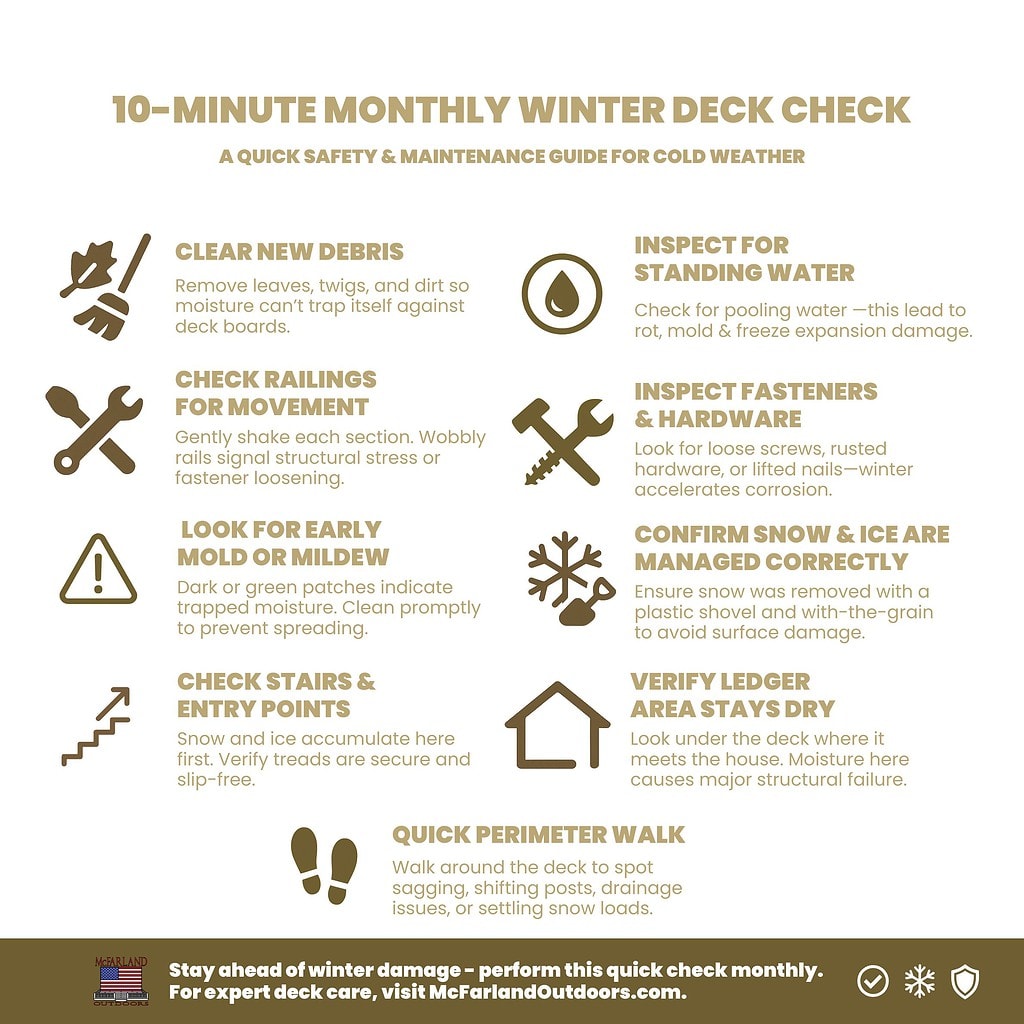
Your winter routine should take 10 minutes a month:
- Look for early mold or mildew
- Check for board cupping or heaving
- Sweep away new debris
- Inspect stairs for ice buildup
- Verify railings remain tight
- Confirm water isn’t pooling
Small changes caught early prevent structural failure later.
When Winter Deck Maintenance Is Not Enough
Contact a professional if you notice:
- Soft or spongy ledger area
- Significant board warping
- Persistent standing water
- Loose structural connections
- Heaving or sagging areas
- Railing instability
Winter magnifies underlying issues – don’t ignore them.
McFarland Outdoors can inspect, repair, or upgrade your deck to handle Indiana winters with confidence.
Final Takeaway
Ignoring winter deck maintenance isn’t just a cosmetic issue – it’s structural. With the right preparation, safe snow removal practices, and ongoing checks, your deck can survive harsh Midwest winters and stay in top condition for years.
If you found these winter deck maintenance tips helpful, share it – or reach out to McFarland Outdoors for expert deck maintenance, repairs, or upgrades.
Winter deck maintenance determines whether your deck lasts or fails!

Proven business leader with a strong track record of founding, growing, and scaling successful small businesses. Experienced in building companies from the ground up, driving sustainable growth, and leading teams through all stages of development. In the past year, led the delivery of 45+ custom deck projects. Skilled in identifying new business opportunities, developing and mentoring talent, and managing the full scope of daily operations—from sales and pricing strategy to financial oversight and execution. Known for operational excellence, strong financial acumen, and a continuous-improvement mindset that drives performance across every area of the business.