
Comparing deck materials for an Indianapolis home can feel overwhelming, especially when different sources offer conflicting recommendations. Indiana’s mix of freeze–thaw cycles, humidity, shade, and strong summer sun puts unusual stress on outdoor materials, which means many “popular” options don’t perform as well here as homeowners expect.
This guide brings clarity to that decision. You’ll find a straightforward, research-based comparison of PVC, composite, hardwood, and wood decking, along with realistic long-term cost expectations and insights tailored to Indiana’s climate. The goal is simple: to help you choose the material that will provide the best performance, value, and longevity for your home.
Why Indianapolis Climate Eliminates Half Your Options
Indiana isn’t a “four seasons” state. It’s a high-stress environment for outdoor materials:
- Freeze–thaw cycles expand and contract decking
- Humidity + shade accelerate mold and rot
- UV exposure fades unprotected materials
- Spring/fall temperature swings move boards and open joints
- Snow and ice soak low-quality wood for months
- De-icing salts attack cheap metals and boards
A study by Purdue University’s Department of Agricultural & Biological Engineering documented how freeze–thaw cycles increase decay rates in untreated softwoods by up to 44%.
If you choose poorly, Indiana climate will expose shortcuts fast.
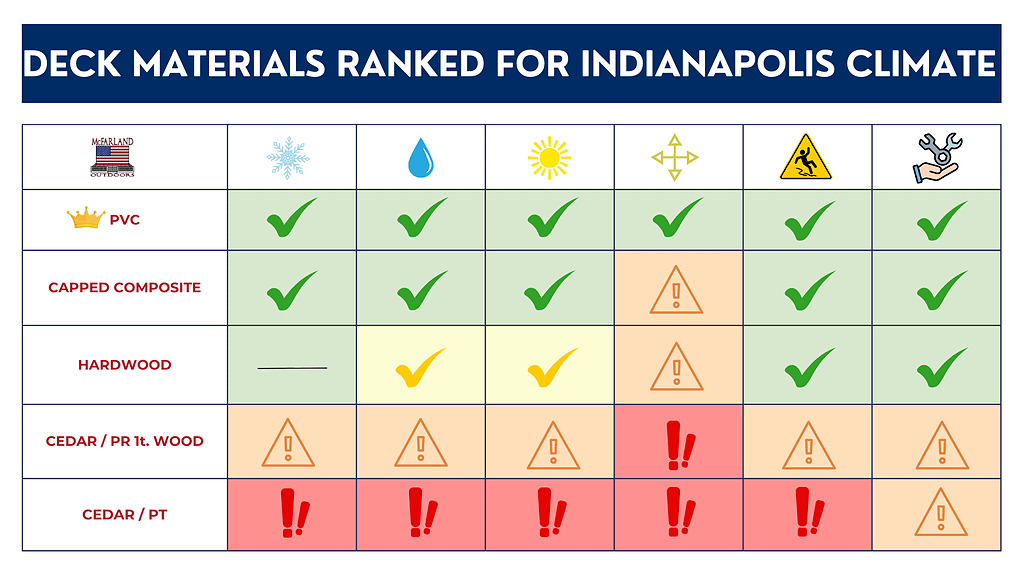
Indianapolis Deck Material Ranking 2025
Here’s the blunt hierarchy most contractors won’t say out loud:
- PVC (highest performance)
- Capped Composite
- Modified Wood (Thermally/Acetylated)
- Dense Hardwoods (Ipe, Cumaru)
- Cedar (mid performance, high maintenance)
- Pressure-Treated Pine (lowest performance)
PVC is 100% synthetic, meaning zero organic material = minimal mold, minimal movement, maximum longevity.
Why PVC Excels in Indiana:
- Best moisture resistance for Indiana humidity
- Lowest expansion/contraction swing when installed correctly
- Doesn’t rot, warp, cup, or invite insects
- Resists freeze–thaw damage better than wood
- Easy maintenance: soap + water
TimberTech Advanced PVC consistently ranks at the top due to full polymer encapsulation and Class A fire rating.
Downsides:
- Higher upfront cost
- Can feel warmer underfoot in full sun
- Requires precise installation for movement gaps
Use PVC if: Your yard is shaded, humid, around a pool, or backed by trees — basically: most Indianapolis yards.
Capped Composite – The Best All-Around Value for Most Indianapolis Homes
Capped composite decking blends wood fibers with plastic, covered by a protective polymer shell. This is what 70%+ of Indianapolis homeowners ultimately choose.
Why Composite Performs Well in Indianapolis:
- Resistant to rot, mold, and insects
- Far more stable than wood
- Protected cap prevents fading and staining
- Huge style/color options
- Affordable compared to PVC
Brands like Trex and TimberTech Composite dominate the Midwest because they’re proven in freeze–thaw regions.
TimberTech vs Trex (Real Differences That Matter):
| Feature | TimberTech Composite | Trex Composite |
| Cap Coverage | 4-sided | 3-sided |
| Scratch Resistance | High | Moderate |
| Moisture Resistance | Higher | Moderate |
| Price | Premium | Budget-friendly |
Downsides:
- Slightly heavier movement than PVC
- Can scratch (depending on brand/line)
- Dark colors heat up in July
Use composite if: you want a low-maintenance, long-lasting deck without PVC pricing.
Modified Wood – The Only Natural Wood That Handles Indiana Without Drama
Modified woods are heated/treated at the cellular level to reduce moisture absorption.
Strengths:
- More dimensionally stable than cedar/PT
- Nice natural aesthetic
- Fewer gaps open during freeze–thaw cycles
- Lower maintenance than cedar
Weaknesses:
- Must still be sealed for color retention
- Availability varies
- Costs more than cedar
Use modified wood if: you love the real-wood aesthetic but hate real-wood headaches.
Hardwood Decking – Strong Overkill for Some Homes
Hardwoods are extraordinarily durable — but require expert installation and annual oiling if you want to maintain color.
Strengths:
- 40–50+ year potential lifespan
- Incredible density and wear resistance
- Gorgeous natural appearance
Weaknesses:
- Expensive
- Heavy movement if not ventilated
- Needs oiling to avoid graying
- Hard on tools, requires predrilling
Use hardwood if: You don’t mind maintenance and want a luxury aesthetic with decades of longevity.
Cedar – High Maintenance Wood in Indiana
Cedar performs well in dry, stable climates. Indianapolis is neither.
Strengths:
- Lightweight
- Attractive grain and color
- Cooler underfoot
Weaknesses:
- Susceptible to moisture and shade rot
- Needs sealing every 2–3 years
- Fades fast
- Can cup and split under freeze–thaw cycles
Cedar can work — but only elevated, ventilated, and maintained.
Pressure-Treated Pine — Cheap Upfront, Expensive Long-Term
Here’s the truth: PT lumber looks like a bargain until it isn’t.
Real Issues in Indiana:
- Highest movement under freeze–thaw
- Splintering, checking, twisting
- Requires annual cleaning + sealing
- Boards often need mid-life replacement
A 20-year cost-of-ownership analysis from the North American Deck & Railing Association (NADRA) shows PT decks often cost more than composite over time.
Use PT only if budget demands it.
20-Year Cost Comparison for Indianapolis (Realistic)
| Material | Upfront Cost | 20-Year Cost | Maintenance Hours | Notes |
| PVC | $$$$ | $$$ | Lowest | Best overall ROI |
| Composite | $$$ | $$$ | Low | Most common choice |
| Modified Wood | $$$ | $$$$ | Medium | Needs sealing |
| Hardwood | $$$$ | $$$$ | Medium-high | Premium but high care |
| Cedar | $$ | $$$$ | High | Beauty comes at a cost |
| Pressure-Treated | $ | $$$$ | Highest | Least stable |
Deck Material Recommendations by Indianapolis Yard Type
- Shaded or Tree-Covered Yards: PVC or capped composite perform best since they resist moisture, mold, and constant shade exposure far better than natural wood.
- Full Sun, High Heat Areas: Light-colored composite or modified wood stay cooler underfoot and handle UV exposure without excessive fading or warping.
- Pool or Hot Tub Decks: PVC is the safest choice thanks to its superior slip resistance and full moisture immunity.
- Budget-Friendly Projects: A pressure-treated frame with a composite surface gives a solid balance of durability and upfront affordability.
- Low-Maintenance Homes: Composite or PVC offer the most hands-off ownership with minimal yearly upkeep.
- High-End or Luxury Builds: Ipe, other dense hardwoods, or TimberTech Advanced PVC deliver long-term performance with a premium finish.
Conclusion
Choosing the right decking material in Indianapolis isn’t about trends — it’s about surviving humidity, freeze–thaw, UV exposure, and long winters.
Now you have a clear comparison, real data, and a ranked list that cuts through the marketing noise.
If you found this useful, share it or bookmark it — and when you’re ready to build, McFarland Outdoors brings the climate expertise to ensure your deck performs for decades.
Proven business leader with a strong track record of founding, growing, and scaling successful small businesses. Experienced in building companies from the ground up, driving sustainable growth, and leading teams through all stages of development. In the past year, led the delivery of 45+ custom deck projects. Skilled in identifying new business opportunities, developing and mentoring talent, and managing the full scope of daily operations—from sales and pricing strategy to financial oversight and execution. Known for operational excellence, strong financial acumen, and a continuous-improvement mindset that drives performance across every area of the business.