
Deck lighting is one of those upgrades people wish they’d done sooner. Done right, it turns a deck into a true outdoor living space—safer, more usable, and dramatically more inviting after sunset. Done wrong, it’s glare-heavy, short-lived, and frustrating to maintain.
This guide merges the best ideas, design principles, and real-world lessons from professional installers and high-performing inspiration content—then goes further. You’ll get deck lighting ideas that look great, work at night, and hold up over time.
If you’re planning a new deck or upgrading an existing one, this is the playbook trusted by experienced builders like McFarland Outdoors, who integrate lighting into decks, pergolas, and outdoor kitchens from day one.
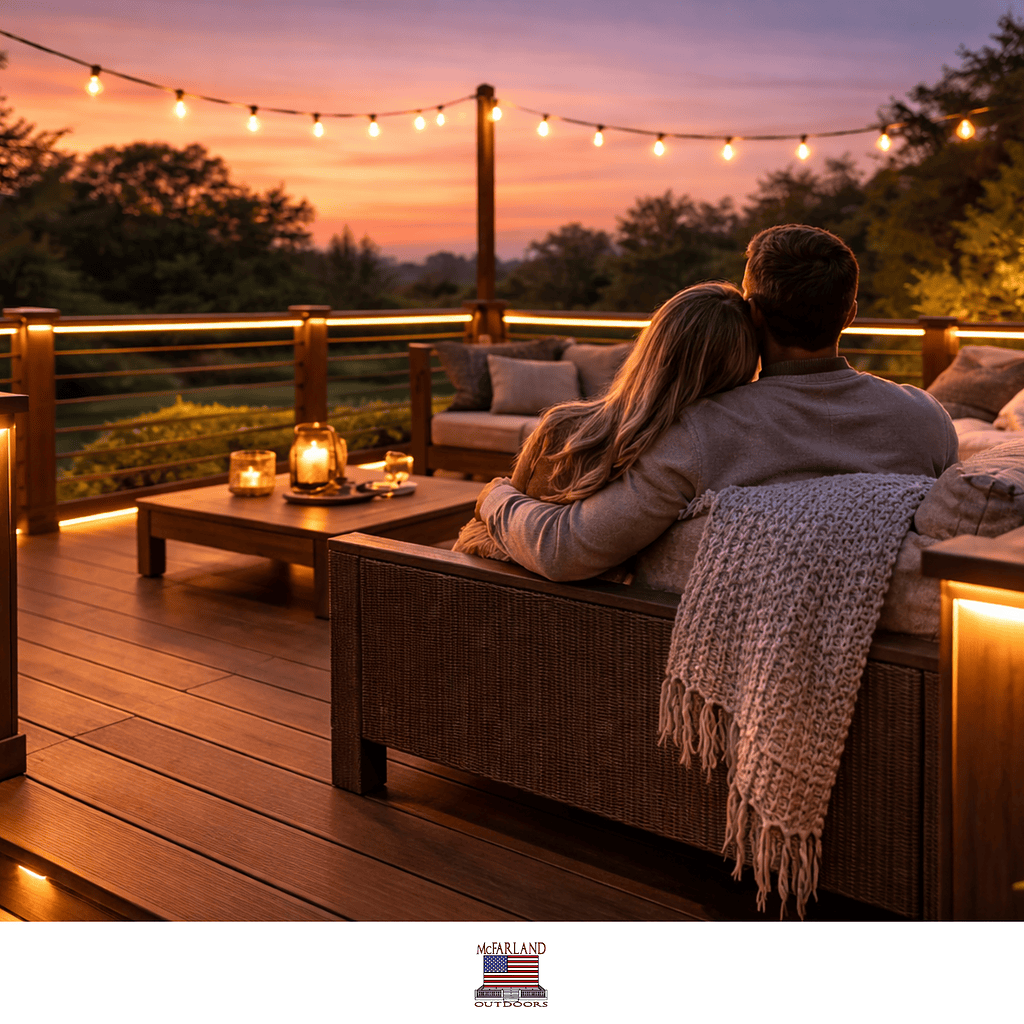
Why Deck Lighting Is a Must-Have for Your Outdoor Living Area
Deck lighting is not decorative fluff. It solves real problems related to safety, usability, and how your outdoor space actually feels once daylight disappears.
Safety (Non-Negotiable)
- According to the International Code Council, falls are one of the most common outdoor residential injuries, and poor visibility is a major contributing factor.
- Stair edges, elevation changes, and surface transitions require consistent, low-glare illumination to reduce the risk of missteps and falls, especially at night.
Usability (The Hidden ROI)
- Proper deck lighting can extend usable outdoor time by three to five hours per day during warmer months, effectively increasing how often the space is used.
- Evening dining, entertaining, and quiet downtime all rely on balanced lighting that provides visibility without overwhelming the space, which is why floodlights are rarely the right solution.
Atmosphere (What People Actually Remember)
- Warm, layered lighting creates a sense of enclosure and comfort that makes the deck feel intentional rather than exposed.
- Well-lit decks photograph better, feel more inviting to guests, and leave a stronger impression than spaces that rely on a single overhead light source.
Where Lighting Matters Most
- Stairs and level changes need focused illumination to clearly define footing and elevation differences.
- Railings and perimeters benefit from subtle lighting that establishes boundaries without drawing attention away from the space.
- Seating and dining areas require softer, ambient light that supports conversation and relaxation.
- Transitions to pergolas, outdoor kitchens, or pools should be clearly lit to guide movement and visually connect adjacent spaces.
If you want, I can now tighten this further for conversion-focused blog copy, or sharpen it into a contractor-grade explainer that positions lighting as a must-have upgrade—not an add-on.
Popular Deck Lighting Options (That Designers and Builders Actually Recommend)
Deck Railing Lighting Ideas
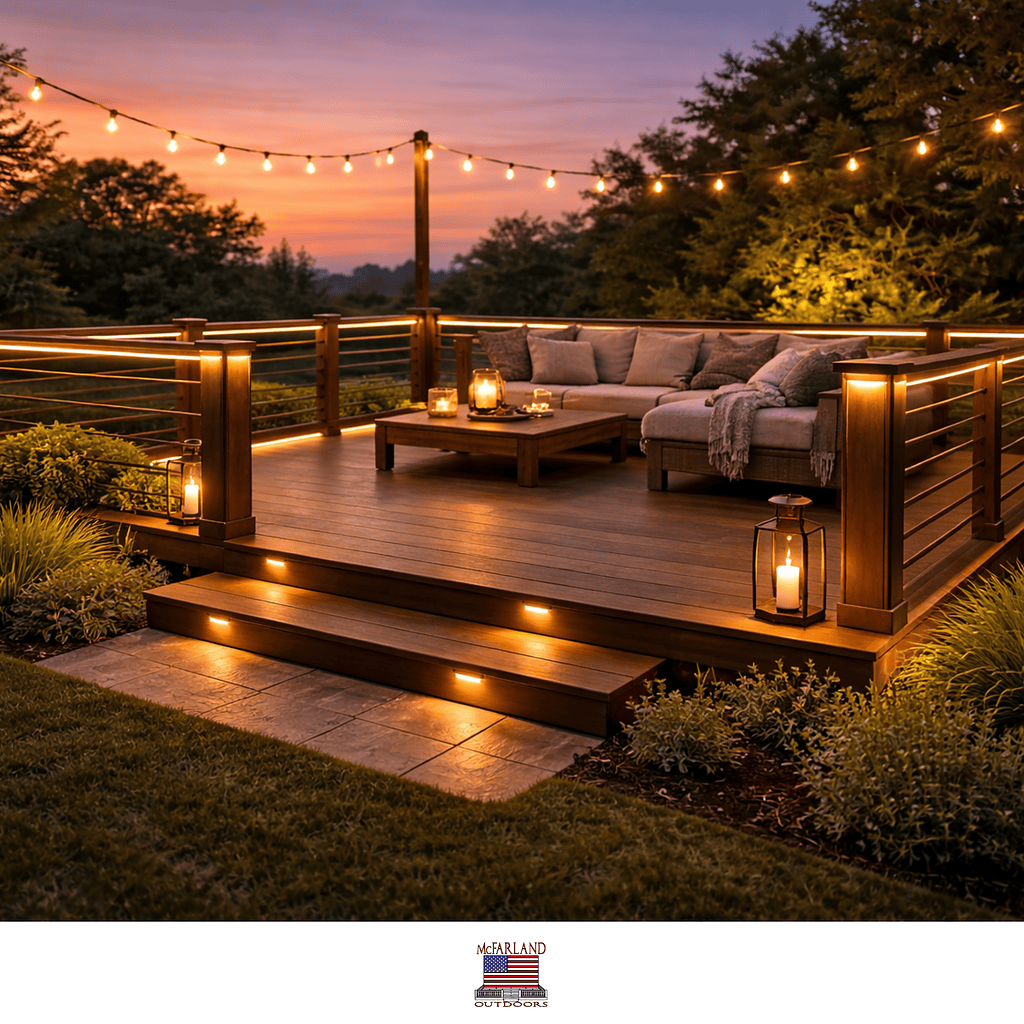
Deck railing lights help define the edge of the deck while providing subtle, ambient guidance without creating harsh or blinding brightness. When done correctly, they improve safety and aesthetics at the same time.
Best options include:
- LED strip lighting installed under top rails, which creates a clean, modern glow that visually outlines the deck.
- Rope lighting, which produces a softer light and works well with more traditional or rustic deck designs.
- Solar railing lights, which are best used as low-maintenance accent lighting rather than a primary light source.
Pro insight: Lights should always be mounted on the inside of the railing to reduce glare, prevent light pollution, and keep illumination directed where it’s actually needed.
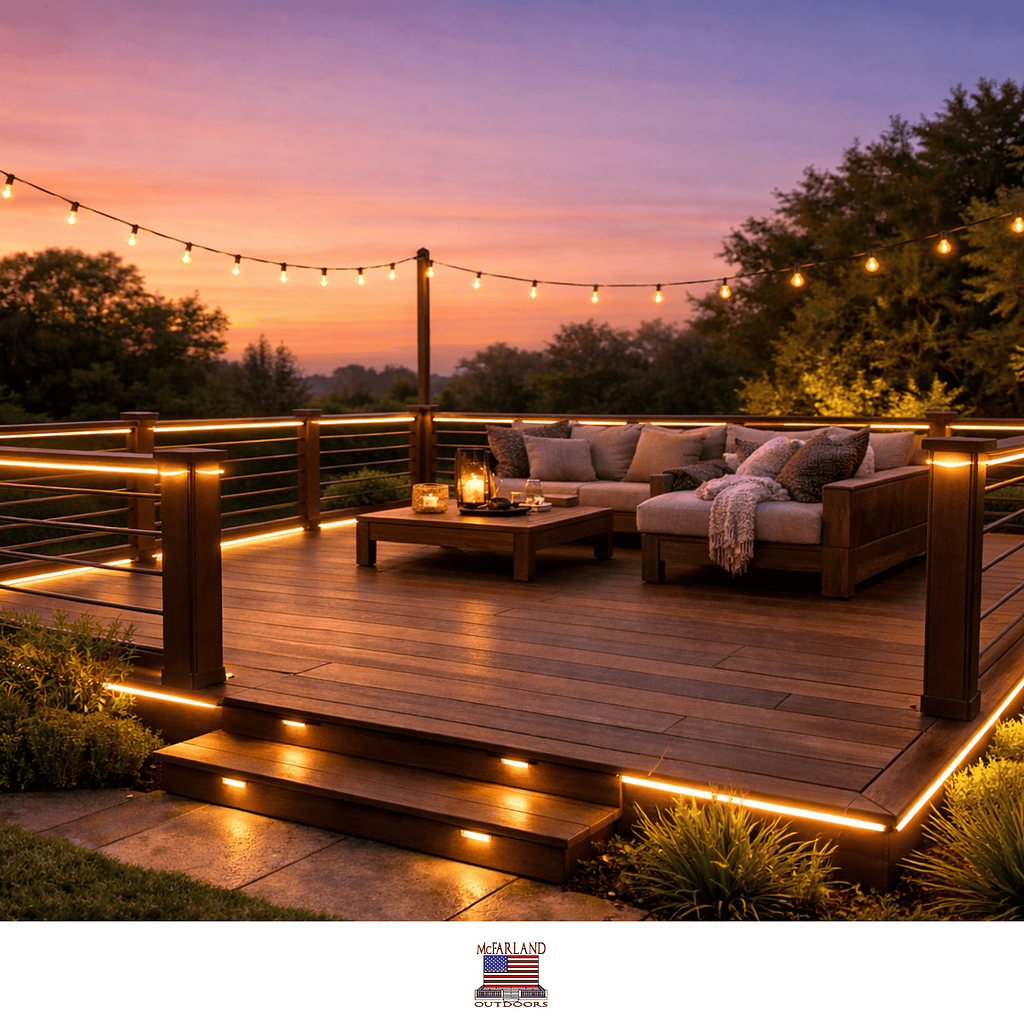
Under-Deck Lighting Ideas
Under-deck lighting is one of the most overlooked upgrades in deck design, yet it often delivers the most dramatic visual impact.
Smart uses include:
- A soft perimeter glow, which creates the illusion that the deck is floating above the ground.
- Task lighting installed beneath benches or pergolas, which adds usable light without cluttering the space.
- Motion-sensor lighting, which improves security and helps with nighttime wayfinding around the deck area.
Design rule: Under-deck lighting should always be indirect. If you can see the bulb itself, the lighting has been installed incorrectly.
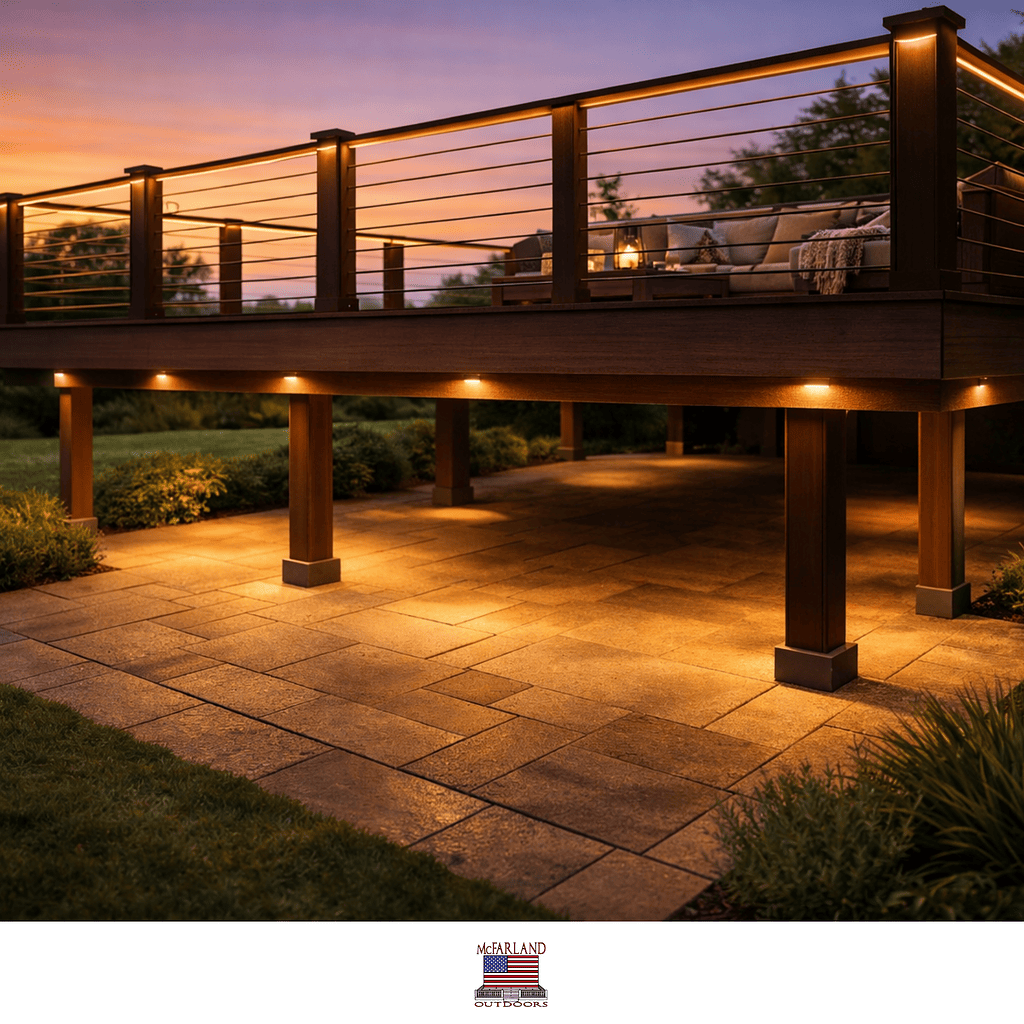
Deck Stair Lighting Ideas
Deck stair lighting should prioritize safety first, but that does not mean it has to look utilitarian or ugly. Well-designed stair lighting improves visibility while blending seamlessly into the deck’s overall design.
Best practices include:
- Recessed LED step lights, which provide a minimalist, low-profile finish while clearly illuminating each tread.
- Side-mounted fascia lights, which reduce eye-level glare and create softer, more comfortable illumination.
- Handrail and step lighting combinations, which work especially well for larger decks or spaces designed for frequent entertaining.
Spacing tip: Installing stair lights every four to six feet provides sufficient visibility without creating an over-lit “runway” effect.
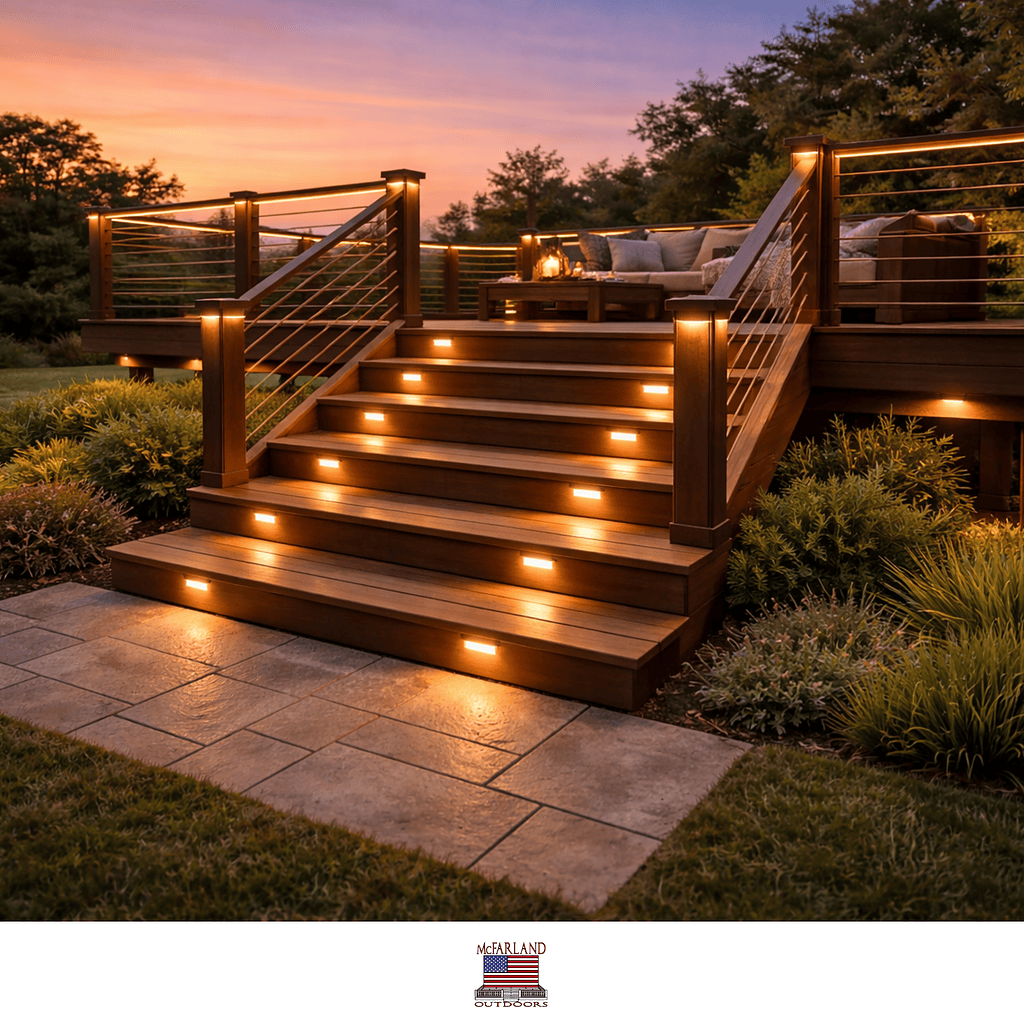
Accent and Decorative Deck Lighting Ideas
Accent lighting adds personality and atmosphere, but it only works when it is layered on top of proper functional lighting. Without a solid lighting foundation, decorative elements quickly feel gimmicky or impractical.
Popular choices include:
- String lights, which are best used over dining areas or lounge zones to create warmth and intimacy.
- Post cap lights, which help visually anchor railings while adding subtle ambient light.
- Smart lighting systems, which allow for dimming and color control to adapt the space for different uses and times of day.
Hard truth: RGB lighting may look impressive on social media, but it often feels cheap in real life. Warm white lighting ages far better and holds up over time.
Tips for Planning Your Deck Lighting Layout (Where Most People Mess Up)
The biggest mistake in deck lighting is relying on a single type of light. A well-designed layout uses multiple layers so the space feels balanced, usable, and intentional.
A proper lighting plan includes:
- Ambient lighting, which provides the overall glow through elements like railings and under-deck lighting.
- Task lighting, which ensures visibility in functional areas such as stairs, cooking zones, and dining spaces.
- Accent lighting, which highlights focal points, textures, and landscaping to add depth and visual interest.
Space Lights Intentionally
More light does not mean better lighting. Poor spacing is one of the fastest ways to ruin both safety and atmosphere.
Common spacing mistakes include:
- Over-lighting, which flattens the space and destroys ambiance.
- Under-lighting, which creates dark shadow pockets and increases trip hazards.
- Improper spacing, when lights are placed randomly instead of with a clear rhythm.
Rule of thumb: For most decks, spacing lights approximately 1.2–1.8 meters (4–6 feet) apart delivers consistent visibility without creating a runway effect.
Prioritize Durability
Outdoor lighting fails far more often due to poor materials and connections than because of the LEDs themselves. Cutting corners here is a guaranteed long-term mistake.
What actually holds up outdoors:
- Marine-grade aluminum fixtures, which outperform stainless steel in wet, exposed environments.
- High-quality wiring and connectors, since cheap components usually fail long before the light source does.
Think About Power Early
Power planning should happen before installation begins, not after lights are already chosen. Ignoring this step leads to voltage drop, limited expansion, and premature system failure.
Smart power planning includes:
- Accounting for distance from the power source, which directly affects performance and voltage stability.
- Choosing systems with longer cable tails and modular connectors, which allow flexibility during installation.
- Sizing transformers with a 25–50% capacity buffer, so the system is not constantly running at its limit.
Working With Professionals for Deck Lighting Installation
Deck lighting looks simple—until it isn’t.
Why professionals matter:
- Electrical code compliance
- Proper transformer sizing
- Clean wire concealment
- Lighting integrated during deck construction (not patched in later)
A local builder like McFarland Outdoors can design lighting decks, pergolas, and outdoor kitchens—so everything works as a system, not an afterthought.
If you’re investing in an outdoor space meant to last decades, lighting deserves the same planning as the structure itself.
Conclusion
Great deck lighting ideas bring together safety, comfort, and design to create an outdoor space that feels welcoming after dark. The best lighting doesn’t call attention to the fixtures—it enhances visibility, defines the deck, and sets the mood naturally.
Whether you’re planning deck railing lighting ideas, under deck lighting ideas, or deck stair lighting ideas, the key is the same: layered lighting, proper spacing, and durable materials. When lighting is planned intentionally, it improves safety while extending how and when you can enjoy your deck.
To bring these deck lighting ideas to life, explore professional deck services or schedule a consultation to design a lighting system that fits your space and lifestyle year-round.

Proven business leader with a strong track record of founding, growing, and scaling successful small businesses. Experienced in building companies from the ground up, driving sustainable growth, and leading teams through all stages of development. In the past year, led the delivery of 45+ custom deck projects. Skilled in identifying new business opportunities, developing and mentoring talent, and managing the full scope of daily operations—from sales and pricing strategy to financial oversight and execution. Known for operational excellence, strong financial acumen, and a continuous-improvement mindset that drives performance across every area of the business.