
Building a deck is an exciting project that can significantly enhance your outdoor living space. Whether you’re planning a simple relaxation spot or a full-scale entertainment area, proper deck planning is essential to ensure your deck meets all your needs, stays within budget, and adheres to local building codes. A well-planned deck can add value to your home, improve your lifestyle, and provide a lasting, enjoyable space for years to come.
In this comprehensive deck planning checklist, we’ll walk you through everything you need to know about planning your deck layout, selecting the right materials, and ensuring your project is up to code. Whether you’re a DIY enthusiast or hiring a contractor, this guide will help you stay organized and on track, while also providing helpful tips and expert insights.
Deck Planning vs. Deck Design: Setting the Context
Planning = Constraints, Structure, and Legality
Deck planning is the practical phase where you establish the boundaries and requirements for your deck’s construction. This step focuses on ensuring that your deck adheres to all necessary legal requirements, such as building codes, permits, and zoning restrictions. Planning also involves considering structural constraints, including soil conditions, the foundation, weight load, and how your deck will integrate with the existing property.
Without proper planning, even the most beautiful design can face serious setbacks, delays, or worse – failed inspections. It’s essential to understand that planning must always come before design, as it defines what’s possible based on structural realities, budget limitations, and legal requirements.
Design = Aesthetics, Finishes, Styling
On the other hand, deck design is all about the aesthetic appeal. It includes the layout, materials, finishes, and style that make the deck visually appealing. This is where you decide on the deck’s appearance, including color choices, textures, and features such as built-in seating, railings, and lighting.
However, design should never be rushed before planning. Without a clear understanding of the planning constraints (such as space limitations, structural integrity, or local building codes), rushing into the design phase can lead to rework, wasted materials, and project delays.
Why Reversing the Order Causes Rework, Delays, and Failed Inspections
Attempting to design before you plan creates a domino effect of problems:
- Structural limitations: A design based on aesthetics alone may not be feasible given the soil, slope, or existing structures around your property.
- Legal complications: Design choices that conflict with local zoning laws, permit requirements, or building codes can result in inspections failing and costly revisions.
- Wasted time and money: When the deck is designed before proper planning, contractors may need to redo work or discard materials that were chosen based on an incorrect assumption.
Planning before design ensures you stay within legal and structural boundaries, avoiding wasted resources and frustration.
Why You Need a Deck Planning Checklist
Planning to build a deck can be overwhelming. With so many decisions to make, from choosing the right materials to understanding complex building codes, it’s easy to feel lost. This is why a deck planning checklist is crucial.
A good checklist will help you:
- Clarify your goals: Understand the purpose of your deck.
- Navigate technicalities: Comprehend the code requirements and technical details like footings, joists, and beams.
- Stay within budget: Avoid overspending by planning materials and labor costs ahead of time.
- Save time: Create a structured timeline to complete your deck project efficiently.
- Ensure safety and durability: Avoid costly mistakes by ensuring structural integrity and proper design.
Let’s dive into each essential step of planning your deck layout and construction, ensuring that your project is both successful and stress-free.
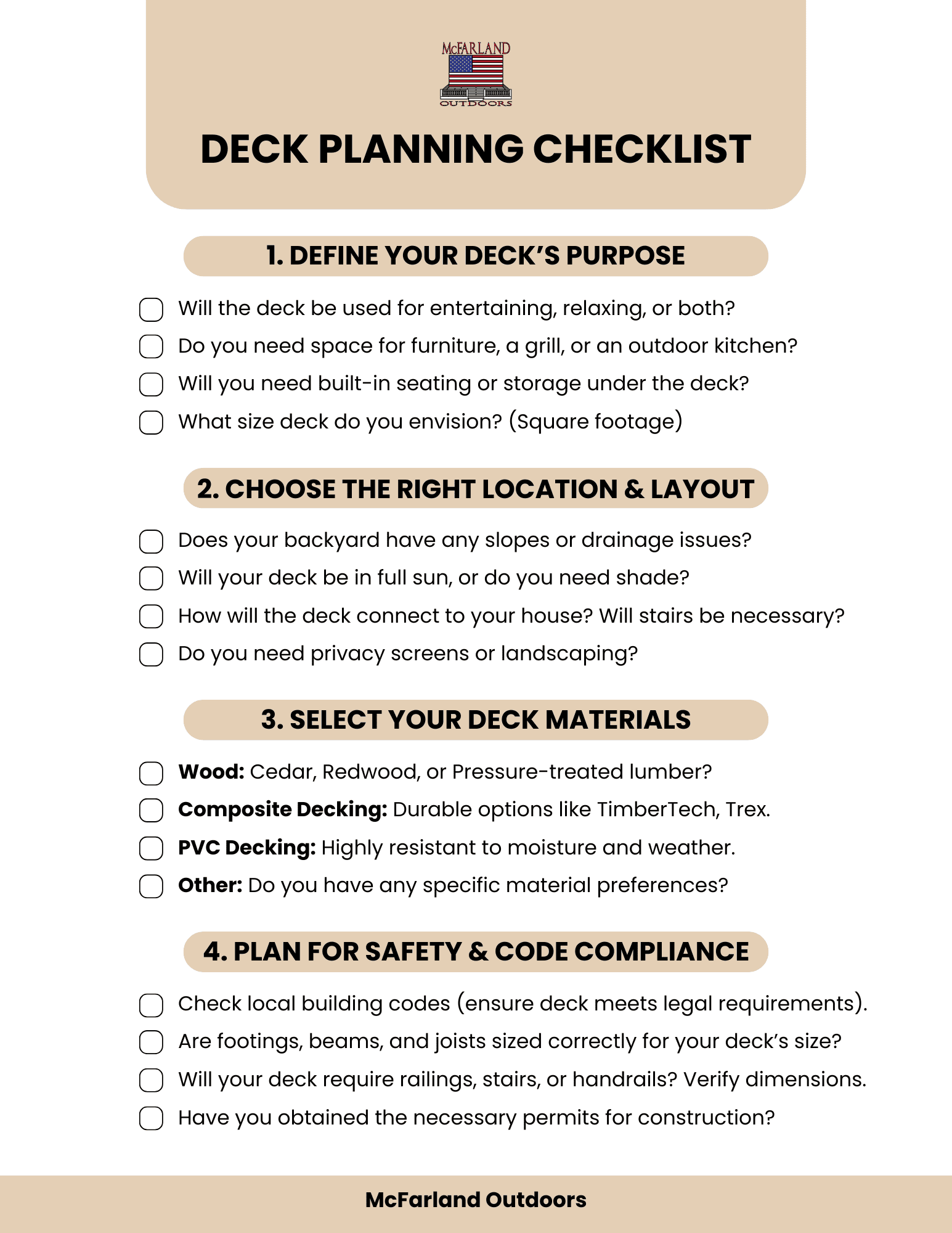
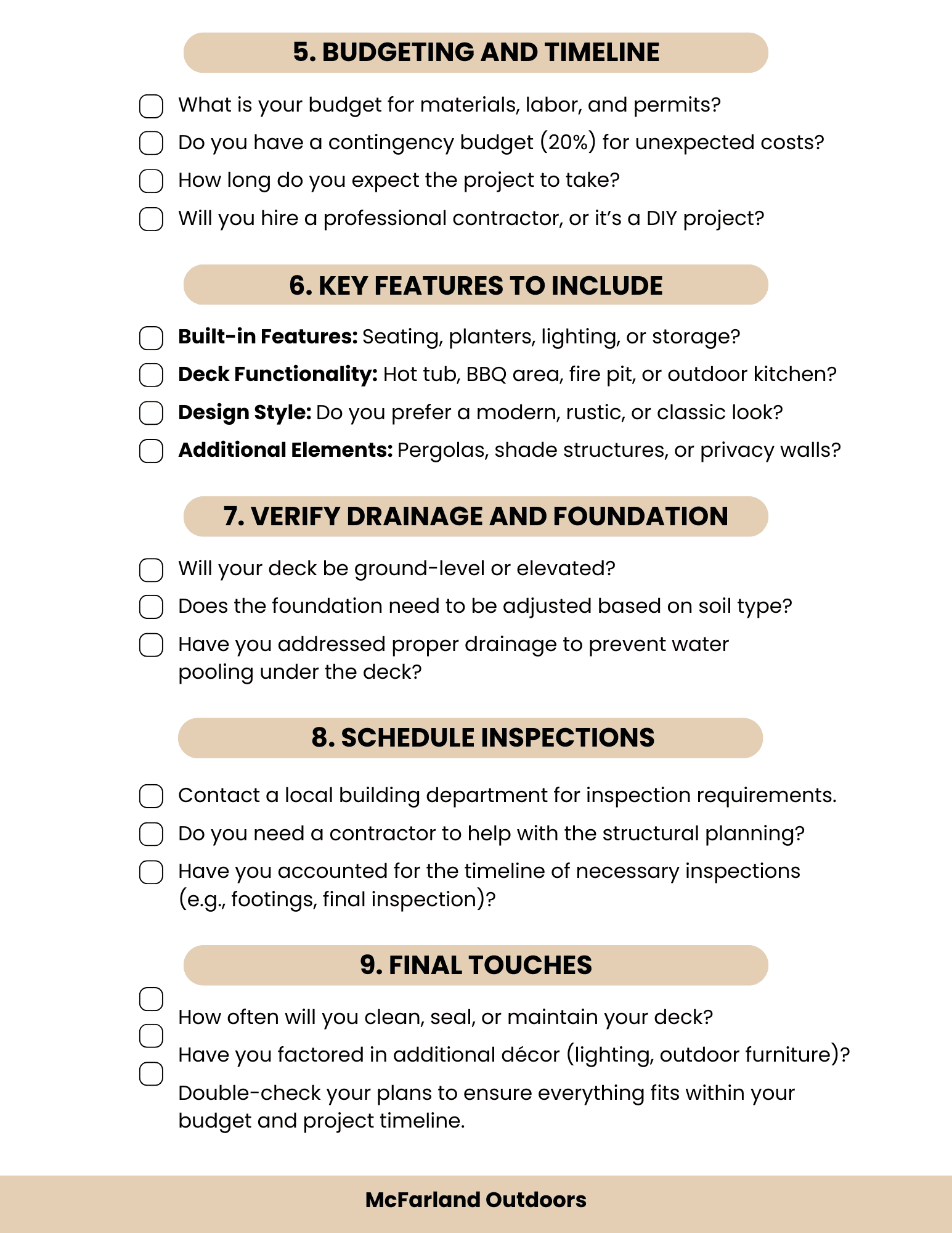
Ready to Start Planning Your Dream Deck?
Download our FREE Deck Planning Checklist now and get all the essential steps, expert tips, and crucial considerations you need to plan the perfect deck!
Whether you’re a DIY enthusiast or working with a professional, this checklist will help you stay organized, avoid common mistakes, and ensure your deck is safe, beautiful, and up to code.
Click below to get started today!
Step 1: Define the Purpose and Layout of Your Deck
Why Defining the Purpose Matters
The first step in planning a deck layout is understanding how you’ll use the space. This will influence every decision you make, from size to materials to design features. Are you planning a quiet spot to sip your morning coffee, or an expansive area for entertaining guests? Knowing this will guide your deck’s size, features, and materials.
Key Questions to Ask Yourself:
- How many people will use the deck regularly?
- Will you be hosting large parties or intimate family gatherings?
- Do you need space for a grill, outdoor kitchen, or fire pit?
- Should your deck be elevated or ground-level?
- Will you include built-in seating, lighting, or other features?
Step 2: Choose the Right Materials
Choosing the right materials is one of the most crucial aspects of deck planning. If you’re weighing durability, maintenance, and long-term value, our wood vs. composite deck comparison for Indianapolis homes breaks down which materials actually perform best in Indiana’s climate.
Key Material Options:
- Wood: Natural woods like cedar and redwood offer a classic look but require more maintenance.
- Composite Decking: Made from wood fibers and plastic, composite decks are low-maintenance and durable, but they come at a higher upfront cost.
- PVC Decking: Synthetic and highly resistant to moisture, PVC decks are perfect for wet or humid climates.
- Pressure-treated Lumber: Budget-friendly, pressure-treated wood is widely available but needs regular sealing.
Tip: Consider your local climate when choosing materials. For example, in humid climates, opt for moisture-resistant materials like composite or PVC to avoid rotting and mold.
Step 3: Understand Deck Codes and Regulations
Ensuring your deck complies with local building codes is crucial for both safety and legal reasons. In Indiana, permit requirements vary by city, deck height, and attachment method, which is why understanding deck permit requirements in Indiana before finalizing your plans prevents failed inspections and costly redesigns.
Key Areas to Address:
- Footings and Foundations: In colder climates, decks need deep footings to prevent shifting during freeze/thaw cycles.
- Deck Size: Local codes may limit the size of your deck or require specific setbacks from property lines or other structures.
- Stairs and Railings: Codes specify the number of steps, railing height, and spacing for safety.
- Permits: Always check with your local building department to obtain the necessary permits and schedule required inspections.
Tip: Consulting with a professional contractor or your local municipality is a smart way to ensure full compliance with all codes and regulations.
Step 4: Plan Your Deck’s Structural Components
The structural integrity of your deck is paramount. This step involves planning the core elements that support your deck, including the footings, ledger boards, beams, and joists.
Footings and Foundation:
- Footings should extend below the frost line in colder climates.
- For detached decks, you don’t need deep footings, but they still need to be stable and anchored properly.
Beams and Joists:
- Beams support the weight of the deck, while joists provide the framework for the decking material.
- The span of the beams and joists will depend on the material and size of your deck.
Tip: When planning your deck, ensure proper weight distribution across beams and joists to avoid sagging or instability over time.
Step 5: Choose Deck Features and Design Details
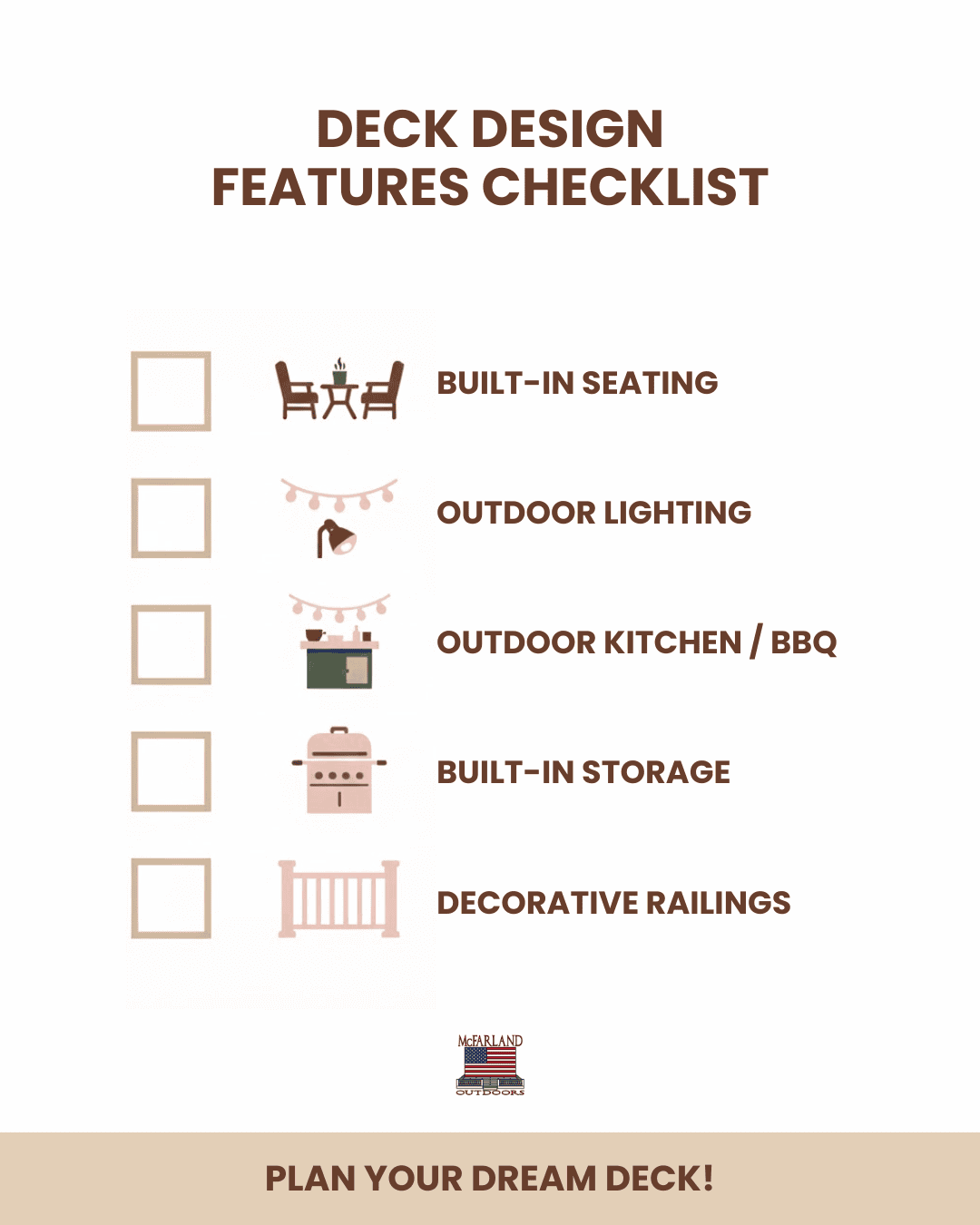
Now comes the fun part – personalizing your deck to fit your style and needs. Think about the features you want to incorporate to make your deck unique and functional.
Popular Features to Consider:
- Built-in Seating: Create an inviting space for guests by adding benches or built-in lounges.
- Outdoor Kitchen: Consider adding a grill, sink, or counter space for cooking and dining outdoors.
- Lighting: Incorporate deck lighting for ambiance and safety, especially around stairs and pathways.
- Privacy Screens: If you’re concerned about neighbors or wind, adding privacy screens or planting hedges could enhance comfort.
Tip: Think about how you’ll use the deck in different seasons – consider adding heating elements or coverings if you want year-round use.
Step 6: Budgeting and Project Timeline
Having a clear budget is essential to avoid unexpected costs. Decks can vary significantly in price depending on size, materials, and features.
Budget Considerations:
- Materials: Prices vary by material type. For instance, composite decking is more expensive than pressure-treated wood.
- Labor: If you’re hiring a contractor, get multiple quotes to compare labor costs.
- Additional Costs: Don’t forget to factor in permits, inspections, and unforeseen issues like soil grading or drainage.
Timeline:
- DIY: If you’re building the deck yourself, plan for 2-4 weeks depending on complexity.
- Contractor: A professional team may complete the deck in a few days to a couple of weeks.
Tip: Always include a buffer in your budget for unexpected costs – around 10-20% is a good rule of thumb.
Common Deck Planning Mistakes: Failure Analysis
Designing Before Constraints
One of the biggest planning mistakes is starting the design process without fully understanding the constraints of your site. If you haven’t accounted for the size of the space, local regulations, or the deck’s structural needs, your beautiful design may not be possible, forcing you to restart.
Ignoring Drainage
Poor drainage can lead to water damage and structural failure. Many homeowners overlook how water will flow around the deck, leading to standing water, rotting materials, and costly repairs. Proper drainage planning ensures long-term durability and protection.
Undersized Framing
An often-overlooked mistake is using undersized framing for the deck’s weight load. Without accurate calculations for the size of posts, beams, and joists, your deck might not hold up over time, leading to sagging, shifting, or even collapse.
Planning Aesthetics Before Physics
Designing your deck without considering the physics of its structure is a critical error. For example, oversized features like a large hot tub or heavy built-in seating can put too much strain on the deck. Always consider the load-bearing capabilities before finalizing design choices.
Underestimating Inspections
Ignoring the need for inspections is a costly mistake. Failing to schedule inspections or neglecting to check that everything is up to code can lead to legal trouble and delays, especially if structural issues are uncovered during the final inspection.
Deck Planning vs. Deck Inspection: Understanding the Process
Planning = Before Build
Deck planning occurs before you even begin building the deck. It sets the groundwork for everything, including how much space you have, what your budget is, what materials you’ll use, and how the deck will align with your home. Proper planning ensures a smooth construction process and sets realistic expectations for the project.
Inspection = Verification
Deck inspections occur at critical points during and after construction to verify that the deck is being built according to code and meets all safety requirements. This can include checking the depth of footings, structural integrity, and ensuring proper materials are being used. Inspections help to catch any potential issues before they become costly problems. Reviewing a professional deck inspection checklist during the planning phase ensures nothing critical is overlooked before construction even begins.
Why Both Are Required
Both deck planning and inspections are required to ensure a safe and successful deck project. Planning provides the structure and framework for the build, while inspections verify that the deck is being built according to those standards. Failing to plan properly or neglecting inspections can result in building code violations, safety hazards, and costly rework.
When to Involve a Professional: Decision Guide
DIY Planning Limits
While it’s entirely possible to plan and build a deck on your own, DIY planning has its limits. If you’re unsure about local building codes, structural integrity, or planning complex features like a multi-level deck or an outdoor kitchen, it’s best to seek professional advice. Professional contractors or engineers can help guide you through the technical aspects of planning your deck.
When Engineers Are Required
If your deck involves elevated platforms, large spans, or complicated designs, an engineer’s input may be necessary. They can calculate the weight load, determine the proper foundation depth, and ensure the deck is structurally sound. Complex designs or challenging environmental conditions (like poor soil or slope) require specialized knowledge.
When Inspectors Should Be Consulted Early
While inspections are generally required after construction, it’s wise to consult an inspector early in the planning stage, especially if you’re unsure about local codes or potential zoning restrictions. They can help ensure your deck design is compliant before you start building, preventing any legal hurdles later.
Conclusion
With this deck planning checklist, you’re now equipped to start the exciting process of building your dream deck. From understanding your needs and choosing the right materials to ensuring compliance with codes and budgeting wisely, this guide has walked you through every essential step.
Remember: a well-planned deck not only enhances your outdoor space but also increases your home’s value. Take the time to carefully consider your design and structure, and your deck will provide lasting enjoyment for years to come.
Share this guide with a friend who’s planning to build a deck, or explore our related resources to learn more about deck materials and trends.

Proven business leader with a strong track record of founding, growing, and scaling successful small businesses. Experienced in building companies from the ground up, driving sustainable growth, and leading teams through all stages of development. In the past year, led the delivery of 45+ custom deck projects. Skilled in identifying new business opportunities, developing and mentoring talent, and managing the full scope of daily operations—from sales and pricing strategy to financial oversight and execution. Known for operational excellence, strong financial acumen, and a continuous-improvement mindset that drives performance across every area of the business.