
Decks are more than just outdoor spaces; they’re investments that need regular upkeep to ensure safety. Deck failures are common and often caused by issues like rot, loose fasteners, or unstable railings. According to the Consumer Product Safety Commission (CPSC), thousands of deck-related injuries happen every year, many of which could be avoided with proper inspections.
Failing to inspect your deck can lead to serious legal and insurance risks. Homeowners may be held liable for injuries, and insurance policies may not cover claims for decks that haven’t been properly maintained. Regular inspections not only protect your investment but also ensure your family’s safety and compliance with local codes..
Do Decks Need to Be Inspected?
Decks are subjected to a lot of stress — from weather conditions to constant foot traffic. Regular inspections can prevent problems before they become serious, but the responsibility often falls on homeowners. Here’s why inspecting your deck regularly is essential:
Homeowner Responsibility vs Municipal Inspections
Municipal inspections are typically required for new builds or major remodels, but homeowners are responsible for ensuring their deck remains safe throughout its lifespan. Whether you have a new or existing deck, conducting regular inspections is a proactive way to protect your family and home.
New Builds vs Existing Decks
While a new deck is typically built to current codes, existing decks can deteriorate due to wear, moisture, or structural issues. The older your deck, the more likely you are to encounter hidden risks, making inspections essential.
Real Estate Transactions
Deck inspections are critical when buying or selling a home. Potential buyers will often request an inspection of the deck to ensure it’s safe and compliant with local codes. If the deck shows signs of damage or neglect, the sale could be delayed or the price could be negotiated down.
Insurance & Liability Exposure
Neglecting deck inspections can lead to insurance issues. If an accident occurs on your deck, insurance companies may refuse coverage if it’s determined that the deck wasn’t maintained to a safe standard. An up-to-date inspection ensures you remain protected.
Age-Based Inspection Recommendations
- 0-5 years: Annual visual inspection, focusing on surface wear and fastener integrity.
- 5-10 years: Semi-annual inspections, focusing on structural elements such as beams and joists.
- 10+ years: Annual inspections, focusing on structural integrity, moisture management, and fastener condition.
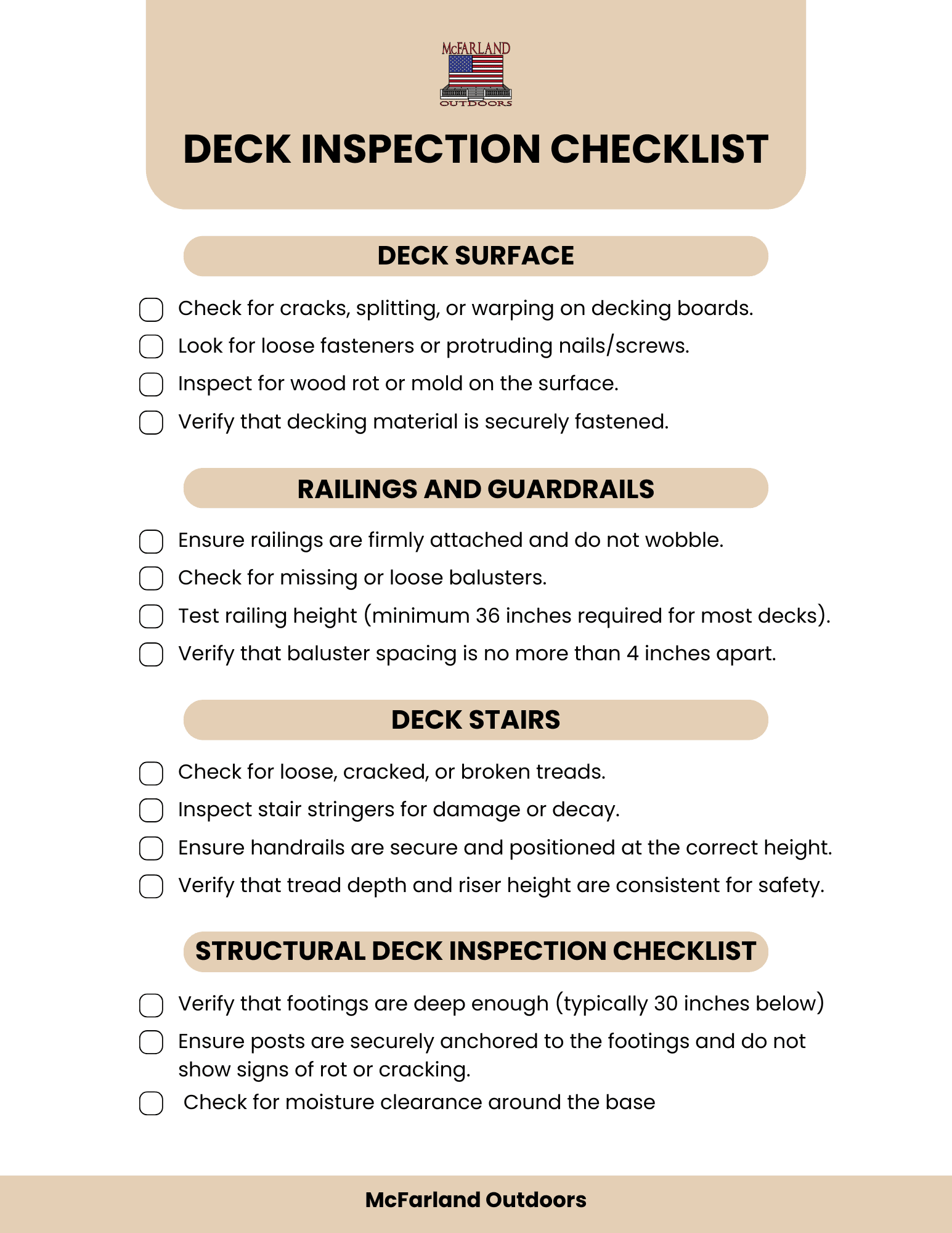
Deck Inspection Process (Start → Finish)
A comprehensive deck inspection is more than a quick once-over. Here’s the process for conducting a thorough deck inspection:
Pre-Inspection Prep
Before starting, gather the necessary tools: flashlight, screwdriver, hammer, measuring tape, and an awl. Have your deck’s blueprint or layout handy for structural checks.
Visual Walk-Through
Walk around the deck and observe it from all angles. Look for obvious signs of wear, such as cracking, warping, or loose components.
Structural Checks
Focus on the core structure — footings, columns, beams, and joists. Ensure everything is securely connected, and there’s no movement or visible decay. Look for gaps or cracks that could compromise stability.
Connection & Load Path Review
Ensure all connections (such as where the ledger board meets the house and the posts meet the beams) are secure and have no visible signs of weakening.
Framing & Substructure Inspection
Check joists, beams, and support posts for signs of rot, sagging, or insect damage. Inspect the soil under the deck to ensure proper drainage.
Surface & Safety Inspection
Inspect the decking (wood or composite) for cracks, rot, or loose fasteners. Make sure railings, stairs, and guardrails are stable and free from damage.
Documentation & Report Creation
Take photos and notes to document any issues you find. This will help you during the repair process and provide documentation for insurance or real estate transactions.
Repair Prioritization & Re-inspection
Classify issues as critical, major, or minor, and prioritize repairs. After completing repairs, schedule a re-inspection to ensure that all issues were properly addressed.
Complete Deck Inspection Checklist
Here’s a detailed deck inspection checklist covering every aspect of your deck’s structure and safety.
Structural Support & Foundation
- Footings: Ensure footings are securely in place and at least 30 inches deep.
- Posts: Look for signs of rot, cracks, or shifting.
- Soil Contact: Ensure no wood is in direct contact with soil.
- Moisture Clearance: Ensure proper drainage away from the foundation.
Deck Framing Inspection Checklist
- Joists: Check for sagging, warping, or insect damage.
- Beams: Look for signs of decay or structural weakness.
- Ledger Board: Ensure it’s securely attached to the house.
- Joist Hangers & Fasteners: Verify proper installation and condition.
- Blocking & Lateral Bracing: Check for secure bracing to prevent swaying.
Deck Surface & Flooring
- Wood vs Composite: Examine for cracking, warping, and loose fasteners.
- Rot & Cracks: Identify any areas of damage.
- Trip Hazards: Check for protruding nails or uneven boards.
Railings & Guardrails
- Stability Testing: Push against the railings to test their stability.
- Fastener Integrity: Check for rust or looseness.
- Baluster Spacing: Ensure no gaps larger than 4 inches.
- Load Resistance: Ensure the railing can withstand 200 lbs of pressure without moving.
Deck Stairs
- Stringers: Inspect for rot or instability.
- Tread Depth & Riser Consistency: Ensure uniform step heights and depth.
- Handrails: Ensure they are secure and positioned correctly.
Flashing & Water Management
- Ledger Flashing: Inspect for water damage or rot.
- Drainage: Ensure water flows away from the deck to avoid foundation erosion.
- Rot Indicators: Look for signs of trapped moisture or mildew.
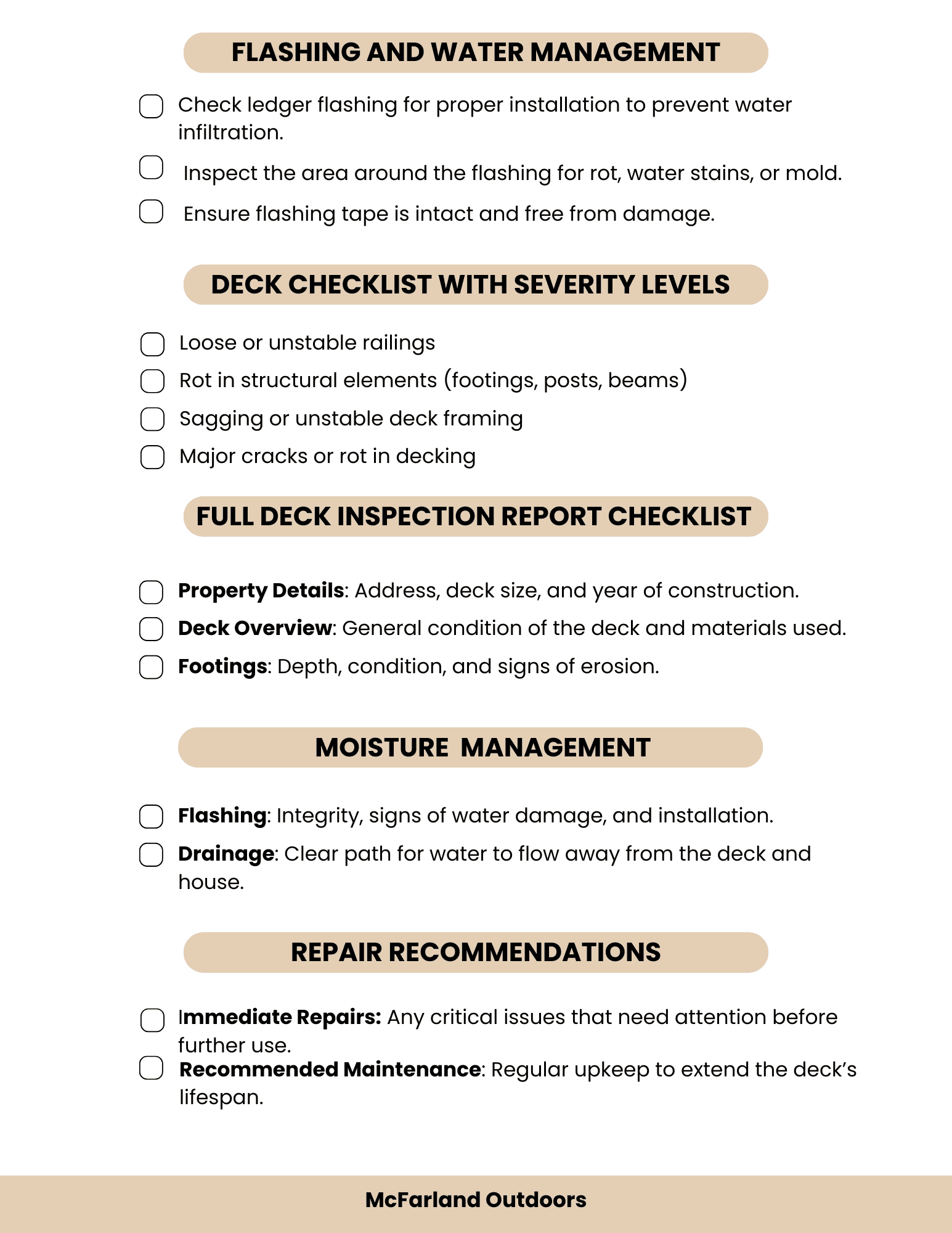
Deck Inspection Severity Levels
Classifying the severity of issues helps prioritize repairs:
- 🔴 Critical (Unsafe): Immediate attention required, deck use should stop.
- 🟡 Major (Repair Soon): Serious issues that need attention soon to avoid further damage.
- 🟢 Monitor (Maintenance Item): Minor issues that should be addressed at the next inspection.
Deck Inspection Report: What a Real Report Includes
A proper deck inspection report includes several key sections:
Standard Report Sections
- Property Info: Details about the property and deck.
- Deck Overview: A summary of the deck’s condition.
- Structural Findings: Issues with framing, supports, or footings.
- Safety Findings: Railings, stairs, and other safety-related issues.
- Photo Documentation: Visual evidence of any damage.
- Repair Recommendations: What needs to be fixed, and by whom.
- Next Inspection Timeline: When to conduct the next inspection.
Sample Defect Language
- “Ledger board separation”
- “Railing instability”
- “Stair stringer failure”
- “Rot indicators”
How Reports Are Used
- Home Sales: A deck inspection report can help a buyer understand the deck’s condition.
- Insurance: Provides documentation for insurance claims.
- Permits: Needed for approval of repairs or modifications.
- Legal Liability: Protects homeowners from potential liability in the event of an accident.
DIY vs Professional Deck Inspection
What Homeowners Can Safely Check
- Surface conditions (cracking, rot).
- Railings and stairs for stability.
- Fasteners (loose screws or nails).
What Requires a Professional
- Structural components (framing, footings).
- Advanced load path analysis.
When to Escalate Immediately
- Signs of significant structural damage or instability.
How Often Should You Inspect a Deck?
- Annual Homeowner Checklist: A simple walk-through to identify surface-level issues.
- Bi-Annual Professional Inspection: For older decks or more complex structures.
- Post-Storm Inspections: Check for damage after severe weather events.
Common Deck Inspection Failures
- Ledger Board Failures: These can lead to deck collapse.
- Railing Collapses: Often due to rusted or loose fasteners.
- Stair Stringer Issues: A major cause of deck accidents.
- Fastener Corrosion: Leads to instability and increased risk of failure.
- Moisture & Rot: Undetected moisture can weaken the structure over time.
Downloadable Deck Inspection Checklist
Access our printable PDF with a structured table, severity columns, and a dedicated notes section. Perfect for tracking repairs and scheduling future inspections.
Final Takeaway: Deck Safety Is Preventable
Deck accidents are preventable with regular inspections. By staying proactive and scheduling annual inspections, you can extend the life of your deck, keep your family safe, and avoid expensive repairs.
Share this Guide with friends and family to help spread the word about deck safety.

Proven business leader with a strong track record of founding, growing, and scaling successful small businesses. Experienced in building companies from the ground up, driving sustainable growth, and leading teams through all stages of development. In the past year, led the delivery of 45+ custom deck projects. Skilled in identifying new business opportunities, developing and mentoring talent, and managing the full scope of daily operations—from sales and pricing strategy to financial oversight and execution. Known for operational excellence, strong financial acumen, and a continuous-improvement mindset that drives performance across every area of the business.