
If your wooden deck is looking worn and you’re eyeing composite as an upgrade, one question probably keeps coming up: can I just lay the new boards right on top? It sounds tempting — less demo, less labor, less cost upfront. But the answer is more nuanced than a simple yes or no.
You can install composite decking over an existing deck structure— but almost never directly over existing deck boards. The distinction between surface and structure is everything here, and getting it wrong can cost you far more than a full replacement would have.
Let’s break it down properly.
Can I Put Composite Decking Over an Existing Deck?
Yes — but only in specific situations, and only after a thorough inspection.
The critical distinction most homeowners miss is this: there’s a big difference between laying composite over old deck boards (almost always a bad idea) and reusing the existing frame or substructure (sometimes perfectly fine, with proper prep).
Think of it this way: the surface is cosmetic. The structure is everything. If you focus only on what you can see and ignore what’s underneath, you’re setting yourself up for a deck that looks great for a season or two — and then starts to fail from the ground up.
Composite Decking Over Existing Deck: The 2 Scenarios You Must Understand
Scenario 1: Installing Over Existing Deck Boards
This is the scenario most articles skim over, but it deserves a hard stop.
Laying composite boards directly on top of your old wooden deck boards traps moisture between the two layers. Composite decking is designed to sit on a joist network with open airflow and drainage below it. Stack it on top of solid wood boards and you eliminate both.
Here’s what happens next:
- Water gets trapped and can’t escape
- The wood underneath begins to rot faster than it would exposed to open air
- Mold and mildew build up in the gap
- The composite boards themselves can warp or become damaged from the moisture below
- Most manufacturers will void your warranty if composite is installed this way
Beyond moisture, there’s a tripping hazard issue: composite boards add roughly an inch of height. Laid over existing boards, that height change at doorways, stairs, and transitions becomes a genuine safety risk — and a building code problem.
Scenario 2: Installing Over the Existing Frame (Sometimes)
Removing the old deck boards and installing composite directly onto the existing joists and substructure? That’s a legitimate approach — and what most professionals mean when they talk about “re-skinning” a deck.
The key word is sometimes. Whether this works depends entirely on the condition and configuration of what’s underneath.
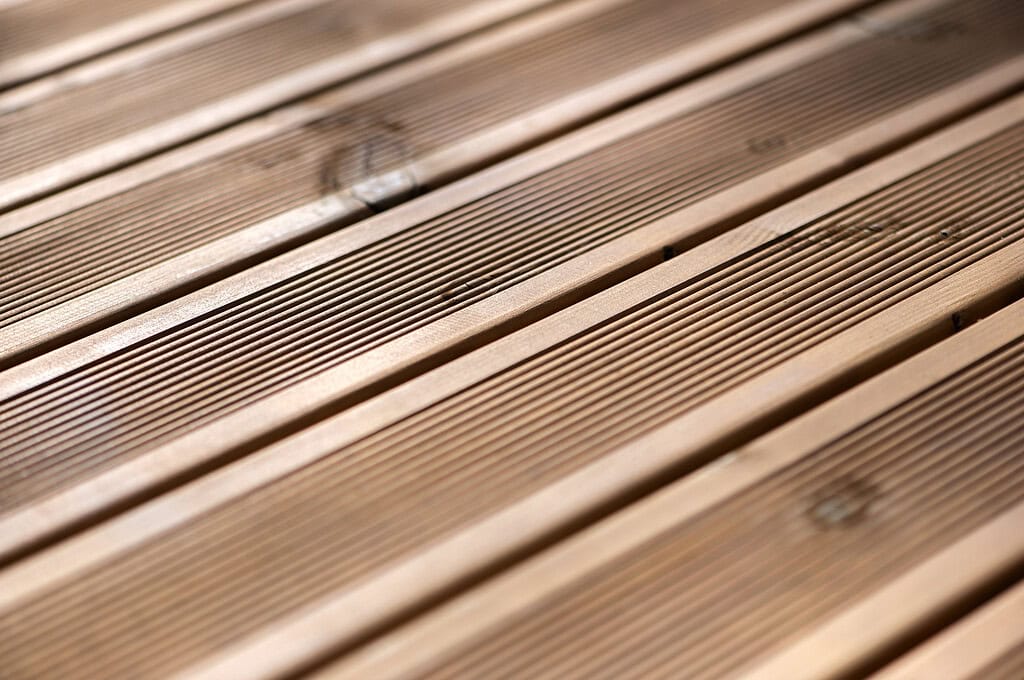
When You Can Install Composite Decking Over an Existing Deck
You’re a solid candidate for re-skinning if:
- The frame is structurally sound. No rot, no soft spots, no wobble. Use a screwdriver to probe the wood — if it pushes in easily, you have rot.
- Joist spacing meets composite requirements. Most composite manufacturers specify 16″ on center (roughly 400mm). Some professionals recommend as tight as 12″ for maximum stability. If your existing joists are spaced wider, you’ll need to add intermediate joists before laying composite.
- The substructure is less than 10–15 years old. Pressure-treated lumber typically shows significant degradation within 8–10 years. Keeping up with a proper maintenance routine is one of the best ways to extend your frame’s usable life before re-skinning becomes an option.
- There are no drainage or pooling issues. Water should flow away from the frame, not pool beneath it. A proper drainage slope of approximately 1:100 is ideal.
- The ledger board is secure and flush. If the ledger is pulling away from the house, that’s a structural red flag that must be addressed before anything goes on top.
When You Should Not Do It
Walk away from re-skinning and rebuild from scratch if:
- The frame shows visible rot, mold, or significant decay. Composite is built to last 25–50 years. An already-compromised frame won’t support that lifespan.
- Joist spacing is too wide and adding new joists isn’t feasible. Some older decks were built at 24″ or even 500mm centers — too wide for composite without a major retrofit.
- There are persistent moisture or drainage problems that can’t be solved by regrading or adding a drainage slope.
- The deck was built to older building codes. Regulations update every three years. Footings, post spacing, beam sizes, and attachment methods from 10–15 years ago may not meet current standards — and altering more than 50% of a deck’s structure typically requires a new permit.
- The structure is uneven or unstable in ways that can’t be corrected with simple reinforcement.
The Biggest Mistake Homeowners Make
The most common — and costly — error is using a new composite surface to cover up existing problems rather than fix them.
It feels like a smart shortcut. You’re spending money on beautiful new composite boards. Why tear everything apart first?
Here’s the hard truth: composite decking is designed to last 25 to 50 years. A neglected or aging wooden substructure might have 5 to 15 years left in it, generously. That mismatch in lifespan means you could find yourself ripping up your perfectly good composite boards in a decade to replace a rotting frame underneath — spending far more in the long run than a full rebuild would have cost upfront.
Don’t build a 30-year surface on a 10-year foundation.
Pros and Cons of Installing Composite Decking Over an Existing Deck
Pros
- Lower upfront cost — reusing the existing frame saves on demolition and framing materials
- Faster installation — no full teardown means the project wraps up quicker
- Less waste — fewer materials going to landfill
- Immediate aesthetic upgrade — composite’s clean lines and color options transform an outdoor space fast
Cons
- Hidden structural risks — you can’t fully inspect what you can’t see; pulling the boards reveals the real picture
- Lifespan mismatch — composite outlasts wood substructures; you may be forced to rebuild sooner than expected
- Potential warranty voidance — installing composite over boards (not joists) voids most manufacturer warranties
- Weight load concerns — composite is approximately 25% heavier than wood, adding stress to an already-aged structure
- Building code compliance — older decks may not meet current standards once work begins
Cost Comparison: Overlay vs. Full Deck Replacement
| Re-Skin (Overlay) | Full Replacement | |
| Upfront cost | Lower | Higher |
| Labor | Less | More |
| Long-term reliability | Depends on frame condition | High |
| Lifespan | Frame-limited | Full 25–50 year composite life |
| Best for | Newer, sound frames | Older or damaged structures |
The math that changes everything: If a re-skin costs $8,000 and lasts 12 years before the frame fails, versus a full replacement at $18,000 lasting 30+ years, the rebuild often delivers better cost-per-year value — and zero mid-project surprises.
How to Install Composite Decking on an Existing Deck
If your inspection confirms the frame is solid and ready, here’s how to do it right:
Step 1: Remove Existing Deck Boards
Pull up all old surface boards carefully. This exposes the substructure for a full inspection — and is non-negotiable. Never skip this step.
Step 2: Inspect and Reinforce the Substructure
Check every joist, beam, and ledger board. Look for:
- Soft or spongy wood (rot)
- Greenish discoloration (mold/mildew)
- Black areas (advanced rot)
- Rusted fasteners
- Loose or wobbly members
Repair or replace anything compromised. Add intermediate joists if spacing exceeds 16″ on center.
Step 3: Treat Cut Ends and Apply Joist Tape
Apply a high-quality wood preservative to any cut ends on the frame. Then use joist protection tape on every joist surface — it waterproofs the top of each joist, seals old screw and nail holes, and dramatically extends the life of the substructure. Don’t skip it.
Step 4: Install a Drainage Slope
Aim for a 1:100 decline rate to ensure water moves off the frame rather than pooling underneath.
Step 5: Install Composite Boards
- Cut boards to length, allowing for end gaps
- Work from the outside edge inward toward the building
- Use hidden fasteners (T-clips or similar) where possible — they allow for thermal expansion and give a clean, fastener-free surface
- Maintain consistent 5mm gaps between boards for drainage and expansion
- Use a jigsaw to cut around any existing railing posts
Step 6: Final Inspection
Check every fastener. Test each board for stability under weight. Reinstall railings and accessories.
Composite Decking vs. Replacing the Deck: Which Is Better?
| Factor | Re-Skin on Existing Frame | Full Deck Replacement |
| Lifespan | Limited by substructure age | Full 25–50 year composite life |
| Structural reliability | Depends on inspection | Built to current code |
| Upfront investment | Lower | Higher |
| Long-term ROI | Riskier | More predictable |
| Best candidate | Frame under 10–15 years, excellent condition | Any deck with structural concerns |
Real Scenarios: When an Overlay Makes Sense
Re-skinning genuinely works well in these situations:
- Your deck is less than 10–15 years old and has been well maintained
- The frame was built with rot-resistant wood — cedar, redwood, or mahogany hold up significantly better than untreated pine
- You want a cosmetic upgrade without changing the layout or size of the deck
- Budget constraints are real and the inspection confirms the structure is sound
- You’re planning to sell and need a fresh look without a full renovation budget
When You’re Better Off Rebuilding
Rebuild from scratch when:
- The deck is more than 15 years old and showing signs of wear anywhere in the frame
- Any structural member shows rot — it spreads, and what looks isolated rarely is
- You want to expand, redesign, or change the layout — a rebuild gives you a clean slate
- The existing deck doesn’t meet current building codes — altering over 50% of the structure requires permits and compliance anyway
- Long-term ROI matters more than short-term savings — a new structure under your composite boards maximizes the full 25–50 year lifespan
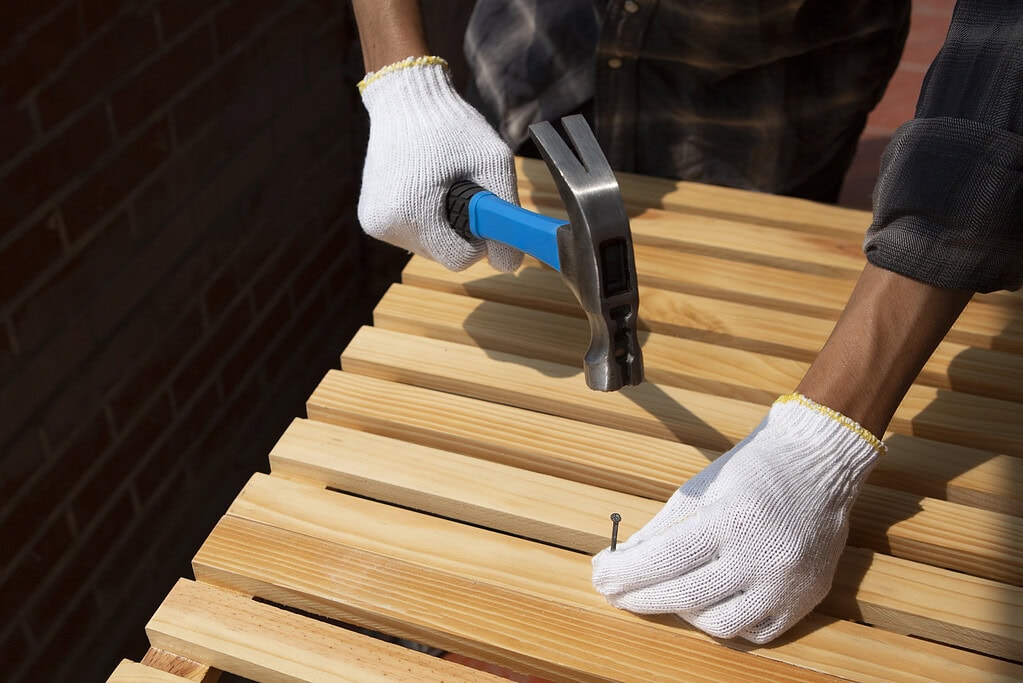
Conclusion: Should You Install Composite Over Your Existing Deck?
The answer depends on your structure, not your surface.
- Never lay composite boards directly on top of existing wood boards
- Possibly reuse the existing frame — but only after pulling the old boards and doing a proper inspection
- Always use joist tape, check spacing, and address drainage before installation
- Remember the lifespan mismatch: composite lasts 25–50 years; an aging frame may not
Short-term savings feel good until you’re tearing up a deck that looked perfect on the surface. The goal isn’t just a deck that looks great on day one — it’s a deck that’s still performing 20 years from now.
If you’re unsure about your existing structure, get a professional assessment before you commit. The cost of an inspection is nothing compared to the cost of getting it wrong.

Proven business leader with a strong track record of founding, growing, and scaling successful small businesses. Experienced in building companies from the ground up, driving sustainable growth, and leading teams through all stages of development. In the past year, led the delivery of 45+ custom deck projects. Skilled in identifying new business opportunities, developing and mentoring talent, and managing the full scope of daily operations—from sales and pricing strategy to financial oversight and execution. Known for operational excellence, strong financial acumen, and a continuous-improvement mindset that drives performance across every area of the business.