
Retaining walls don’t fail because homeowners pick the “wrong” material. They fail because people expect a single lifespan number in a system that’s driven by soil physics, water pressure, and installation quality. If you want the real answer to how long do retaining walls last, it’s this: 15 to 100+ years is possible — but only when the wall is designed for the conditions it’s actually facing.
This guide cuts through marketing claims and generic advice. It explains retaining wall lifespan the way engineers and experienced contractors understand it — based on material, drainage, load, and Midwest conditions. No fluff. No guesswork.
Short Answer: Retaining Wall Lifespan Depends on More Than Material
Most retaining walls fall somewhere between 15 and 100+ years, but lifespan depends on more than material and single-number answers are misleading. Longevity comes down to three different “lifespans” that most articles never separate:
- Material durability – how long the material resists rot, corrosion, or breakdown
- Structural lifespan – how long the wall safely resists soil pressure
- Functional lifespan – how long the wall does its job without leaning, cracking, or draining poorly
Indiana’s climate compresses lifespan fast when walls aren’t engineered correctly. Clay-heavy soils, freeze–thaw cycles, and heavy rainfall create lateral pressure that overwhelms walls built as simple “landscape features.”
A short, decorative wall might survive decades with minimal engineering. A taller wall holding back saturated clay is a structural system, whether it looks like one or not.
What Actually Determines How Long a Retaining Wall Lasts
Soil Type and Ground Conditions in Central Indiana
Indiana soils are dominated by expansive clay, which creates one of the highest failure risks for retaining walls.
Clay expands when wet and contracts when dry. That constant movement applies lateral pressure that cracks, tilts, or bulges walls that weren’t designed for it. Many early failures happen not because the material was weak—but because the soil forces were underestimated.
Walls that last longest in the Midwest account for:
- Soil expansion pressure
- Seasonal moisture changes
- Long-term settlement beneath the footing
Ignoring soil behavior is the fastest way to cut decades off a wall’s life.
Drainage and Hydrostatic Pressure (The #1 Failure Cause)
Hydrostatic pressure is water pressure trapped behind a wall. It’s silent, constant, and destructive.
“Bad drainage” isn’t a cosmetic issue — it’s structural. Saturated backfill multiplies soil pressure, pushing walls forward until cracking or collapse occurs.
Drainage systems that extend retaining wall lifespan include:
- Perforated drain pipe at the base
- Free-draining gravel backfill
- Filter fabric to prevent clogging
- Proper wall outlets or weep paths
Walls without these elements fail early regardless of material choice.
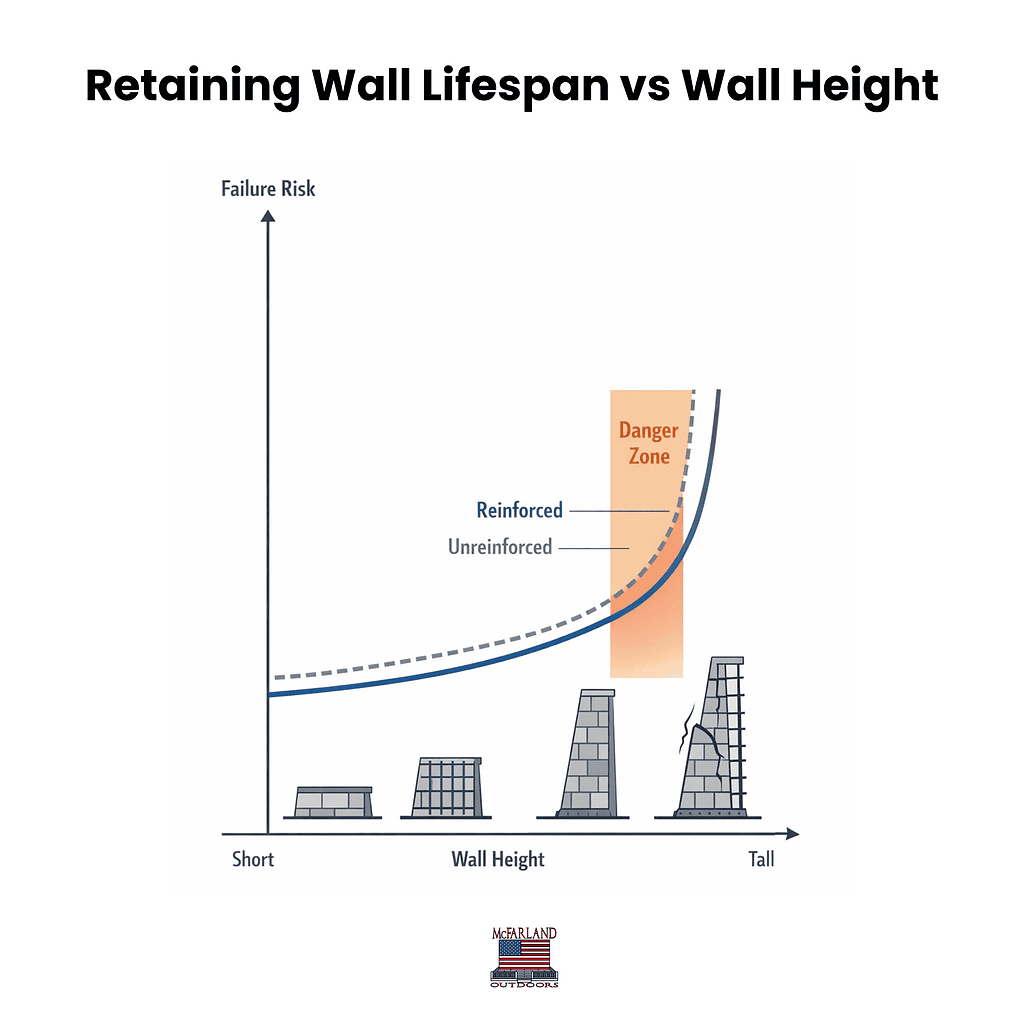
Wall Height, Load, and Engineering Requirements
Once a retaining wall reaches a certain height, it stops being a landscaping detail and becomes a load-bearing structure.
Taller walls experience:
- Exponentially higher soil pressure
- Greater water accumulation
- Higher risk from freeze–thaw cycles
Residential walls often carry soil plus live loads from patios, fences, or vehicles. Commercial walls carry even more. Without reinforcement, taller walls fail sooner — sometimes catastrophically. In Indiana, taller structural projects often trigger permit and code requirements that homeowners overlook until it becomes a problem.
Installation Quality (More Important Than Material)
No amount of maintenance fixes a wall that was built wrong.
Critical installation factors include:
- Proper base depth and leveling
- Compacted backfill in controlled lifts
- Correct footing width
- Accurate reinforcement placement
Poor installation shortens lifespan more than any material choice. This is why two concrete walls built a year apart can fail decades apart.
Retaining Wall Lifespan by Material (Realistic Ranges, Not Marketing Claims)
How Long Do Wood Retaining Walls Last?
Typical lifespan: 15–30 years
Pressure-treated timber can reach the upper end of this range when drainage is excellent and maintenance is consistent. Even then, wood remains vulnerable to moisture, rot, and insects.
Timber makes sense for:
- Short walls
- Temporary solutions
- Budget-limited projects
It does not make sense where soil stays wet or walls exceed modest heights.
How Long Do Block Retaining Walls Last?
Typical lifespan: 30–60+ years
Segmental block systems rely on interlocking units, gravel backfill, and often geogrid reinforcement. When properly installed, they perform well in residential applications.
Block brand matters far less than:
- Drainage design
- Reinforcement length
- Soil compaction
Commercial installations typically require additional engineering to reach the upper lifespan range.
How Long Do Stone Retaining Walls Last?
Typical lifespan: 50–100+ years
Natural stone is extremely durable, but structural longevity depends on construction method.
- Dry-stacked stone relies heavily on gravity and drainage
- Mortared stone adds strength but still requires engineering
Stone walls can look intact while slowly failing structurally — aesthetic durability doesn’t equal structural durability.
How Long Do Concrete Retaining Walls Last?
Typical lifespan: 50–100+ years
Concrete is durable, but not automatically superior.
Longevity depends on:
- Steel reinforcement placement
- Drainage behind the wall
- Freeze–thaw exposure protection
Concrete fails when water infiltrates, freezes, and expands internally. Without drainage and reinforcement, concrete walls crack early despite their strength.
Why Retaining Walls Fail Early (And Why Maintenance Can’t Always Save Them)
Most failures aren’t material failures — they’re design failures.
Common causes include:
- Trapped water pressure
- Footings placed above frost depth
- Underestimated soil loads
- Missing reinforcement
Maintenance can slow deterioration, but it cannot correct structural miscalculations. At a certain point, replacement is safer than repair.
How Long Retaining Walls Last With Proper Maintenance
Maintenance extends lifespan when the structure is sound.
What helps:
- Clearing drainage outlets
- Monitoring minor cracks early
- Managing vegetation roots
What maintenance can’t fix:
- Poor footing depth
- Missing drainage systems
- Structural underdesign
Annual inspections are recommended, especially after heavy rainfall or freeze–thaw seasons.
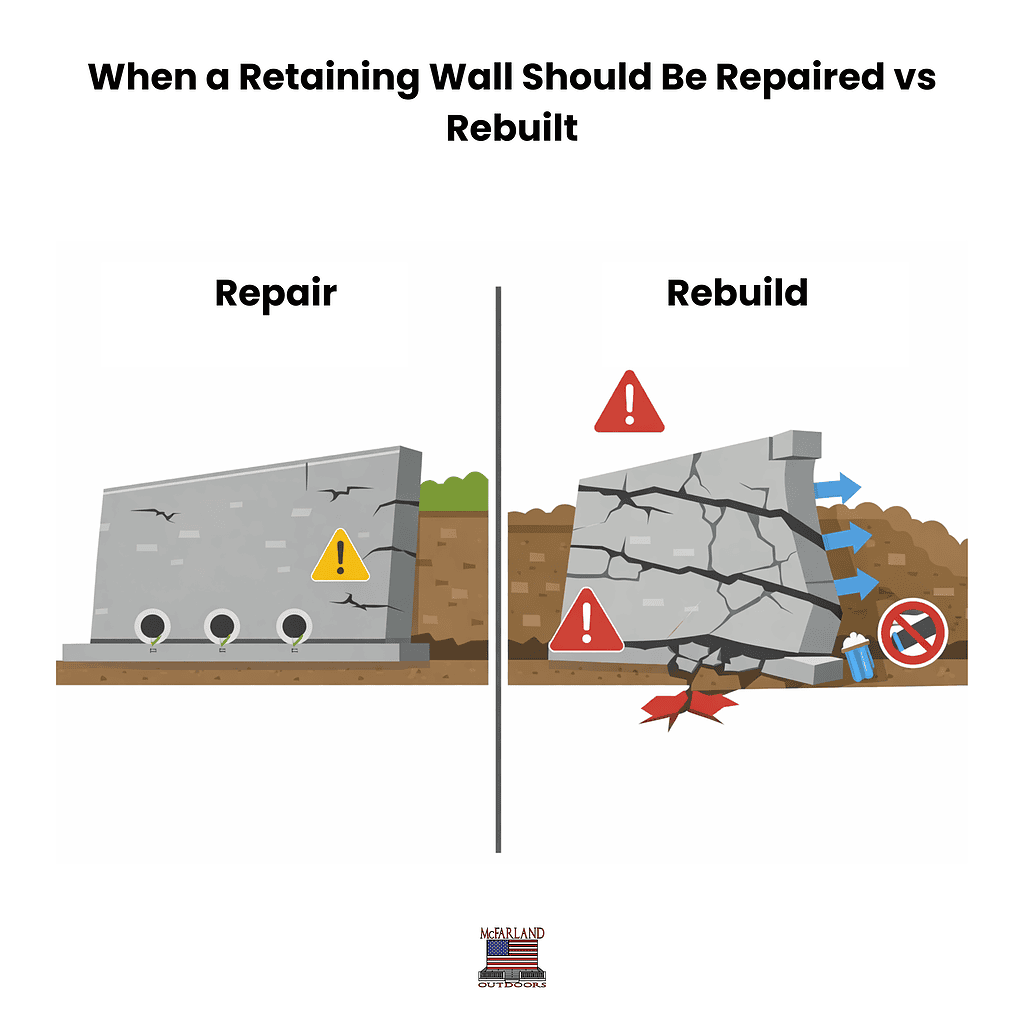
When a Retaining Wall Should Be Repaired vs Rebuilt
Repairs make sense when:
- Cracks are hairline
- Movement is minimal
- Drainage issues are localized
Rebuilding is unavoidable when:
- The wall is leaning noticeably
- Bulging or separation is visible
- Soil is washing through joints
At that stage, safety and property protection outweigh short-term savings.
Retaining Walls Built for Indiana Soil and Weather Last Longer
Local conditions matter more than generic material advice.
Indiana walls face:
- Freeze–thaw cycles that shift footings
- Heavy rain events that overload drainage
- Seasonal clay expansion
Walls designed specifically for these factors last longer than walls built to national “average” standards. Local experience beats theoretical lifespan every time.
Final Takeaway: What to Expect From a Properly Built Retaining Wall
A well-designed retaining wall isn’t a gamble—it’s a system.
- Wood walls: expect decades, not generations
- Block and stone walls: long-term performance when engineered correctly
- Concrete walls: excellent longevity when reinforced and drained
Lifespan isn’t a guess. It’s a design decision.
Before committing to wall height or material, consult a local professional who understands soil, drainage, and climate—not just aesthetics, and start by choosing a qualified local contractor.
If this guide helped clarify what really determines how long retaining walls last, share it or explore related resources to make smarter decisions before construction begins.

Proven business leader with a strong track record of founding, growing, and scaling successful small businesses. Experienced in building companies from the ground up, driving sustainable growth, and leading teams through all stages of development. In the past year, led the delivery of 45+ custom deck projects. Skilled in identifying new business opportunities, developing and mentoring talent, and managing the full scope of daily operations—from sales and pricing strategy to financial oversight and execution. Known for operational excellence, strong financial acumen, and a continuous-improvement mindset that drives performance across every area of the business.