
Decks are in daily use across the U.S., often for decades at a time. When designed correctly, built to code, and maintained with basic competence, decks perform safely for their intended lifespan.
But here’s the uncomfortable truth most homeowners and even many contractors avoid: deck failures are not random. They follow repeatable patterns tied to age, outdated construction methods, moisture exposure, and neglected connections. The problem isn’t that decks are inherently dangerous. It’s that many older decks are quietly operating beyond the assumptions they were built under.
This guide cuts through alarmist headlines and vague claims. Using verified deck collapse statistics, injury data, and building-code history, we’ll show how often deck failures actually happen, what causes them, and why modern decks behave very differently than legacy structures. The goal isn’t fear — it’s clarity.
Deck Collapse Statistics: How Common Are Deck Collapses in the U.S.?
When people search for deck collapse statistics, they’re usually reacting to viral news stories. What the data actually shows is more nuanced.
According to injury surveillance data from the Consumer Product Safety Commission (CPSC), U.S. emergency rooms treat thousands of injuries annually related to decks, porches, balconies, and railings. These figures typically range between 5,000 and 6,000 injuries per year.
However, here’s the critical distinction most articles fail to make:
- The majority of deck-related injuries are caused by slips, trips, or railing issues, not structural collapse.
- Only a smaller but significant subset involves actual deck failure or partial collapse.
In plain terms: deck collapses are uncommon, but they are not rare, especially when viewed over decades of housing stock.
Key takeaway: The risk exists, but it is concentrated in predictable conditions — not evenly distributed across all decks.
Deck Failure Statistics by Age of Deck
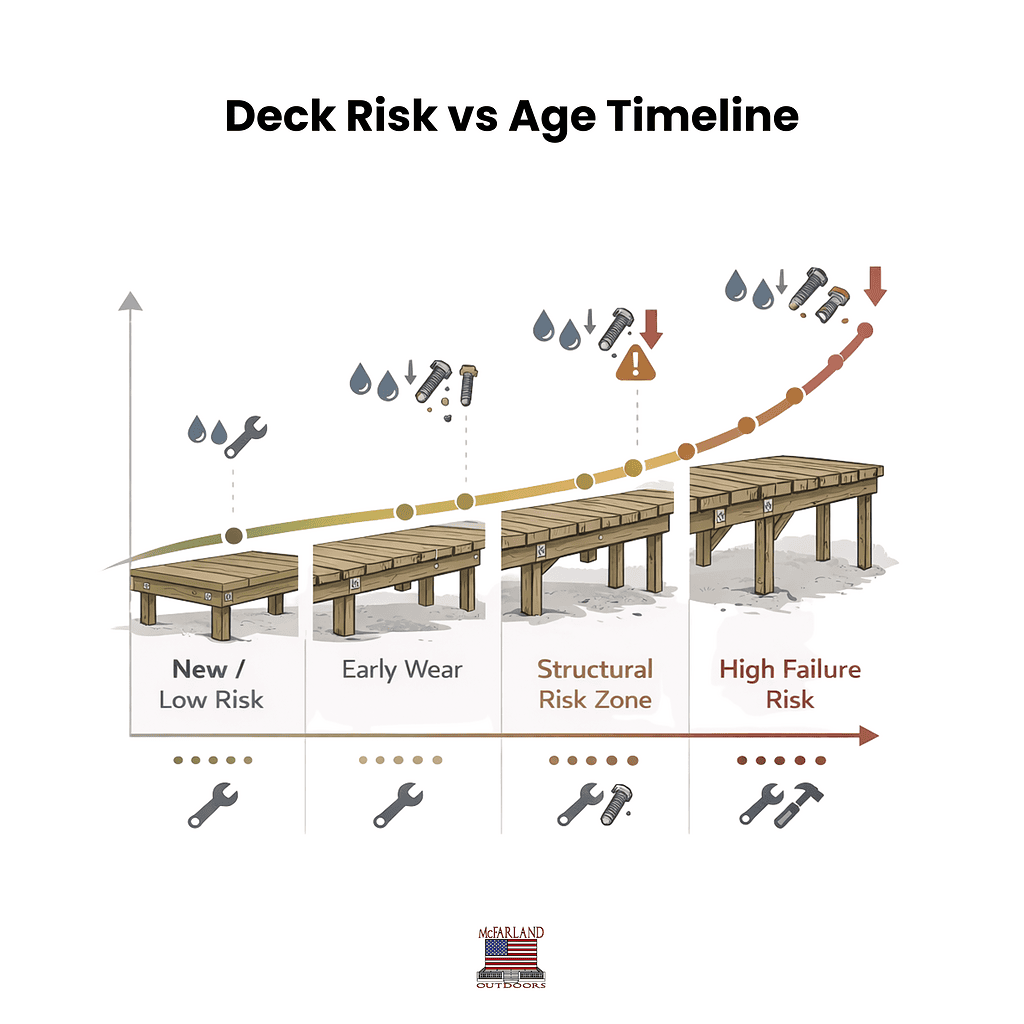
Age is the single most underappreciated risk factor in deck collapse statistics, especially when compared against typical deck lifespan expectations.
Data and inspection findings summarized by the North American Deck and Railing Association (NADRA) show:
- Over 40% of residential decks in the U.S. are more than 20 years old
- A significant portion were built before modern fastening, flashing, and lateral-load requirements
- Many older decks were never designed for current usage patterns (larger gatherings, heavier furnishings)
What changed over time wasn’t just materials — it was understanding. Building science evolved, and codes responded.
Critical insight: Decks don’t “become dangerous” because they’re old. They become dangerous when aging materials are combined with outdated connection details that were never designed to manage moisture or dynamic loads.
Leading Causes of Deck Collapse (By Percentage)
Across forensic investigations, insurance studies, and safety reviews, one cause dominates deck failure statistics:
1. Ledger Board Attachment Failure (≈90%)
Multiple studies and safety analyses — including those cited by NADRA — consistently identify ledger board failure as the primary cause of deck collapses.
Why? Because the ledger connection:
- Bears enormous vertical and lateral loads
- Is exposed to moisture intrusion
- Was historically under-engineered or improperly flashed
When the ledger fails, the deck detaches from the house — often suddenly, especially if you don’t understand how deck framing systems work.
2. Moisture Intrusion & Flashing Failures
Water doesn’t need drama to destroy a deck. Slow, hidden rot behind improperly flashed ledgers — often caused by poor flashing techniques — is one of the most common precursors to collapse.
3. Corroded or Undersized Fasteners
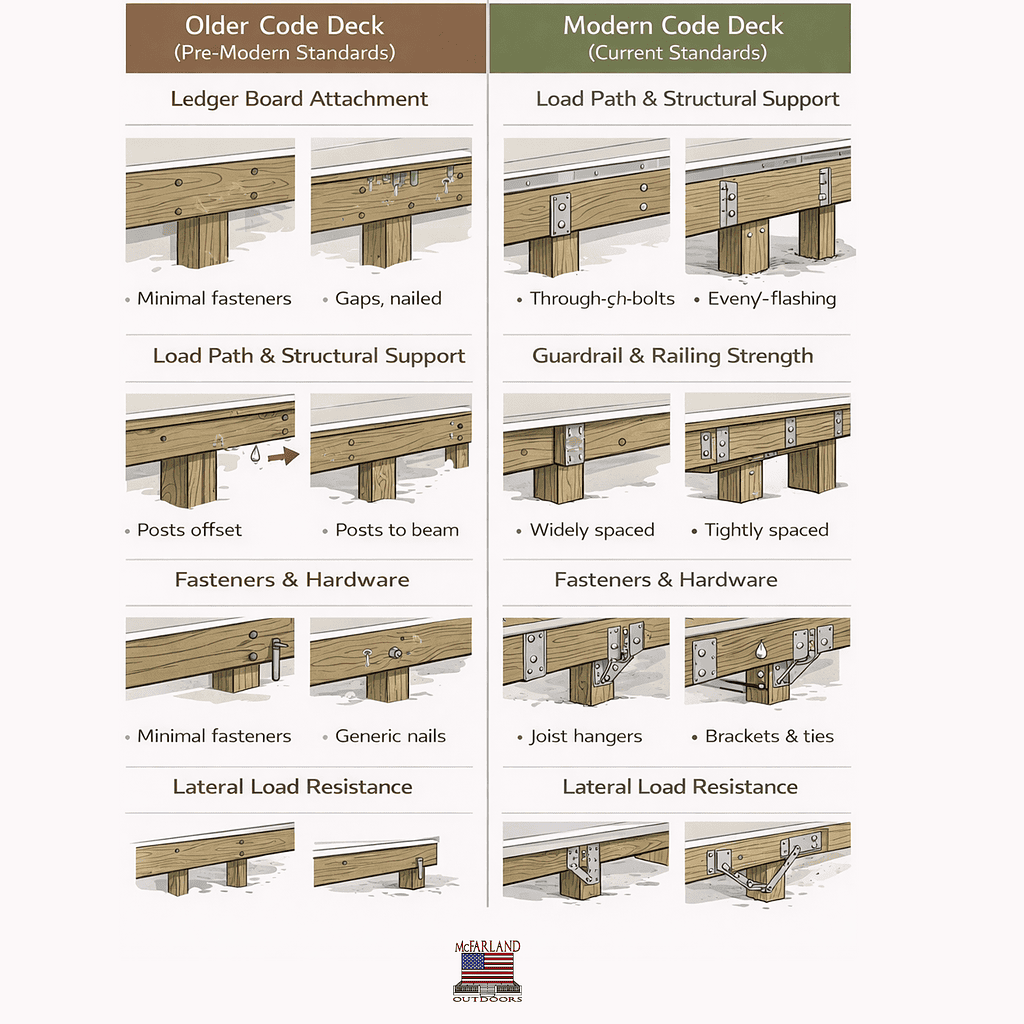
Older decks frequently used nails or non-rated screws where modern codes require structural connectors and corrosion-resistant hardware.
4. Insufficient Lateral Load Resistance
Before modern requirements, many decks had no dedicated lateral load path, making them vulnerable to movement and progressive failure.
5. Overloading During Gatherings
Contrary to popular belief, collapses are rarely caused by “too many people.” They’re caused by normal gatherings applied to weakened structures.
Seasonal & Usage Trends
Deck collapse statistics show a clear seasonal pattern:
- Peak incidents occur from late spring through summer
- Failures correlate with increased occupancy and movement, not abuse
- Dynamic loads — people shifting, leaning, dancing — matter more than static headcounts
This matters because it reframes responsibility. The deck didn’t fail because people used it. It failed because it was no longer structurally capable of being used as intended.
Injuries Associated With Deck Collapses
The injury profile from documented collapses is consistent and sobering, without being sensational:
- Bone fractures (arms, legs, wrists)
- Head injuries from falls
- Spinal trauma from sudden elevation loss
- Fatalities are rare, but they do occur — typically in elevated or multi-level failures
The severity of injuries is directly related to deck height and suddenness of failure, not crowd size.
How Modern Building Codes Changed Deck Safety
A major inflection point in deck safety came with updates to the International Residential Code (IRC), particularly post-2009.
Modern requirements now include:
- Prescriptive ledger fastening schedules
- Mandatory lateral load connectors
- Defined guardrail load resistance
- Improved flashing and moisture management
The permitting and compliance process also plays a critical role in ensuring these modern safety standards are actually followed during construction.
What the data shows: Decks built to current IRC standards are dramatically less represented in collapse statistics than legacy decks. Local variations in local deck building code requirements can further influence how these safety standards are applied in practice.
This isn’t theory. It’s measurable.
What the Data Does Not Say
This is where most public discourse goes wrong.
The statistics do not say:
- Decks are unsafe by default
- Collapses are unpredictable
- Visual condition equals structural condition
In fact, the data says the opposite: deck failures are highly predictable and largely preventable.
Rot hides. Connections fail quietly, which is why understanding the signs to look for during a deck inspection matters. A deck can look fine right up until it doesn’t.
Inspection & Maintenance Statistics
Inspection data compiled by industry groups shows:
- Structural issues are frequently discovered during professional inspections
- Many failure points are not visible from above
- Homeowners routinely overestimate deck condition based on appearance alone
- Consistent routine maintenance practices significantly reduce the likelihood of hidden structural deterioration over time.
Professional evaluations consistently outperform DIY assessments because most failures occur at connections — not surfaces. A structured professional deck inspection checklist can help identify hidden connection failures before they become structural risks.
Final Takeaway: A Data-Driven Perspective
Decks remain one of the most popular and functional outdoor structures in residential construction. The deck collapse statistics don’t indict decks as a category — they indict neglect, outdated construction, and false confidence.
When decks are:
- Properly designed
- Built to modern codes
- Periodically inspected
They perform safely, predictably, and for decades.
Understanding overall deck safety principles is essential to reducing long-term structural risk and preventing failure patterns highlighted in the data.
The risk isn’t decks. The risk is assuming yesterday’s construction can handle today’s expectations without scrutiny.
If this guide clarified something you hadn’t considered, share it or explore our related resources on deck inspection and structural safety.

Proven business leader with a strong track record of founding, growing, and scaling successful small businesses. Experienced in building companies from the ground up, driving sustainable growth, and leading teams through all stages of development. In the past year, led the delivery of 45+ custom deck projects. Skilled in identifying new business opportunities, developing and mentoring talent, and managing the full scope of daily operations—from sales and pricing strategy to financial oversight and execution. Known for operational excellence, strong financial acumen, and a continuous-improvement mindset that drives performance across every area of the business.