
Choosing house and deck color combinations often feels deceptively simple—until you’re standing in front of dozens of samples, scrolling endless Pinterest boards, and hearing contradictory advice from every direction. The reality is that most decks don’t fail because of poor materials or bad craftsmanship. They fail because the colors were never designed to work together in real-world conditions.
This guide explains why so many exterior house and deck color combinations miss the mark, the principles professionals rely on when designing outdoor spaces, and how to choose a deck color you’ll still appreciate 10 to 15 years from now. Whether you’re planning a modern deck, updating a small home, or trying to determine what color deck goes with a blue house, the goal here is simple: help you make a confident, future-proof decision.
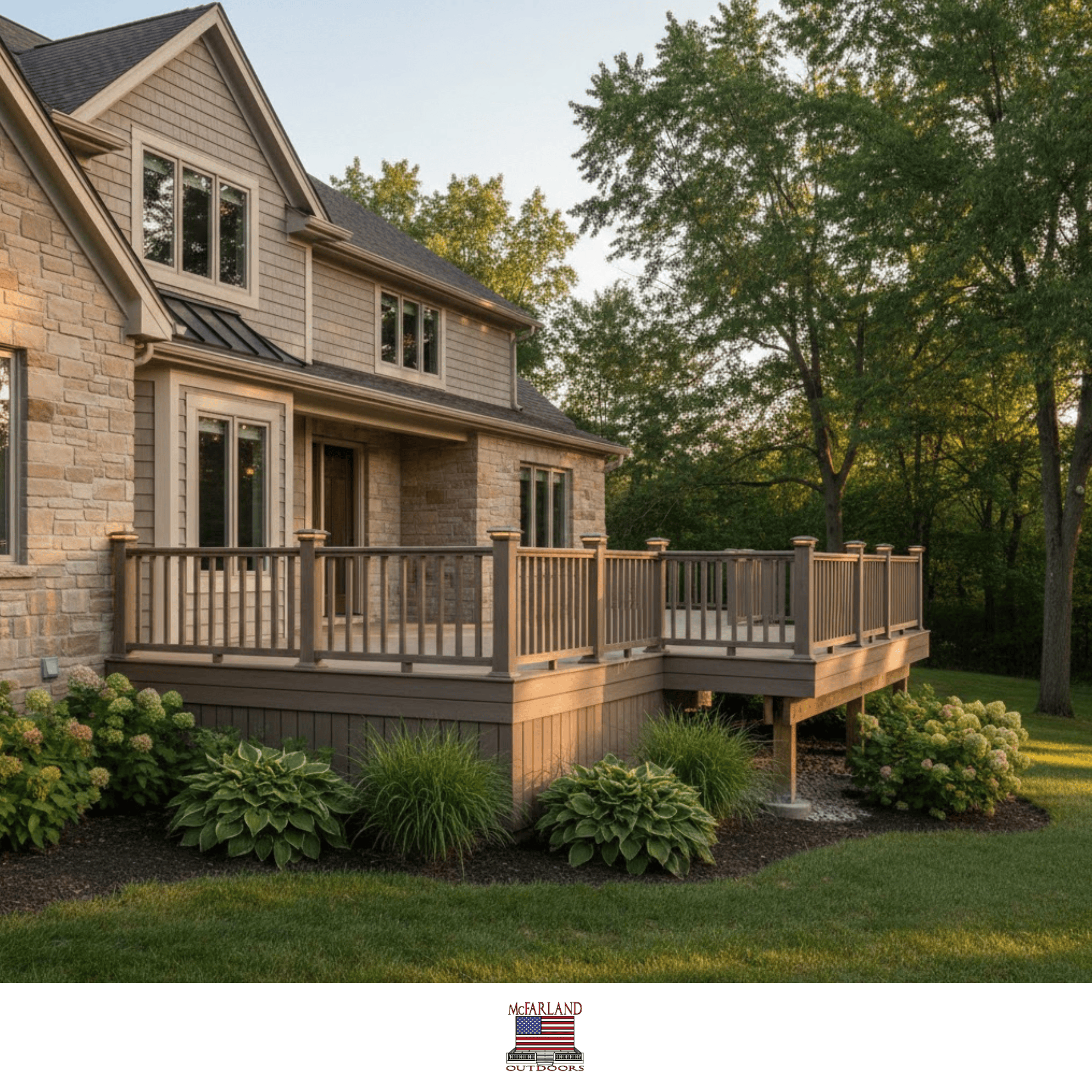
Why Most House and Deck Color Combinations Fail
Most homeowners choose deck colors in isolation—separate from the house, the trim, the yard, and how the space is actually used. That’s the core problem. A deck isn’t a standalone feature; it’s a permanent architectural extension of the home.
When color decisions ignore real-world conditions, problems stack quickly. Deck size, height, sun exposure, and surrounding trees all influence how colors behave over time. What looks balanced in a staged photo can feel overpowering or disconnected once installed.
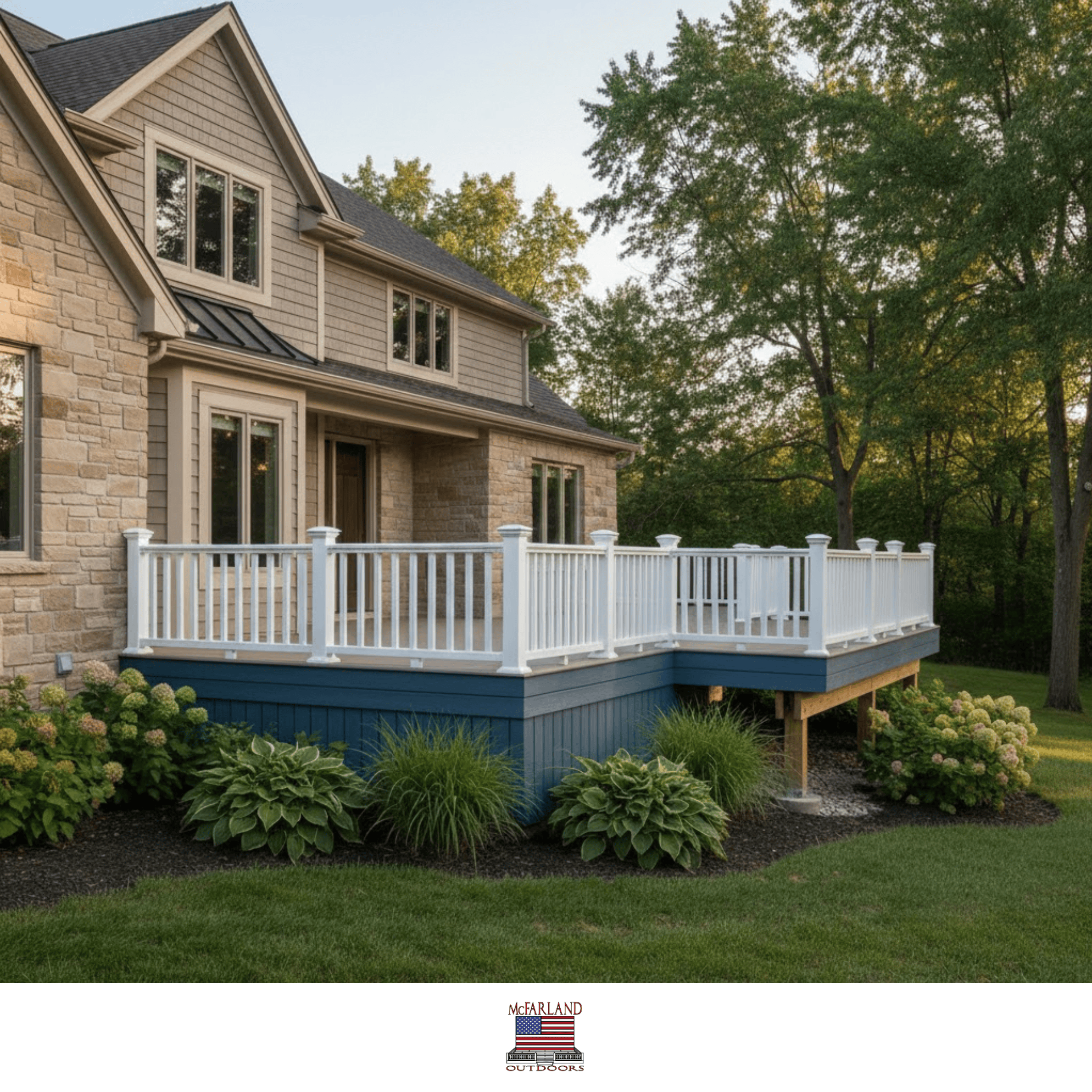
The most common reasons house and deck color combinations fail include:
- Choosing deck colors independently instead of as one visual mass
- Ignoring deck size, elevation, and exposure
- Over-contrasting on small homes, making the deck dominate the structure
- Following short-lived trends that don’t age well in Midwest climates
- Copying sample photos without accounting for real light, shade, and wear
Key takeaway: A deck is architecture, not décor. Once you design it like part of the house, better color decisions follow naturally.
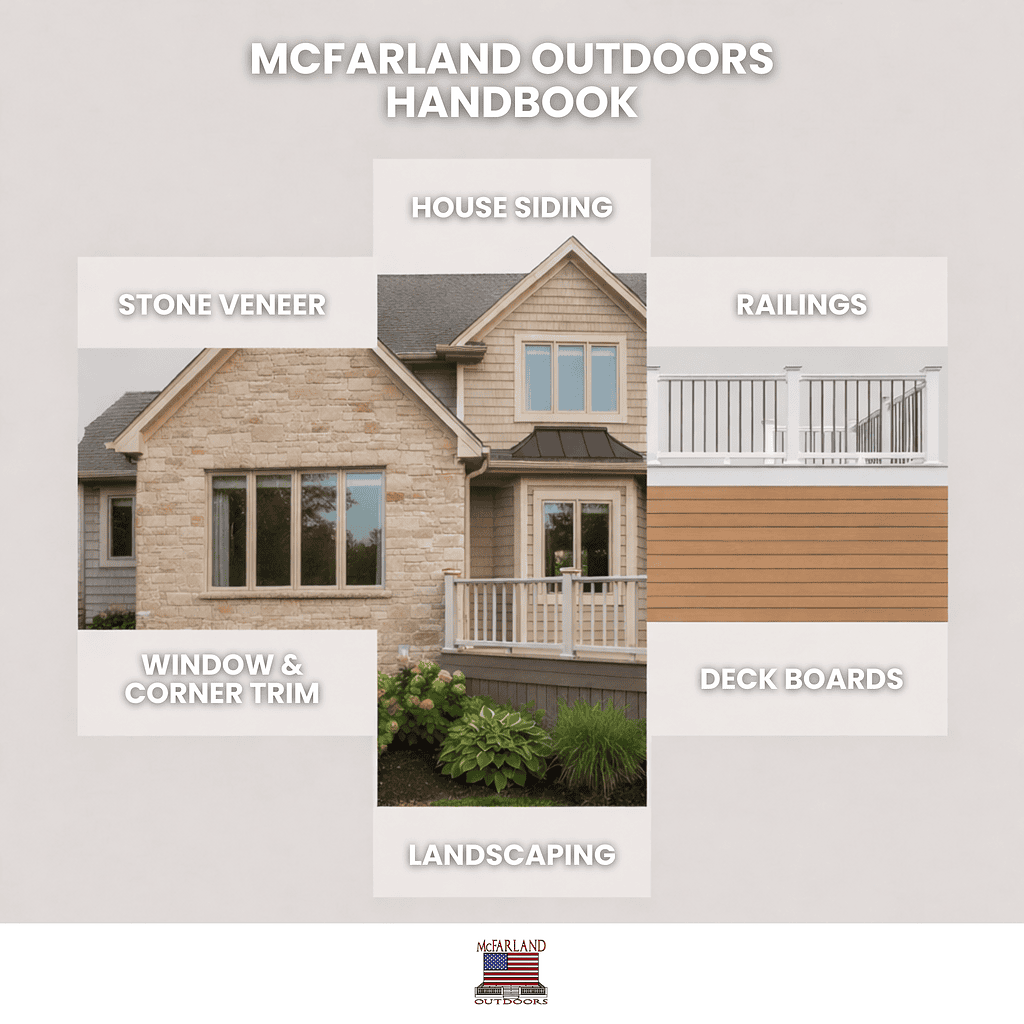
The 5 Rules That Determine the Right House and Deck Color Combination
Rule 1 – Deck Size Changes the Color Rules
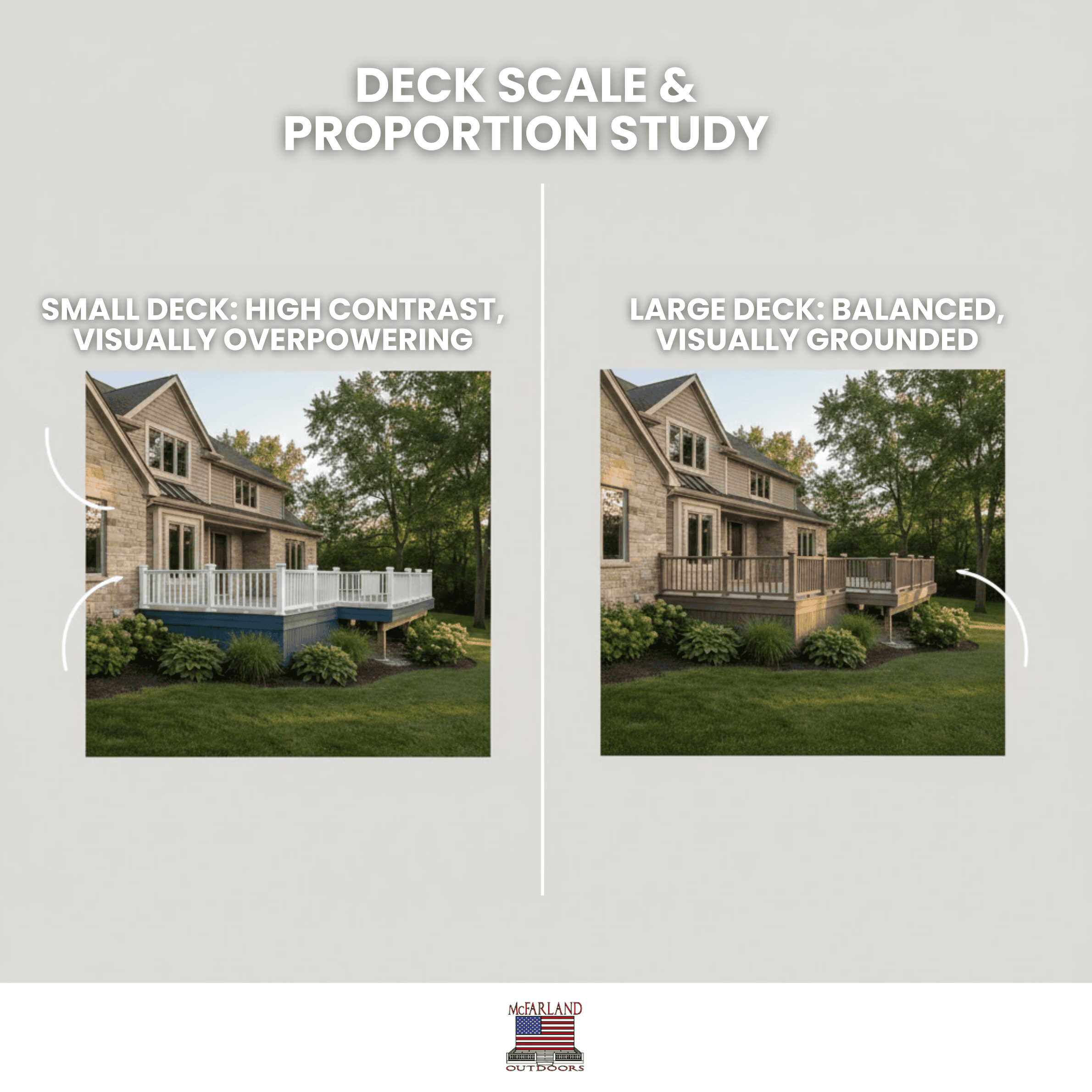
Deck size directly affects how much contrast a space can handle. Smaller decks magnify contrast, while larger decks absorb it.
On small decks, high-contrast combinations—such as a light house with a very dark deck—often feel harsh and unbalanced. Mid-tone or softer-contrast decking typically creates better harmony. Large decks behave differently. Because they occupy more visual space, they usually need darker or mid-range tones to feel grounded and intentional.
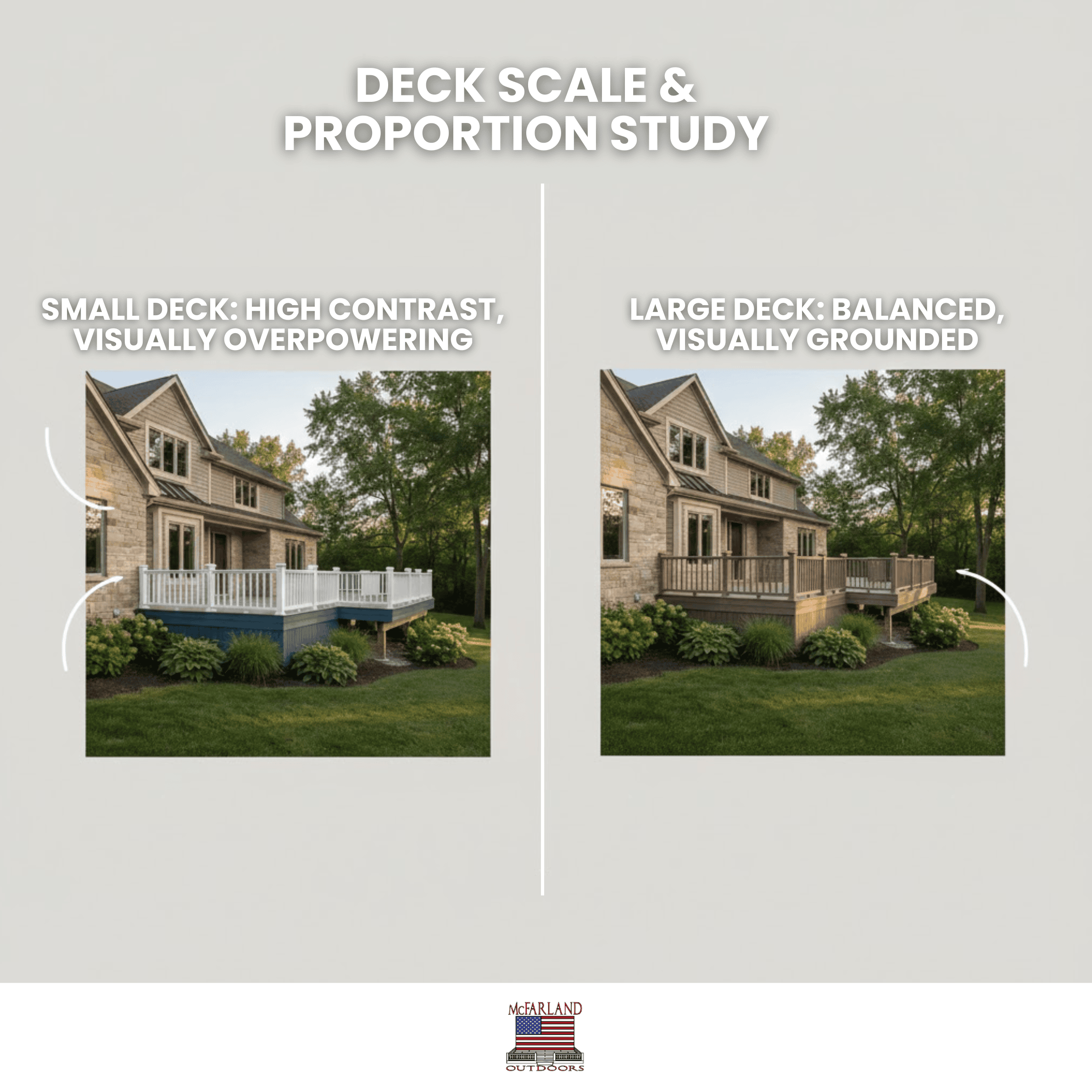
Why dark decks overwhelm small homes:
- They visually pull attention downward
- They make the house appear top-heavy
- They exaggerate scale issues rather than correcting them
Key takeaway: Match contrast level to deck size, not personal preference alone.
Rule 2 – Deck Height Affects Visual Weight
Deck height influences how heavy or light a color feels once installed. Ground-level decks visually blend into landscaping, allowing lighter tones to work without drawing too much attention.
Elevated decks are more prominent. When they’re too light, they often create a “floating platform” effect that looks unfinished or disconnected from the home. Darker or mid-tone decking helps anchor elevated decks visually.
Design tip:
- Pair darker decking with lighter railings to reduce visual mass
- Use railing color as a transition instead of relying on deck boards alone
Key takeaway: Height changes perception—design accordingly.
Rule 3 – Sun, Shade, and Tree Cover Matter More Than Style
Lighting conditions ultimately decide whether a deck color succeeds. Style preferences don’t override physics.
In full sun, very dark decks absorb more heat and show fading sooner. In shaded yards—especially under Midwest tree cover—light gray and cool-toned decks can highlight pollen, dirt, and organic debris. Over time, some gray decks even skew green due to moisture and buildup.
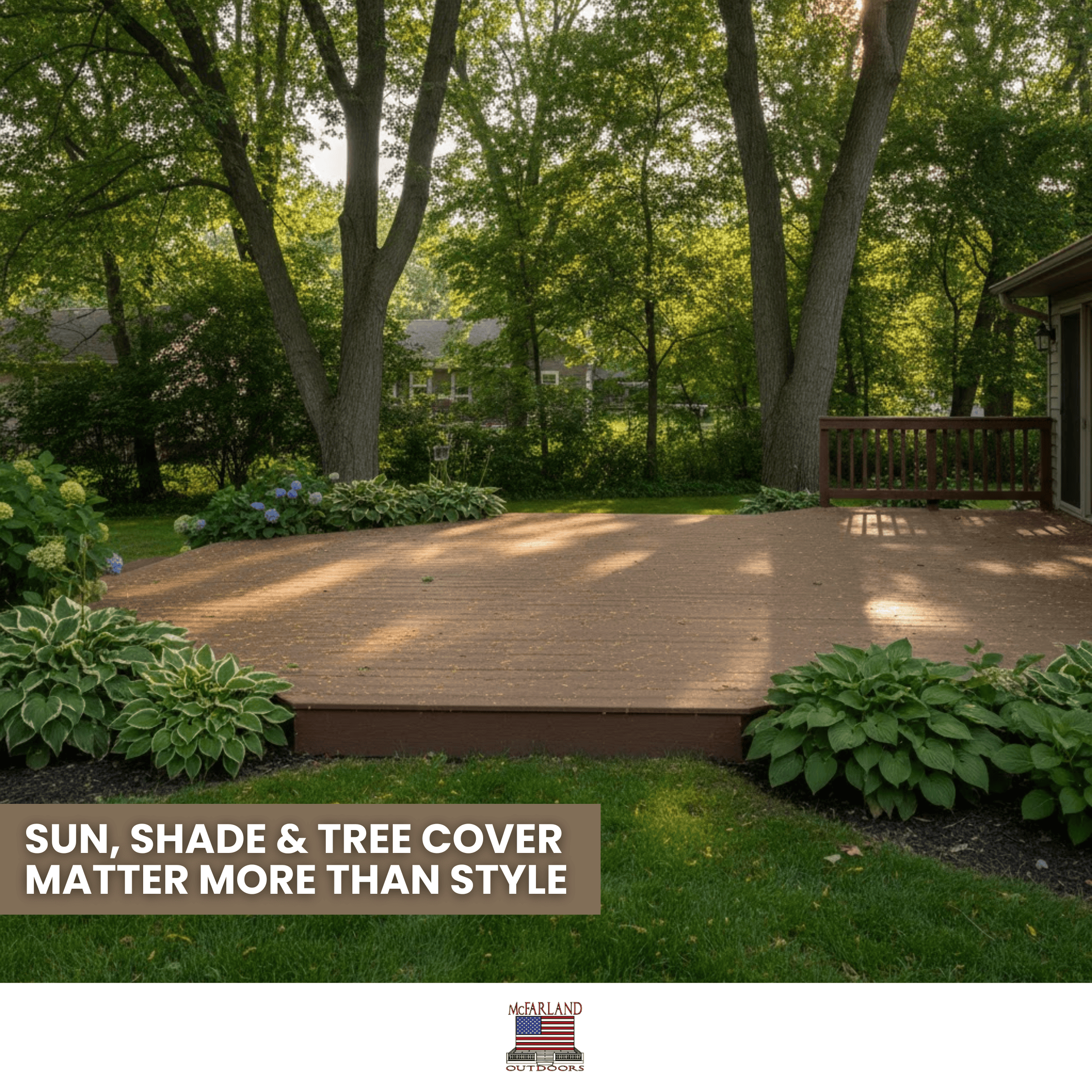
Environmental realities to account for:
- Full sun accelerates fading on dark decks
- Shade exposes dirt and mold on light decks
- Tree cover amplifies color shifts over time
Key takeaway: Choose colors based on exposure first, aesthetics second.
Rule 4 – Trim Color Is the Missing Link
Trim is the bridge between the house and the deck, yet it’s often overlooked. When deck fascia or accents align with house trim, the entire exterior feels cohesive. When trim is ignored, decks frequently look “added on” rather than designed in.
Railings are especially powerful. On multi-tone homes, they can visually connect siding and decking without forcing an exact color match.
Best practices:
- Match deck fascia to house trim when possible
- Use railings as transitional elements
- Avoid letting deck boards carry the entire visual load
Key takeaway: Trim and railings matter as much as deck color itself.
Rule 5 – Think in 10–15 Year Color Aging
Deck colors don’t stay frozen in year one. Composite and PVC materials fade differently than wood, and time exposes poor color choices quickly.
Ultra-dark decks often look bold for the first few years, then feel tired and dated by year eight. Mid-tone, warm-neutral colors tend to age more gracefully and hide wear better.
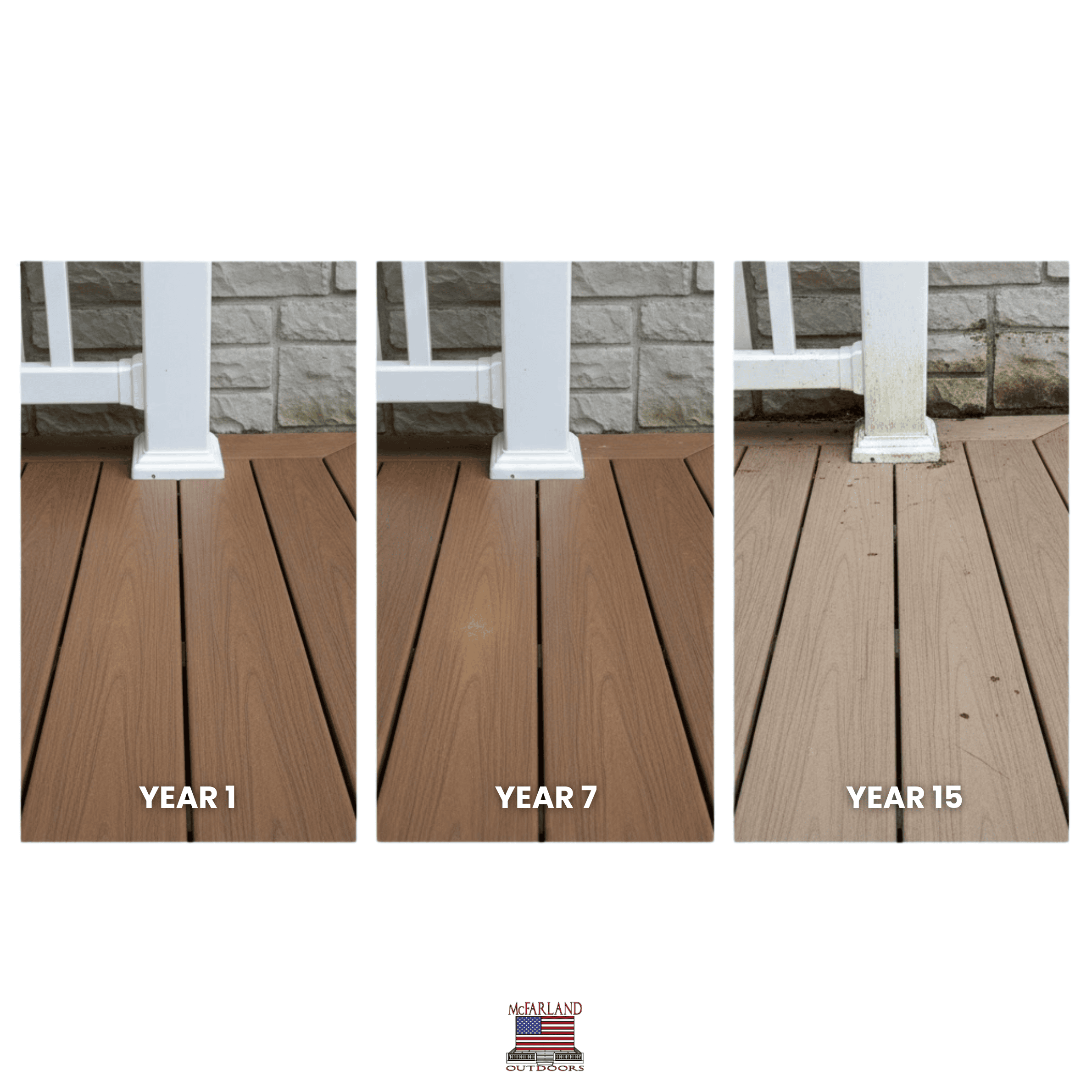
Colors that age best typically:
- Sit in the mid-tone range
- Lean warm rather than cool
- Hide dirt, fading, and surface wear
Key takeaway: Design for longevity, not first impressions.
Best House and Deck Color Combinations by Home Color
White Houses
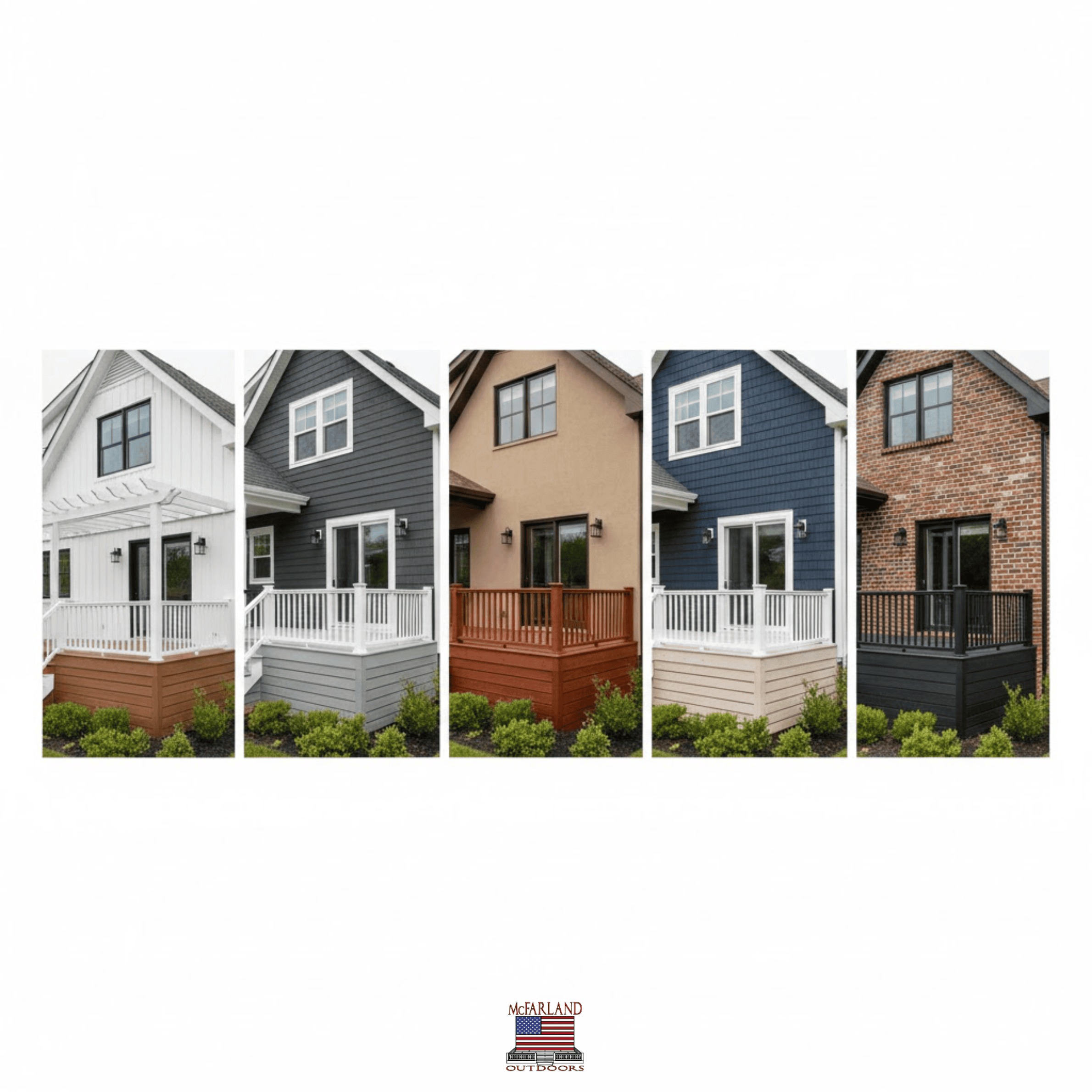
White homes offer flexibility, but restraint is critical. High-contrast combinations—like white siding with a dark brown or charcoal deck—work best on larger or elevated decks. Softer contrasts using warm gray or natural wood tones feel more timeless and forgiving.
For deck colors for a white house with black shutters, grounding the deck in a mid-to-dark neutral prevents the shutters from overpowering the exterior.
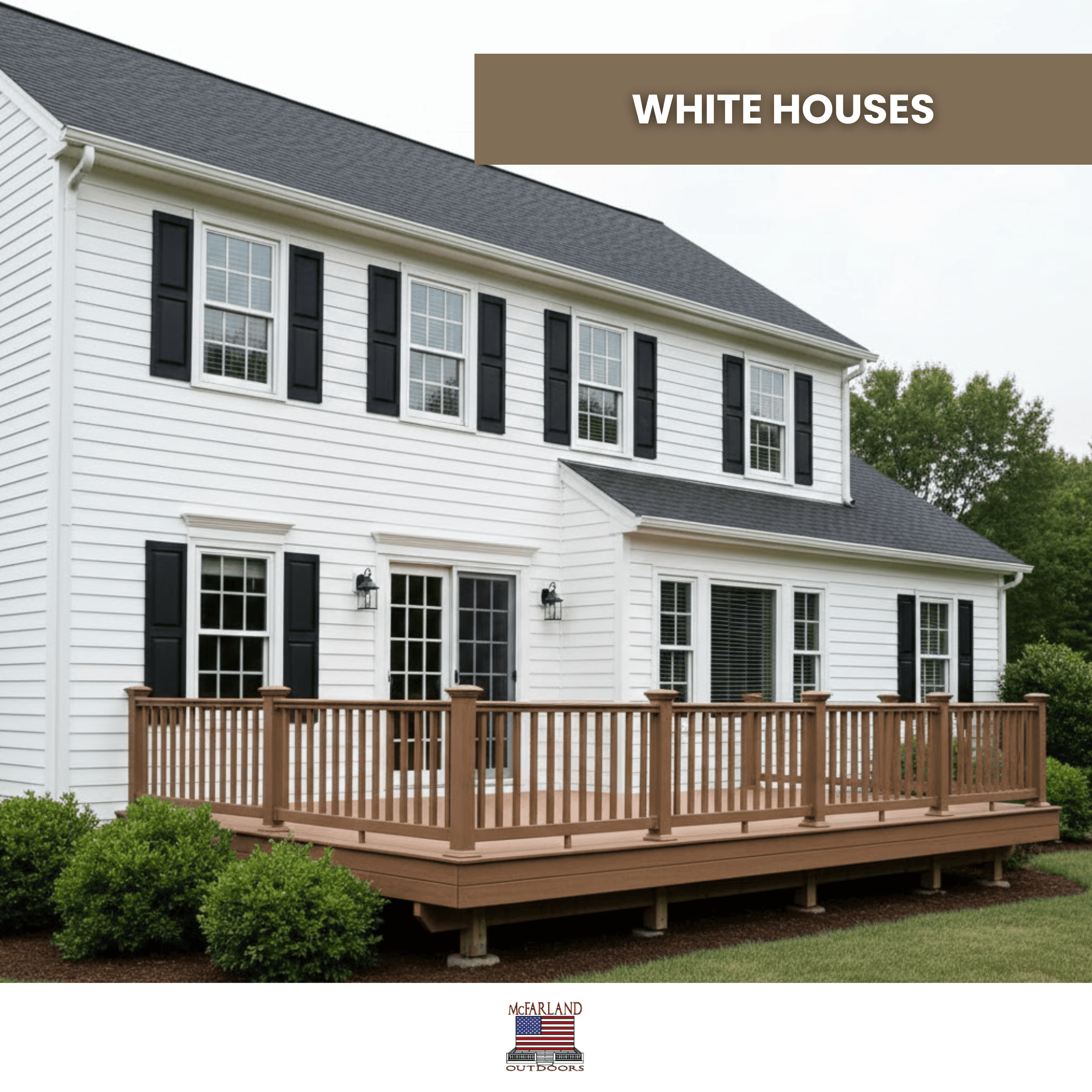
Best options:
- Warm gray for subtle contrast
- Medium brown for balance
- Charcoal for large or elevated decks
Gray Houses
Gray is neutral, but undertones matter. Warm gray houses pair best with taupe, driftwood, or brown-leaning decks. Cool gray houses typically work better with charcoal or stone-toned decking.
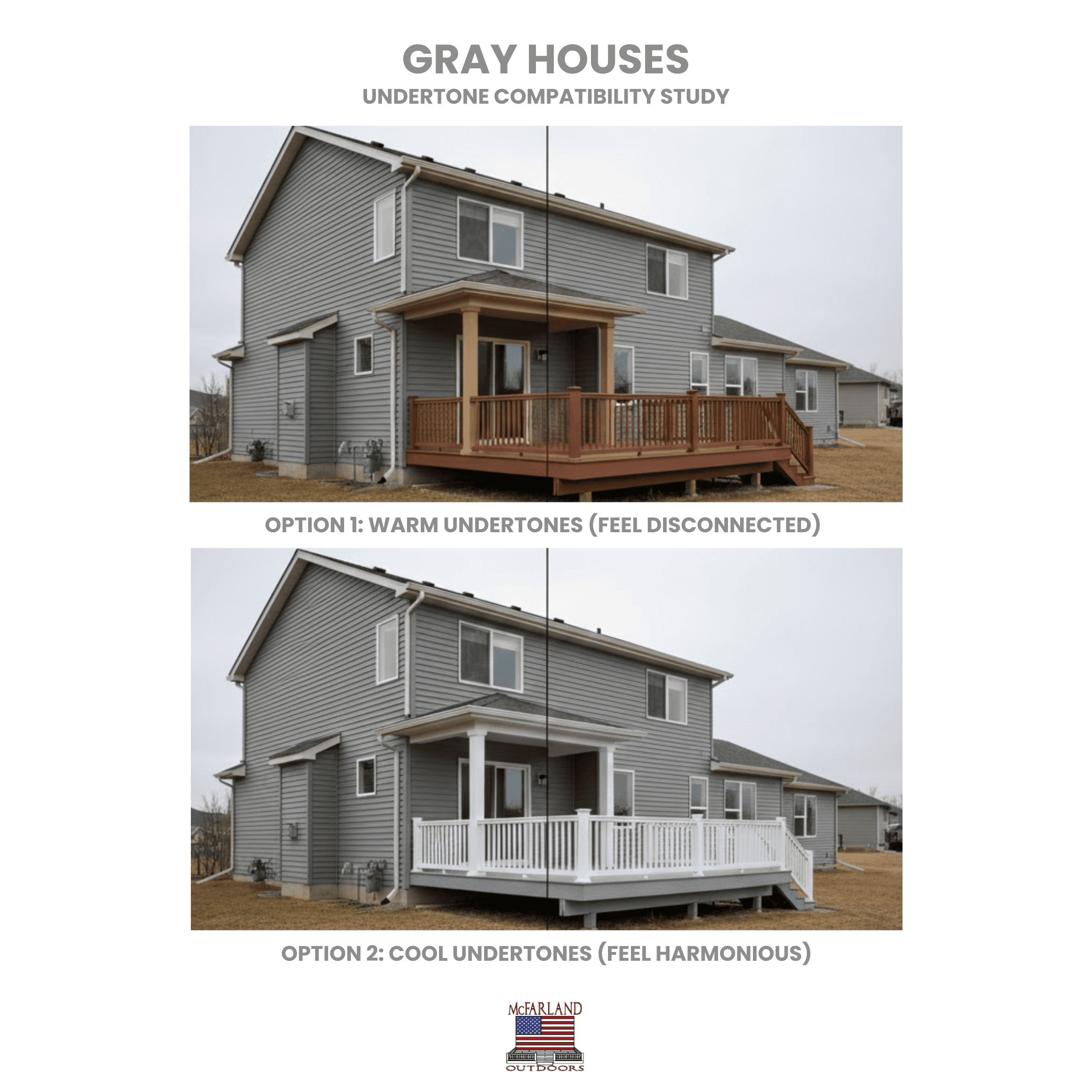
For grey house and deck color combinations:
- Avoid mixing warm and cool grays
- Let undertones guide the pairing
Tan or Beige Houses
Tan homes risk looking flat when colors are matched too closely. Exact tan-on-tan removes depth and visual interest. Introducing contrast through darker browns or lighter grays restores balance.
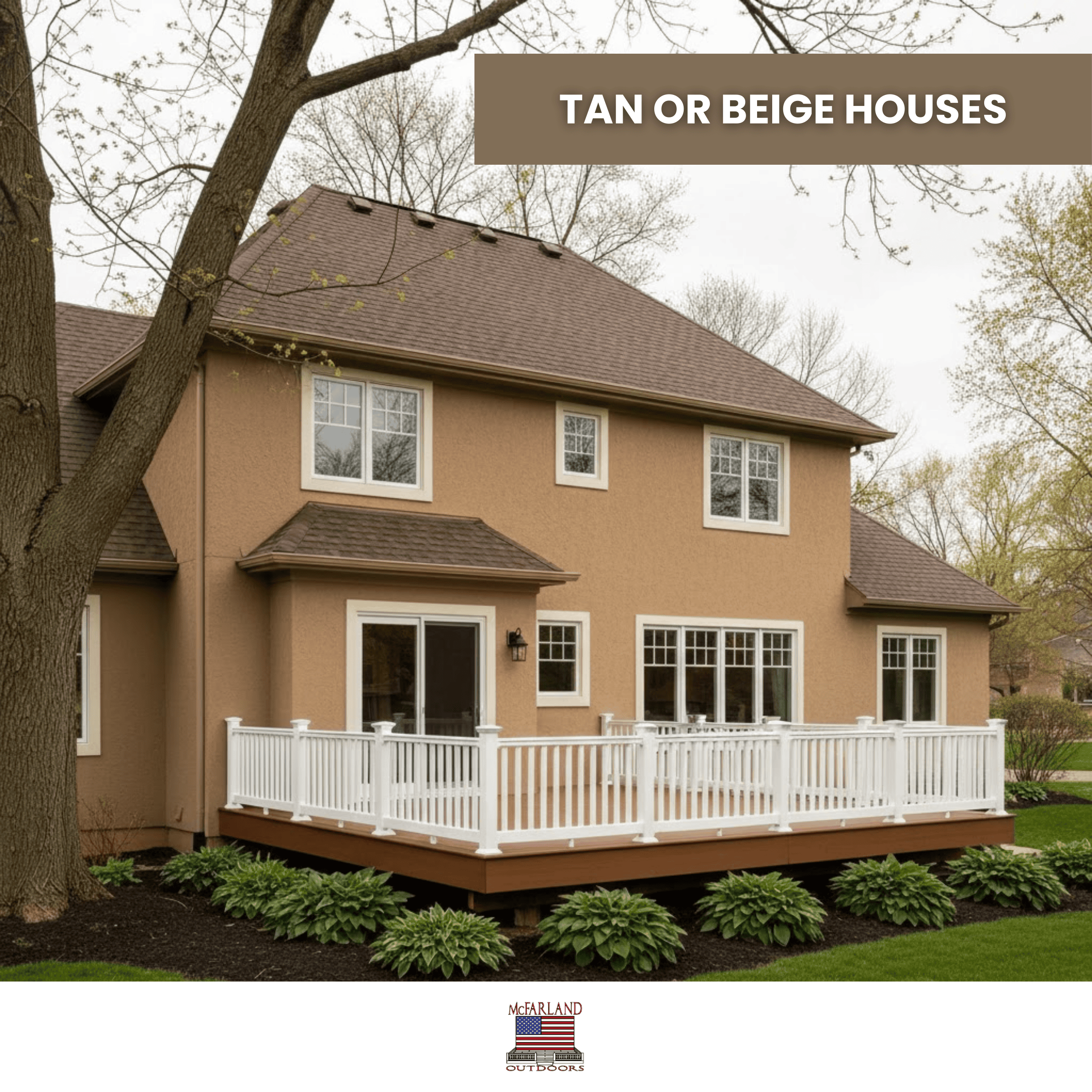
Design focus areas:
- Use contrast intentionally
- Rely on trim to separate surfaces
- Avoid “all-brown” palettes
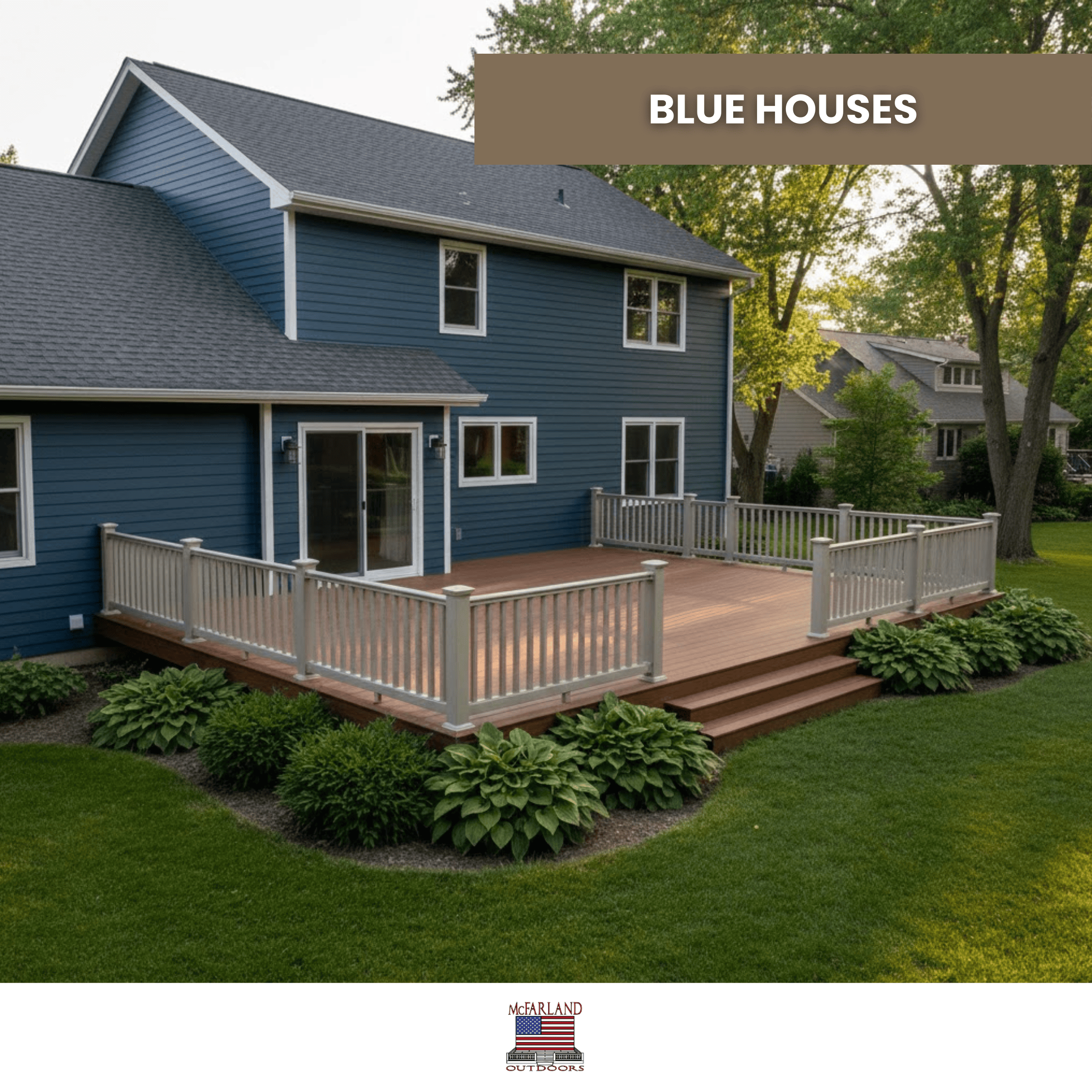
Blue Houses
A common question is what color deck goes with a blue house, and context matters. Coastal blues pair well with light gray or weathered wood tones. Midwest blues usually benefit from warmer browns or greige decking to avoid a cold, sterile look.
Neutral railings help keep blue exteriors from feeling visually overloaded.
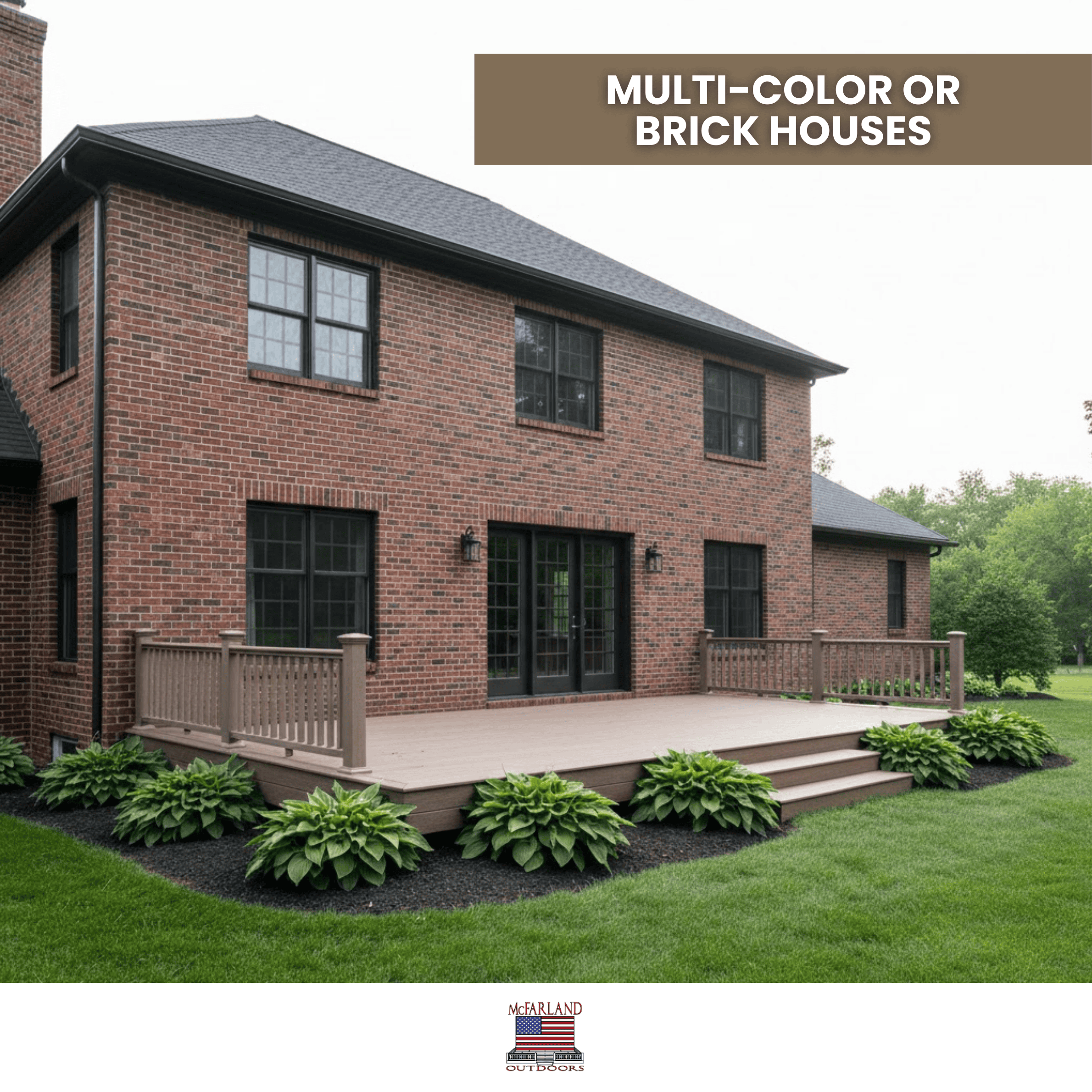
Multi-Color or Brick Homes
Brick and stone already provide complexity, so the deck should stay neutral. Taupe, brown, and muted gray decks allow the home to remain the focal point.
For the best deck color for a red brick house, warm browns and soft taupes consistently outperform stark grays.
Modern House and Deck Color Combinations (Done Right)
Modern design doesn’t mean “dark everything.” Neutral decking paired with black or bronze accents often feels more refined than full monochrome schemes. When monochrome is used, texture variation is essential—flat color alone can look unfinished.
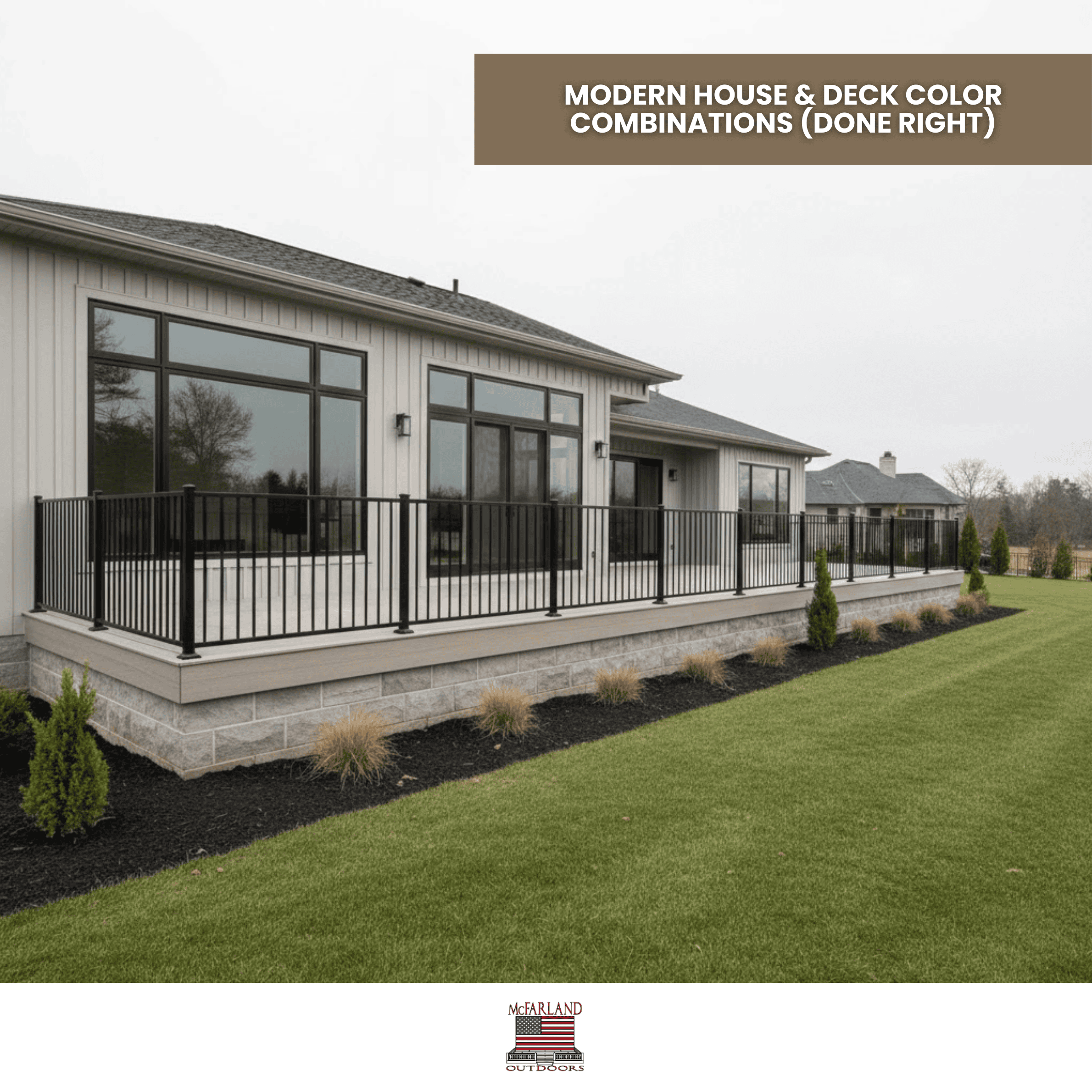
Modern success depends on:
- Clean lines
- Subtle contrast
- Material quality over drama
Small House and Deck Color Combinations That Don’t Overpower
Smaller homes benefit from intentional restraint. High contrast makes decks feel dominant, while lighter decking can visually expand space.
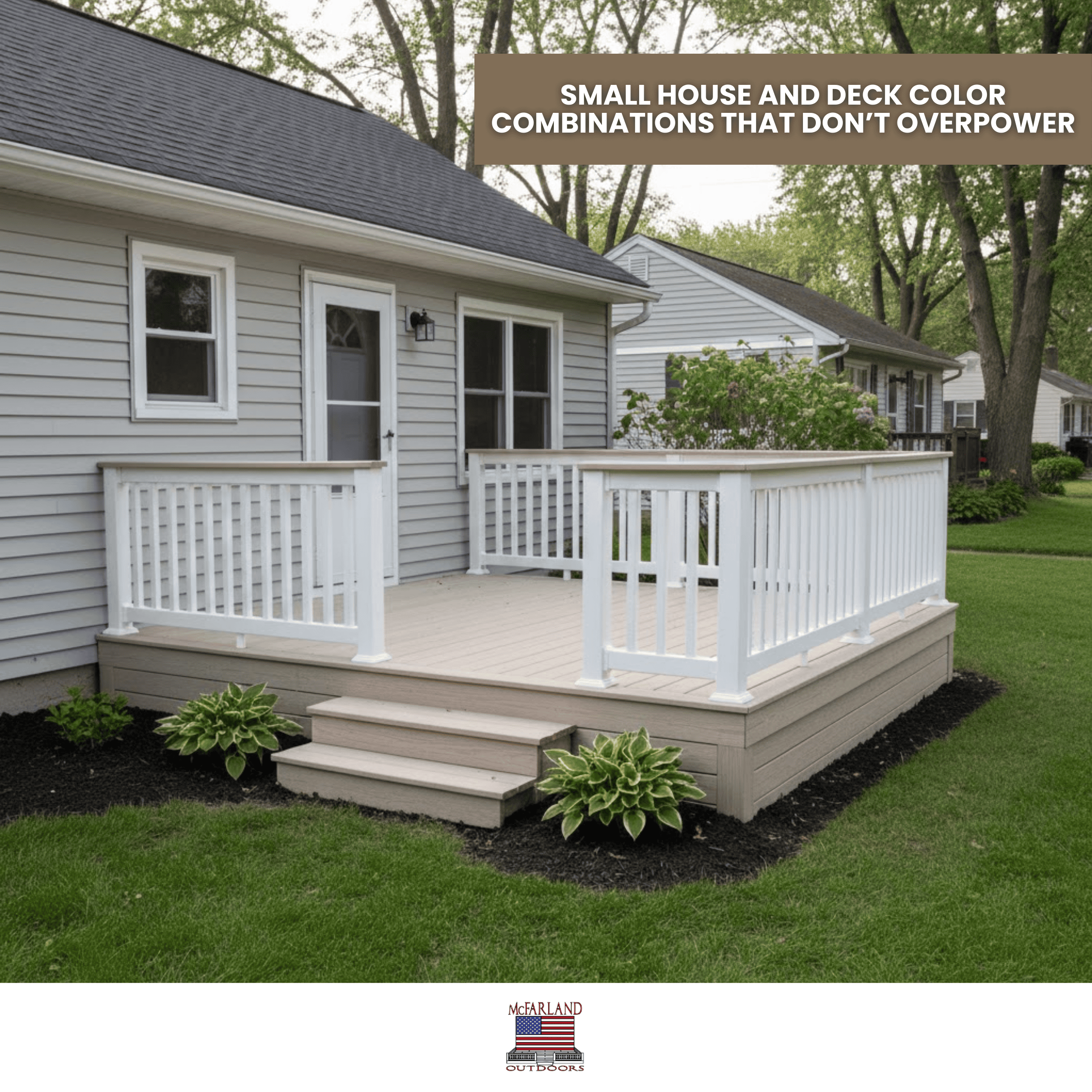
Smart strategies include:
- Reducing contrast deliberately
- Using lighter deck boards
- Controlling visual weight with skirting and railings
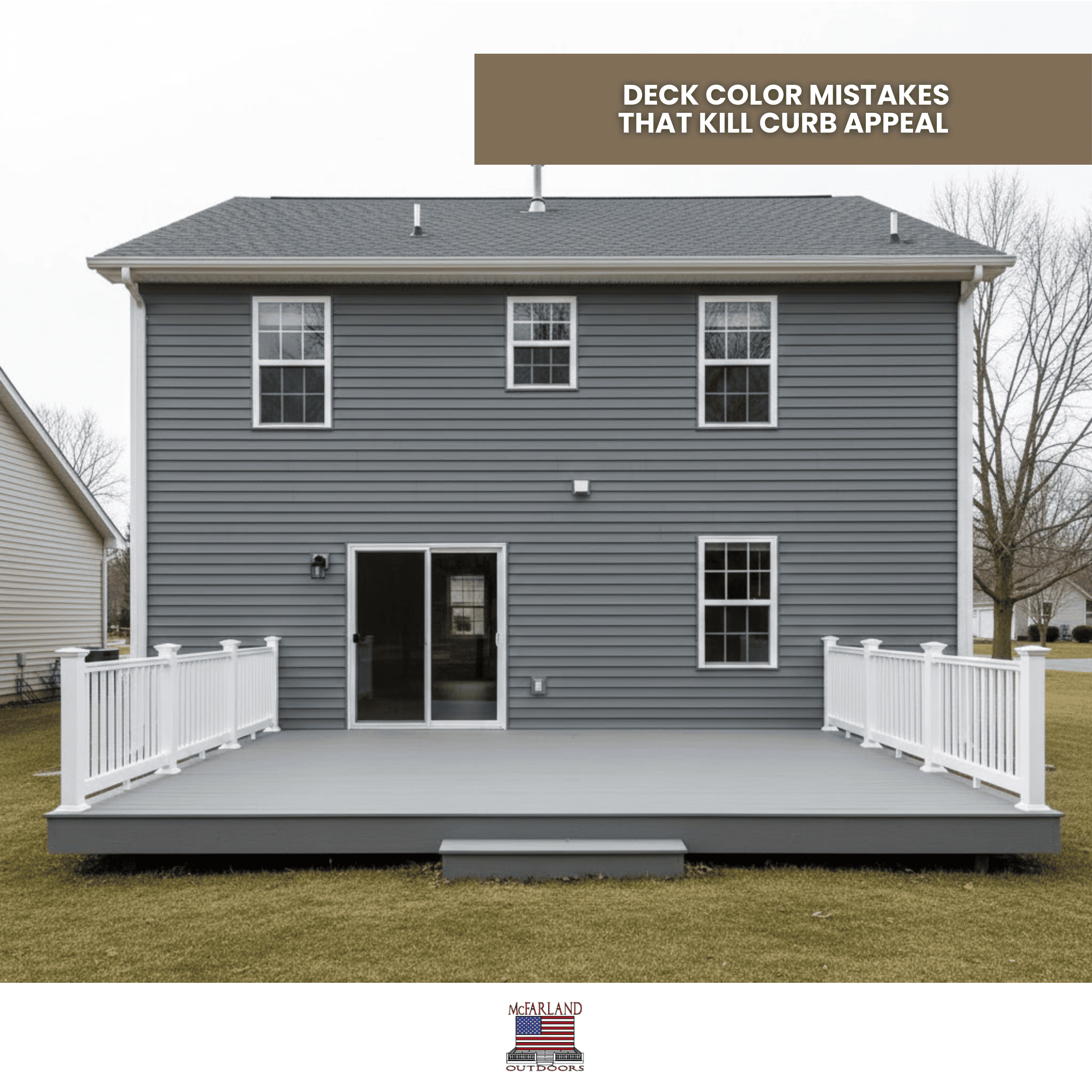
Deck Color Mistakes That Kill Curb Appeal
Some mistakes undermine even well-built decks:
- Matching deck boards exactly to siding
- Ignoring railing and fascia color
- Choosing trendy grays without warmth
- Forgetting seasonal light changes
These problems rarely appear in samples—but they show up quickly in real life.
How to Choose Confidently (Without Guesswork)
Smart testing beats endless browsing. Samples should be tested where they’ll actually live, under real conditions.
Best sampling practices:
- Place samples horizontally
- View them morning, midday, and evening
- Wet the boards to simulate rain
- Trust experienced contractor insight over showroom lighting

Final Takeaway: Cohesion Beats Trend Every Time
The best house and deck color combinations don’t shout. They feel balanced, intentional, and specific to the home. When color decisions account for size, height, light, and long-term aging, the deck stops feeling like an add-on—and starts feeling like it always belonged.
If this guide helped clarify your decision, consider sharing it or exploring more outdoor design insights from McFarland Outdoors.

Proven business leader with a strong track record of founding, growing, and scaling successful small businesses. Experienced in building companies from the ground up, driving sustainable growth, and leading teams through all stages of development. In the past year, led the delivery of 45+ custom deck projects. Skilled in identifying new business opportunities, developing and mentoring talent, and managing the full scope of daily operations—from sales and pricing strategy to financial oversight and execution. Known for operational excellence, strong financial acumen, and a continuous-improvement mindset that drives performance across every area of the business.