
When homeowners begin planning a new deck, one of the first questions that usually comes up is PVC vs composite decking. Both materials are popular alternatives to traditional wood because they offer strong durability, weather resistance, and far less maintenance over time.
At first glance, composite vs PVC decking can look very similar. Both are designed to replicate the appearance of natural wood while eliminating the need for regular staining or sealing. However, the way these boards are built—and how they perform long term—is quite different.
PVC deck boards are fully synthetic plastic boards, while composite boards combine recycled plastic with wood fibers to create a hybrid material. Understanding the difference between PVC and composite decking helps homeowners choose the right material for their climate, budget, and outdoor design goals.
What Is PVC Decking?
PVC decking is manufactured from polyvinyl chloride (PVC), a durable plastic commonly used in construction products such as piping, exterior trim, and siding.
Unlike composite boards, PVC decking contains no organic materials. Because the boards are entirely synthetic, they offer exceptional resistance to moisture and decay.
PVC decking typically provides several important advantages.
- PVC boards are made from 100% synthetic materials, meaning they contain no wood fibers.
- They offer excellent moisture resistance, which helps prevent swelling or deterioration.
- The material is naturally resistant to rot, mold, and insects.
- PVC boards are generally lighter than composite boards, making them easier to handle during installation.
- The surface requires very little long-term maintenance.
Since PVC boards do not contain wood fibers, they do not absorb water the way natural materials can. This makes PVC decks particularly attractive for environments where moisture exposure is constant, such as humid climates, rainy regions, and poolside installations.
Many modern PVC decking products also feature protective polymer caps and UV inhibitors that help reduce fading, staining, and sun damage.
Several well-known manufacturers produce PVC decking, including:
- TimberTech (AZEK Advanced PVC lines)
- Trex Company
- Wolf Home Products
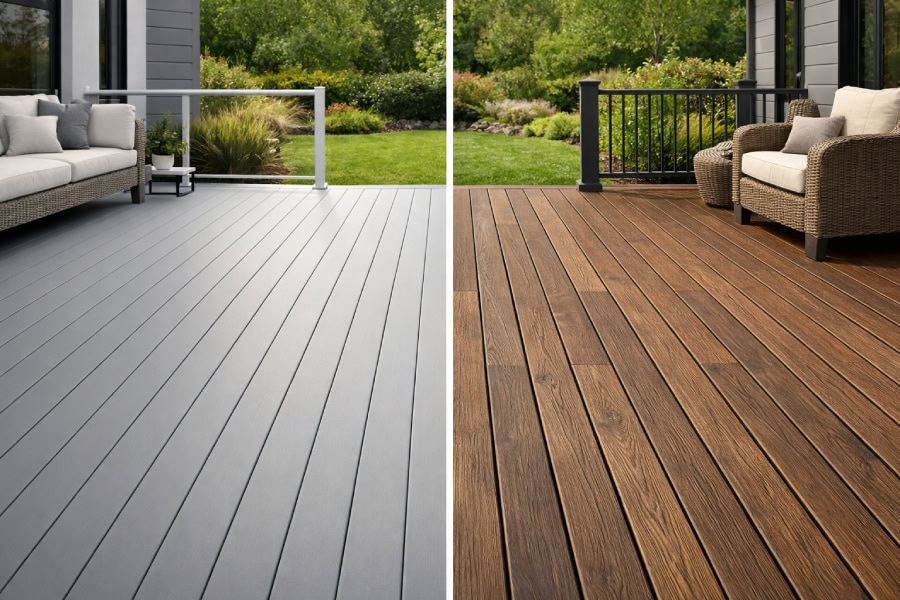
PVC decking has improved dramatically over the past decade. Early versions sometimes appeared overly plastic, but modern boards now feature embossed grain textures and multi-tone color variations that closely resemble real wood.
What Is Composite Decking?
Composite decking is engineered from a blend of recycled plastic and wood fibers, which are bonded together using polymer resins and typically protected by a durable outer cap.
This hybrid construction allows composite boards to maintain the appearance and texture of natural wood while significantly improving resistance to moisture, decay, and weather exposure.
Composite decking offers several key characteristics.
- Composite boards are manufactured from wood fibers combined with recycled plastic.
- Many products are protected by polymer capping, which improves durability.
- The boards provide strong structural performance, making them ideal for large decks.
- Composite decking is resistant to insects, rot, and weather damage.
- The boards often feature natural wood-like textures and color variation.
Most modern products are known as capped composite decking, meaning a protective polymer shell surrounds the core of the board. This outer layer improves several important performance factors.
- It increases moisture resistance.
- It helps prevent surface stains.
- It improves UV protection, reducing fading over time.
- It helps maintain color consistency and surface durability.
Leading composite decking manufacturers include:
- Trex Company
- TimberTech
- Fiberon
Because composite decking contains wood fibers, it often delivers a warmer and more natural wood appearance than fully synthetic boards. For many homeowners, that aesthetic advantage is one of the main reasons composite decking is selected.
Difference Between PVC and Composite Decking
PVC and composite decking may appear similar once installed, but their internal composition and performance characteristics differ in several important ways.
| Feature | Composite Decking | PVC Decking |
| Composition | Wood fibers + recycled plastic | 100% synthetic PVC |
| Appearance | Natural wood grain look | Smoother or uniform grain |
| Strength | Stronger structural boards | Lighter boards |
| Moisture Resistance | Very high | Extremely high |
| Heat Retention | Moderate | Can get hotter |
| Maintenance | Low | Very low |
| Price | Moderate | Higher |
The difference between PVC and composite decking primarily comes down to how the boards are built.
Composite boards are typically heavier and structurally stronger, while PVC boards are lighter and excel in environments where moisture exposure is constant.
Durability: Which Material Lasts Longer?
When comparing pvc deck boards vs composite, longevity is often one of the most important considerations.
PVC decking lifespan
High-quality PVC boards are commonly rated to last 50 years or more. Because the material contains no organic components, it cannot rot or absorb moisture.
PVC decking also resists mold, mildew, and insect damage extremely well.
Composite decking lifespan
Composite boards typically last 25 to 40 years, depending on the manufacturer and product quality.
Although composite boards are extremely durable, the presence of wood fibers means the core material can eventually be affected if the protective cap becomes damaged.
Contractor insight
Experienced deck builders often point out a few practical observations.
- Composite boards are structurally stronger, which can be beneficial for large decks and stairs.
- PVC boards are lighter and easier to handle, but the softer surface may scratch more easily.
In real-world conditions, both materials offer decades of reliable performance and significantly outlast traditional wood decking.
Maintenance Requirements
A major reason manufactured decking has become so popular is the minimal maintenance it requires.
Unlike wood decking, which must be stained and sealed regularly, both PVC and composite decking require very little ongoing upkeep.
Typical maintenance tasks for both materials include:
- Occasional washing with soap and water
- Removing leaves and debris from between boards
- Light brushing if dirt or buildup appears
PVC decking does have a slight advantage when it comes to cleaning. Because the boards are fully synthetic, the surface resists stains and moisture penetration more effectively.
Composite boards, on the other hand, often hide minor scratches and scuffs better due to their deeper wood-grain textures.
For most homeowners, either material dramatically reduces the maintenance effort compared with traditional lumber decks.
PVC Decking vs Composite Price
Another important factor homeowners consider is pvc decking vs composite price.
The total cost of a deck depends on several variables, including size, layout, railing systems, and additional features.
Typical installed pricing ranges include:
Composite decking
- Approximately $50–$90 per square foot installed, depending on the brand of composite boards, the complexity of the deck design, and additional features such as railings, stairs, lighting, or multi-level construction.
PVC decking
- Approximately $60–$100 per square foot installed, with pricing influenced by the quality of the PVC boards, installation complexity, and upgrades like premium railing systems, built-in lighting, or custom deck layouts.
PVC boards generally cost more upfront because they are manufactured entirely from advanced synthetic polymers rather than blended materials.
However, the longer lifespan and reduced maintenance requirements of PVC can offset some of those initial costs over time.
Several factors can influence the final price of a deck installation.
- Deck size and layout
- Stairs or multi-level platforms
- Railing systems and accessories
- Deck lighting
- Structural framing materials
Because every project is different, professional contractors typically recommend requesting a custom estimate before choosing a material.
Climate Performance: Which Works Better in Indiana?
Climate conditions play an important role in how decking materials perform over time.
In regions such as Indiana, decks must withstand several environmental challenges.
- Freezing winters
- Snow and ice accumulation
- Humid summers
- Seasonal temperature fluctuations
Composite boards tend to expand and contract slightly less than PVC, which can be beneficial during freeze-thaw cycles common in Midwestern climates. Composite decking also typically offers better traction when wet, which can be helpful during snowy or icy conditions.
PVC decking performs extremely well in wet environments. The material is often preferred for:
- Pool decks
- Waterfront homes
- Areas with heavy humidity or frequent rainfall
Because PVC boards contain no wood fibers, they resist moisture infiltration extremely well.
For many homeowners in the Midwest, composite decking offers a strong balance of durability, structural stability, and visual appeal.
Installation Differences Contractors Notice
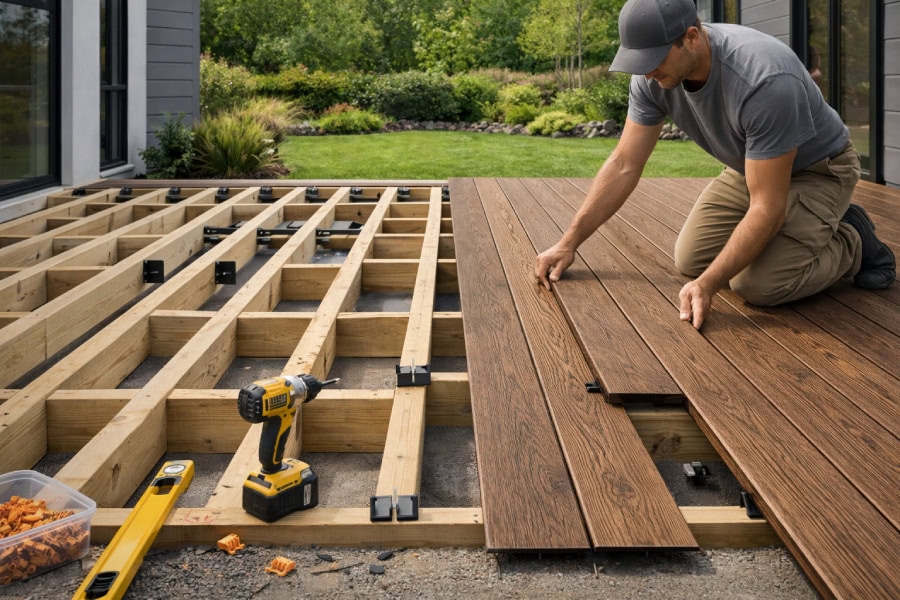
Although installation methods are generally similar, contractors often notice some differences between pvc decking vs composite decking during construction.
Composite decking tends to offer several installation advantages.
- Stronger screw retention
- Easier routing and shaping
- Solid structural support for stairs
- Less expansion movement during temperature changes
PVC decking also has some unique characteristics during installation.
- The boards are lighter and easier to carry
- They expand more with temperature changes
- The material is slightly softer
Both materials commonly use hidden fastener systems, which allow boards to be secured without visible screws and create a cleaner finished appearance.
Following manufacturer installation guidelines is essential for long-term deck performance.
Is PVC Decking Better Than Composite?
Homeowners often ask whether PVC decking is better than composite. The truth is that neither material is universally better—the right choice depends on how and where the deck will be used.
PVC decking is often the better option in environments where moisture exposure is constant. For example, it performs especially well for pool decks, docks, waterfront properties, and coastal environments where humidity and water contact are frequent. Because PVC boards are made entirely from synthetic materials, they resist moisture infiltration extremely well, which helps prevent rot, mold, and long-term deterioration.
Composite decking, on the other hand, tends to perform better in certain structural and design situations. It is commonly preferred for elevated decks, larger outdoor living spaces, and regions with colder climates. The material is typically heavier and structurally stronger, which can be beneficial for larger deck builds. Many homeowners also choose composite decking because it offers a more natural wood appearance thanks to the wood fibers used in its construction.
Both materials significantly outperform traditional wood when it comes to durability and maintenance. In most cases, the final decision comes down to the local climate, how the deck will be used, and the aesthetic style the homeowner wants to achieve.
Frequently Asked Questions
Does PVC decking get hotter than composite?
Yes. PVC decking can become hotter in direct sunlight because plastic retains heat more efficiently than composite materials. Many manufacturers now incorporate heat-reflective technology to help reduce surface temperatures.
Which decking lasts longer?
High-quality PVC decking often lasts 50 years or more, while composite decking typically lasts 25–40 years, depending on the manufacturer and environmental conditions.
Can you mix PVC and composite boards?
Technically, it is possible, but it is rarely recommended. Mixing materials can cause inconsistent expansion rates and visual differences. Most contractors recommend using one material consistently throughout the deck.
Final Thoughts: Choosing the Right Decking Material
When comparing PVC vs composite decking, both materials offer clear advantages over traditional wood, including improved durability and significantly lower maintenance. Composite decking is often chosen for its natural wood appearance, strong structural performance, and balanced combination of cost and longevity. PVC decking, on the other hand, stands out for its exceptional moisture resistance, extremely low maintenance requirements, and potential for a longer lifespan.
Ultimately, the best choice depends on how the deck will be used, the climate it must withstand, and the style you want to achieve. If you are still deciding between PVC vs composite decking, discussing your options with an experienced deck builder can help ensure you choose the material that performs best for your outdoor space.

Proven business leader with a strong track record of founding, growing, and scaling successful small businesses. Experienced in building companies from the ground up, driving sustainable growth, and leading teams through all stages of development. In the past year, led the delivery of 45+ custom deck projects. Skilled in identifying new business opportunities, developing and mentoring talent, and managing the full scope of daily operations—from sales and pricing strategy to financial oversight and execution. Known for operational excellence, strong financial acumen, and a continuous-improvement mindset that drives performance across every area of the business.