
If you’re planning a new build or evaluating an aging structure, the first question is simple: how long does a deck last?
The honest answer is this: most decks last 10 to 50 years, depending on material, climate, construction quality, and maintenance discipline.
That wide range isn’t marketing fluff. It reflects real-world performance differences between pressure-treated lumber, cedar, hardwoods like Ipe, composite boards, and PVC systems. It also reflects something most articles ignore: the structure underneath often fails before the surface boards do.
In this guide, we’ll break down:
- Realistic deck lifespan by material
- How long does a wood deck last vs. composite
- The structural failure points most homeowners overlook
- Midwest climate impact (including Indiana conditions)
- 25-year maintenance cost comparisons
- When to repair vs replace
Let’s start with the numbers.
Average Deck Lifespan by Material (What the Data Shows)
Industry guidance from the International Association of Certified Home Inspectors and structural durability research from the National Association of Home Builders suggest the following realistic ranges:
| Material | Average Lifespan | With Excellent Maintenance | With Poor Maintenance |
| Pressure-Treated Wood | 10–15 yrs | 15–20 yrs | 7–10 yrs |
| Cedar / Redwood | 15–20 yrs | 20–25 yrs | 10–15 yrs |
| Hardwood (Ipe) | 25–40 yrs | 40+ yrs | 20–25 yrs |
| Composite | 25–35 yrs | 35–50 yrs | 20–25 yrs |
| PVC | 30–50 yrs | 50+ yrs | 25–30 yrs |
Important context: these numbers primarily reflect deck boards. The framing beneath — joists, beams, ledger boards — often has a shorter service life.
How Long Does a Wood Deck Last?
When people ask how long does a wood deck last, they usually mean pressure-treated lumber. But not all wood performs the same.
Pressure-Treated Wood
Pressure-treated pine remains the most commonly used decking material in the United States because it is affordable, widely available, and structurally strong. On average, a pressure-treated wood deck lasts between 10 and 15 years. With consistent sealing, cleaning, and annual inspections, that lifespan can extend to 15 to 20 years. However, if maintenance is neglected, the deck may begin deteriorating in less than 10 years.
To reach the upper end of its expected lifespan, pressure-treated decking requires regular care. Homeowners should reseal or restain the deck every one to three years to protect it from moisture intrusion and UV damage. The structure should be inspected annually to identify early signs of rot, loose fasteners, or ledger board movement. Routine cleaning is also necessary to remove debris, mold, and mildew that trap moisture against the wood. Additionally, fasteners should be monitored over time to ensure they remain secure and free from corrosion.
In many cases, deck failure begins not at the surface but around fasteners and ledger boards, where moisture penetrates and remains trapped. Once decay starts in these critical structural areas, the lifespan of the entire deck can shorten dramatically.
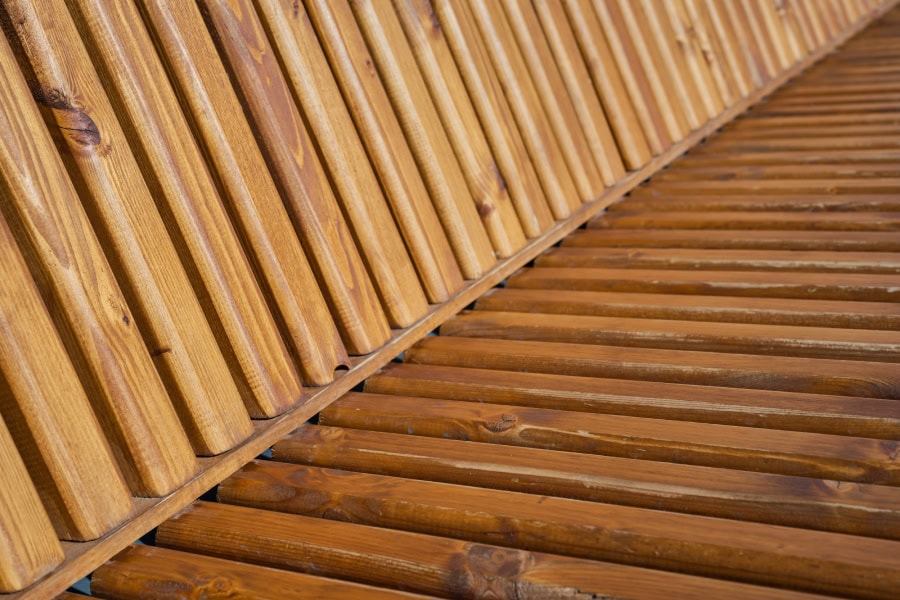
Cedar and Redwood
Cedar and redwood are popular decking materials because they offer natural resistance to rot and insects. They also provide strong aesthetic appeal, with rich tones and visible grain patterns that enhance outdoor spaces.
Under normal conditions, cedar and redwood decks typically last between 15 and 20 years. With disciplined maintenance and consistent protective sealing, their lifespan can extend up to 25 years. However, those higher numbers depend entirely on ongoing care and environmental exposure.
Over time, ultraviolet (UV) radiation breaks down the surface fibers of these softer woods. Without a protective sealant, surface checking, splitting, and color fading will accelerate. Moisture absorption combined with sun exposure creates a cycle of expansion and contraction that gradually weakens the boards.
While cedar generally outperforms untreated pine in durability, it is not maintenance-free. Regular cleaning, sealing, and inspection remain essential if you want to maximize deck lifespan and preserve structural integrity.
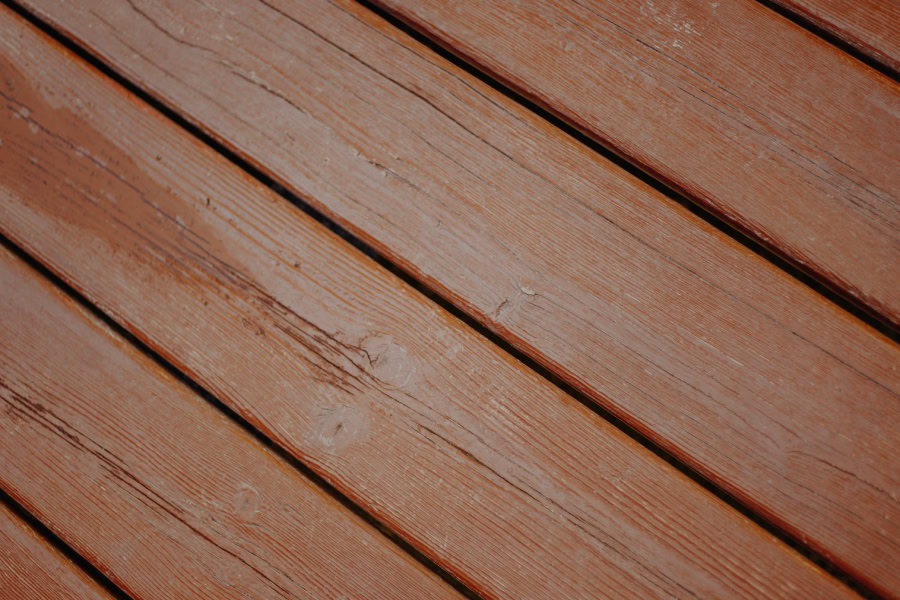
Hardwood (Ipe and Other Tropical Species)
Hardwoods such as Ipe are extremely dense and naturally resistant to insects, fungal decay, and moisture intrusion. Their density makes them one of the longest-lasting natural decking options available.
On average, hardwood decking lasts between 25 and 40 years. In ideal conditions, with proper installation and regular maintenance, some hardwood decks can exceed 40 years of service life.
However, longevity does not eliminate responsibility. Even highly durable hardwoods require periodic oiling to prevent surface checking and maintain appearance. Additionally, although the deck boards themselves may last decades, the supporting structure beneath them is often built from pressure-treated lumber, which may not match the lifespan of the hardwood surface.
In other words, the boards can last 40 years, but the framing may not — and that distinction matters when evaluating how long a deck truly lasts.
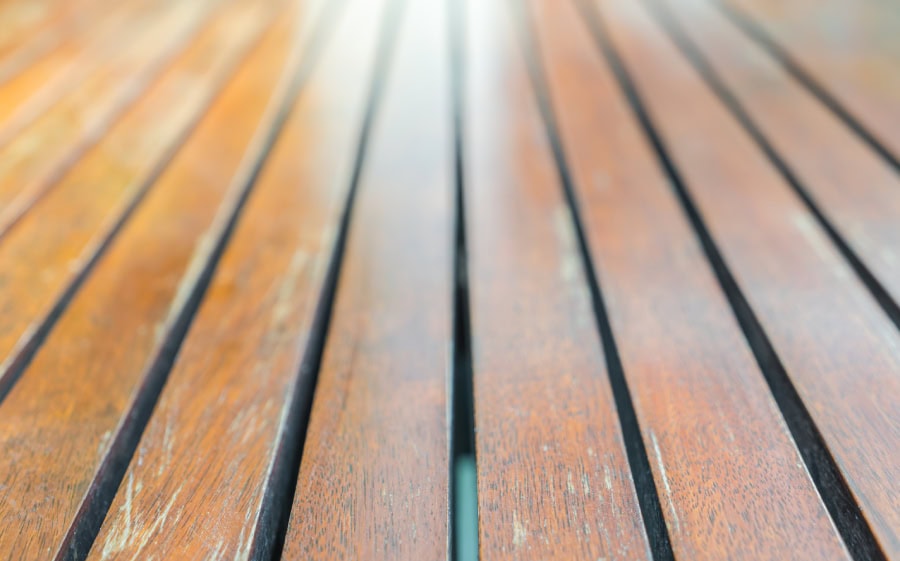
How Long Does a Composite Deck Last?
Now let’s address the second most common question: how long does a composite deck last?
Modern capped composite decking typically lasts:
- 25–35 years under normal use
- 35–50 years in optimal conditions
Manufacturers offer warranties up to 50 years, but warranty length does not equal guaranteed lifespan. It protects against specific defects — not all environmental wear.
Composite boards are engineered to resist:
- Fading
- Staining
- Mold growth
- Moisture absorption
Maintenance is minimal compared to wood, usually limited to periodic cleaning. But composite decks still rely on wooden framing in most builds. That structural layer remains a long-term risk factor.
It’s also worth noting that early-generation composite boards from the early 2000s experienced swelling and surface failures. Modern boards have significantly improved through polymer capping technology.
Composite reduces maintenance — it does not eliminate it.
The Hidden Factor Nobody Talks About: The Structure
Most articles focus on deck boards. That’s a mistake.
According to the U.S. Consumer Product Safety Commission, approximately 2,900 injuries annually are associated with deck collapses.
Industry estimates from the North American Deck and Railing Association suggest that over 40 million decks in the U.S. are beyond their useful service life.
The most common failure points include:
- Ledger board rot
- Improper flashing
- Joist decay from trapped moisture
- Corroded fasteners
- Stair stringer deterioration
- Guardrail instability
The ledger board — where your deck attaches to the house — is the single most common collapse point.
This is where lifespan is truly determined.
Climate Impact: Midwest and Indiana Conditions
In freeze-thaw climates like Indiana, decks face additional stress.
Water penetrates wood fibers. When it freezes, it expands. That expansion creates micro-cracks. Over time, those cracks accelerate rot.
Other environmental stressors include:
- Heavy snow load
- Summer humidity
- Intense UV exposure
- Rapid seasonal temperature swings
In harsher climates, you should realistically reduce lifespan expectations by 10–20%.
For example:
- Pressure-treated rated at 15 years may realistically perform closer to 12–13 years.
- Composite rated at 30 years may function more like 25–28 years.
Climate amplifies construction mistakes.
Maintenance and the 25-Year Cost Reality
Maintenance is the dividing line between short-term and long-term deck lifespan.
For a 500-square-foot wood deck, typical 25-year costs may include:
- Staining every 2–3 years
- Power washing annually
- Partial board replacement
- Possible full rebuild at year 20–25
Over 25 years, total maintenance and repair costs can reach $15,000 to $40,000 depending on labor rates and material choice.
Composite decks, by contrast, generally involve:
- Occasional cleaning
- Minimal board replacement
- Structural framing inspection
Total 25-year maintenance costs often remain under $8,000.
Upfront cost differs. Long-term cost shifts the equation.
Signs Your Deck Is Near the End of Its Lifespan
Watch for these warning signs:
- Soft or spongy deck boards that feel unstable underfoot and indicate internal rot or moisture damage.
- Joists that flex excessively when weight is applied, which may signal structural weakening beneath the surface.
- Rusted fasteners or fasteners that are backing out of the boards, as corrosion can compromise the deck’s structural integrity over time.
- Visible separation at the ledger board, especially where the deck connects to the house, which is one of the most critical and failure-prone areas.
- Guardrails that move or wobble when pressure is applied, indicating potential safety hazards and structural instability.
- Rot at stair stringers, particularly near ground contact points where moisture tends to accumulate.
- Mold embedded deep within the wood fibers, not just surface discoloration, which can indicate prolonged moisture intrusion and decay.
If multiple symptoms appear at the same time, a professional structural inspection should be scheduled immediately to determine whether repair or full replacement is necessary.
Repair or Replace?
Repair may be a practical option under the following conditions:
- Less than 20 percent of the deck boards show visible deterioration, meaning the damage is limited and does not compromise the overall surface.
- The framing beneath the deck remains structurally sound, with no signs of rot, excessive flexing, or moisture-related decay.
- The damage is primarily cosmetic, such as surface fading, minor cracking, or superficial splintering that does not affect load-bearing components.
Replacement becomes necessary under these circumstances:
- The ledger board is compromised, especially where the deck connects to the home, as this area is critical to overall structural stability.
- More than 20 to 25 percent of the deck boards are rotted, warped, or structurally weakened, making widespread repair inefficient and short-lived.
- Joists or beams show signs of decay, sagging, or internal rot, which directly affects the deck’s ability to safely support weight.
- Guardrails lack structural integrity and move under pressure, creating a safety hazard that cannot be corrected with minor fixes.
Cosmetic damage can often be refinished or repaired. Structural damage, however, requires replacement to ensure long-term safety and performance.
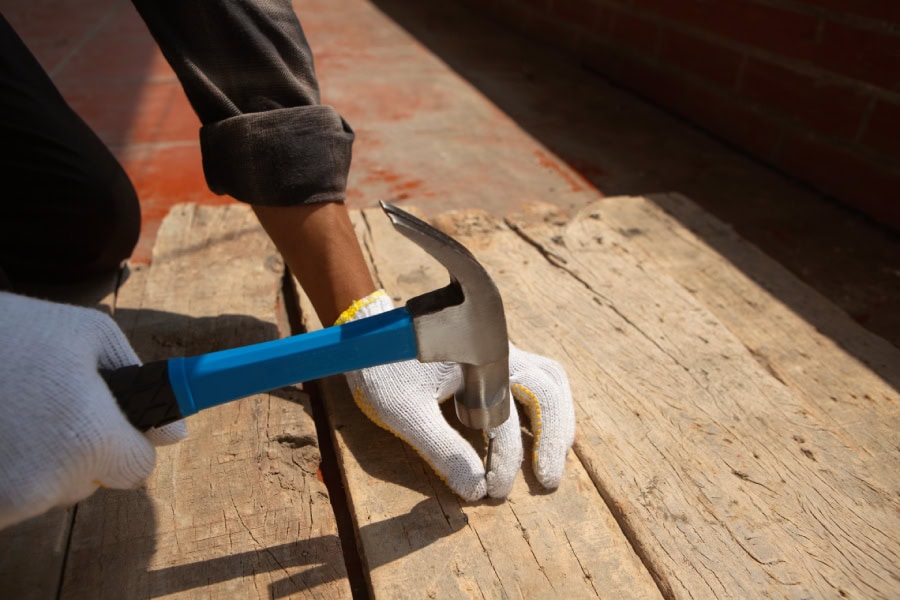
Realistic Lifespan Expectations for Indianapolis
Indiana, the following lifespan ranges are realistic:
- Pressure-treated decks typically last between 12 and 18 years in the Indianapolis area, depending on maintenance consistency and exposure conditions.
- Cedar decks generally perform within a 15 to 20-year range, particularly when sealed regularly and protected from prolonged moisture accumulation.
- Hardwood decking, such as Ipe and other dense tropical species, often lasts between 30 and 40 years, assuming proper installation and routine care.
- Composite deck boards usually perform within a 25 to 35-year range, though the underlying structure may not match that lifespan.
- Framing systems commonly last between 15 and 25 years, depending heavily on proper flashing, ventilation, and moisture management.
Using joist tape, stainless steel fasteners, and designing for effective drainage can significantly extend the life of the structural components. In Midwest climates, moisture control is the single most important factor in determining long-term deck lifespan.
How to Maximize Your Deck Lifespan
If longevity is a priority, construction quality must be treated as seriously as material selection. The following best practices dramatically improve deck lifespan:
- Install proper ledger flashing to prevent water intrusion where the deck connects to the home.
- Use joist tape to prevent moisture from penetrating the tops of framing members, which are especially vulnerable to rot.
- Ensure the deck surface has adequate slope to promote drainage and prevent standing water.
- Elevate the deck sufficiently to allow for proper airflow beneath the structure, reducing trapped humidity.
- Use stainless steel or high-quality coated fasteners to minimize corrosion over time.
- Conduct annual structural inspections to catch small issues before they evolve into costly structural failures.
Material selection certainly matters. However, construction quality and moisture management matter more when determining how long a deck truly lasts.
Frequently Asked Questions
How long does a wood deck last?
Typically 10–20 years for softwoods and 25–40+ years for hardwoods, depending on maintenance and climate exposure.
How long does a composite deck last?
Most modern composite decks last 25–35 years, with premium systems extending beyond that range.
What affects deck lifespan the most?
Moisture exposure, improper flashing, poor ventilation, and inconsistent maintenance.
Do deck boards last longer than framing?
Often yes. Structural framing commonly fails before surface boards.
How often should decks be inspected?
At least once per year, and after major storms.
Final Word
So, how long does a deck last?
Wood decks often last 10–20 years. Hardwoods can push beyond 40. Composite and PVC systems commonly reach 25–50 years. But the real determinant of deck lifespan is structural integrity, not just surface material.
If this guide clarified your next step, explore our additional deck planning resources or share this article with someone considering a build.

Proven business leader with a strong track record of founding, growing, and scaling successful small businesses. Experienced in building companies from the ground up, driving sustainable growth, and leading teams through all stages of development. In the past year, led the delivery of 45+ custom deck projects. Skilled in identifying new business opportunities, developing and mentoring talent, and managing the full scope of daily operations—from sales and pricing strategy to financial oversight and execution. Known for operational excellence, strong financial acumen, and a continuous-improvement mindset that drives performance across every area of the business.