
Deck framing may look simple, but its strength depends on the smaller structural details within the frame. One of the most important of these is deck blocking, which consists of short pieces of lumber installed between joists to stabilize the structure.
Many homeowners understand joists and beams but often ask what is deck blocking and why it matters. Blocking helps prevent joists from twisting, distributes loads across the frame, and reinforces critical areas of the deck.
Many Deck Blocking Code requirements are based on the International Residential Code (IRC), which sets safety standards for residential decks. While some blocking is required by code, other forms are widely used as best practices by experienced builders to improve strength and long-term durability.
What Is Deck Blocking?
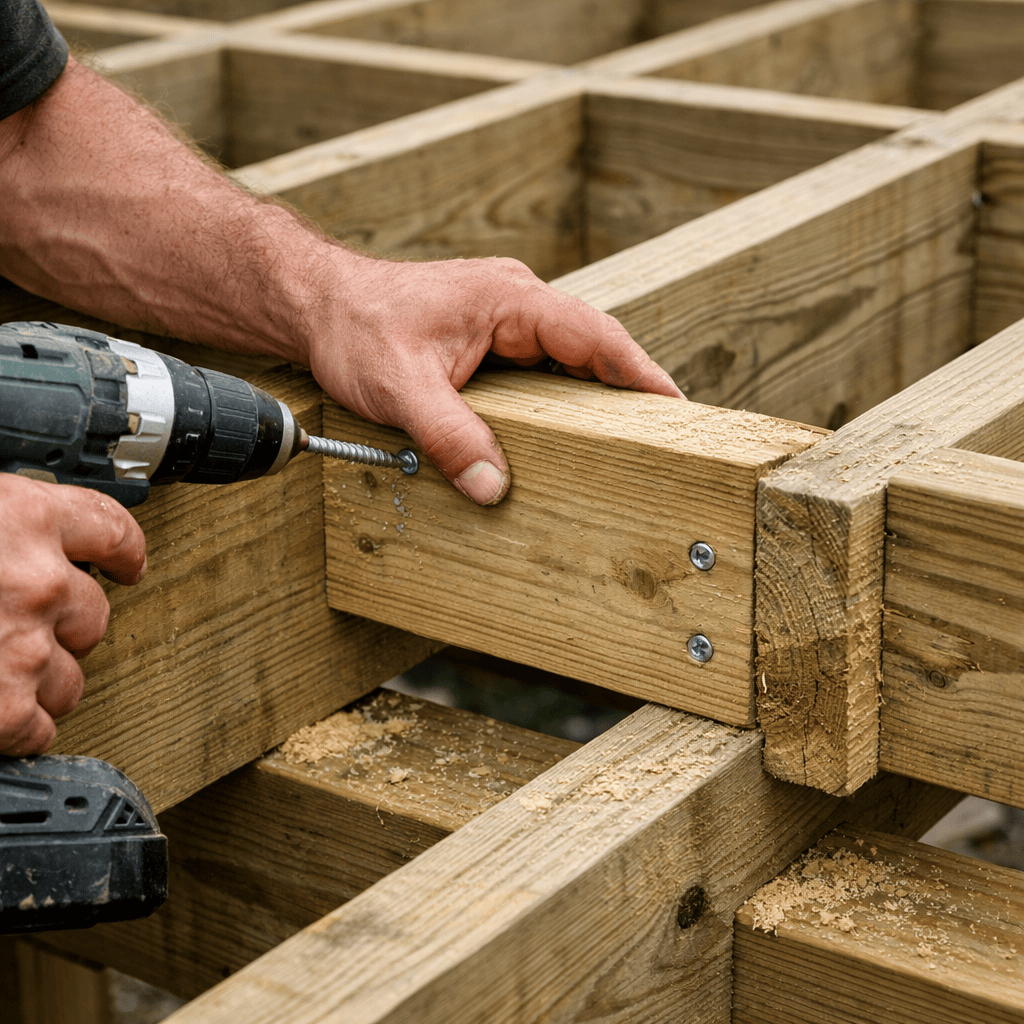
Deck blocking refers to short sections of lumber installed perpendicular between deck joists. These pieces tie adjacent joists together, helping the entire frame behave as a single structural system instead of a collection of independent boards.
Without blocking, long joists can twist, rotate, or shift under load. This movement is commonly called joist roll or joist rotation, and it can lead to uneven deck surfaces or structural instability over time.
Blocking serves several important purposes in deck construction:
- Prevents joist rotation: Long joists naturally want to twist under load. Blocking locks them into position and keeps the top edges aligned.
- Distributes loads across the frame: Blocking helps transfer weight between joists, improving overall load distribution.
- Reinforces rail posts and stairs: Areas with concentrated loads—like guardrails and stair openings—often require additional blocking to strengthen the framing.
- Supports deck board seams: Butt joints between deck boards need solid framing beneath them, which is typically provided by blocking.
Blocking is typically cut from the same size lumber as the joists. For example:
- 2×8 joists use 2×8 blocking
- 2×10 joists use 2×10 blocking
- 2×12 joists use 2×12 blocking
Using matching lumber ensures the blocking aligns flush with the joist tops and maintains consistent structural strength.
Deck Blocking Code Requirements
Most residential deck framing standards originate from the International Residential Code, which provides structural guidelines for wood framing systems. While the code does not require blocking everywhere in a deck frame, it does require it in specific situations.
Several structural conditions commonly trigger deck blocking code requirements.
End Joist Blocking
At the ends of joists, either a rim joist or blocking must be installed to prevent joists from rotating. Rim joists act as continuous blocking that ties the ends of joists together and keeps them aligned.
Large Joist Spans
Longer joist spans are more susceptible to twisting and deflection. In these cases, building inspectors often require blocking or bridging at mid-span to stabilize the joists.
According to span guidance from the American Wood Council (AWC) and the DCA6 Deck Construction Guide, blocking or bridging may be required when joists exceed certain span lengths depending on lumber size and spacing.
Railing Post Reinforcement
Guardrail posts must resist substantial lateral loads and comply with Indiana deck railing code requirements to ensure proper structural support. In fact, deck guardrails are typically required to withstand 200 pounds of outward force applied at the top rail under IRC requirements.
Blocking is commonly installed around guardrail posts to provide additional structural support and prevent movement.
Stair Framing
Deck stair openings create interruptions in the framing system. Blocking around stair openings helps reinforce the surrounding joists and provides solid attachment points for stair stringers.
Local Code Variations
While the IRC provides baseline standards, local building inspectors often require additional blocking depending on:
- deck height
- joist span length
- guardrail configuration
- deck size and layout
Structural stability also starts below the framing system, which is why understanding different deck footing types is important before installing joists and blocking.
Always verify requirements with your local building department before construction.
Is Deck Blocking Necessary?
Blocking is not required in every section of a deck frame, but in many cases it is strongly recommended by professional builders and structural engineers.
In real-world construction, blocking improves the rigidity and longevity of a deck even when code does not explicitly require it, which plays an important role in overall deck structural safety.
Here are the situations where blocking becomes especially important.
Long Joist Spans
Joists longer than 10 to 12 feet benefit significantly from mid-span blocking. Longer spans increase the risk of twisting and flexing, which blocking helps control.
Composite Decking Systems
Composite decking materials tend to flex more than traditional wood boards. Many manufacturers recommend additional blocking beneath butt joints and seams to prevent movement.
Elevated Decks
Raised decks experience greater lateral forces from wind and movement. Blocking helps stiffen the entire frame and reduce structural sway.
Concentrated Load Areas
Certain deck zones experience heavier loads than others, including:
- stair openings
- guardrail posts
- outdoor kitchens or heavy furniture areas
Blocking reinforces these areas and helps distribute loads safely.
For these reasons, many experienced builders install blocking even when it is not strictly required by code.
Deck Blocking Spacing Chart
Proper spacing depends on several structural factors, including joist size, span length, and overall deck design.
The following chart provides a general guideline for joist blocking requirements.
| Joist Span | Blocking Recommendation |
| Under 8 ft | Often not required |
| 8–12 ft | One row recommended |
| 12–16 ft | One to two rows recommended |
| Over 16 ft | Multiple rows recommended |
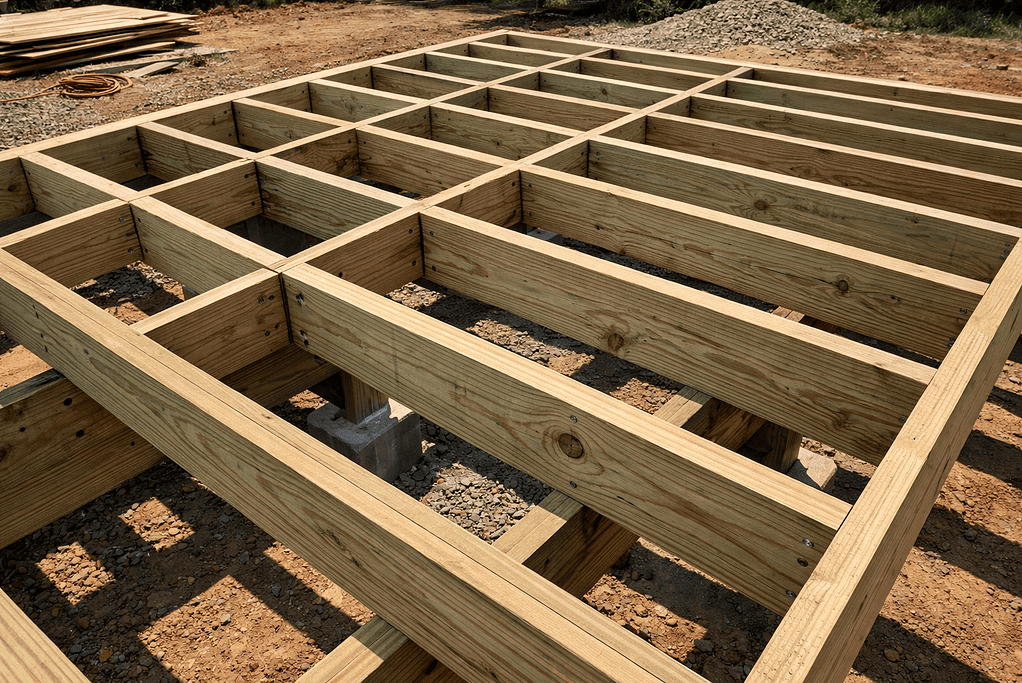
Many professional deck builders install blocking every 4–6 feet along the joist span, which helps maintain structural alignment and reduces joist twisting.
Spacing also depends on:
- joist spacing (12″, 16″, or 24″ on center)
- lumber size (2×8, 2×10, 2×12)
- expected load conditions
These factors influence how much lateral support the joists require.
Deck Joist Blocking Methods
There are several deck joist blocking methods, each designed to stabilize the framing system.
Solid Blocking
Solid blocking uses full pieces of lumber cut to fit tightly between joists.
The blocks are installed flush with the joist tops and fastened through the joists. This is the most common and structurally robust method used in residential decks.
Solid blocking provides excellent resistance to joist rotation and improves load sharing between joists.
Alternating Blocking
Alternating blocking staggers the blocks from opposite sides of the joists.
Instead of aligning every block in a straight row, builders install them alternating left and right along the span. This approach makes installation easier because fasteners can be driven straight into each block.
Alternating blocking is widely used when space is limited or when working within existing framing.
Cross Bracing
Cross bracing uses diagonal braces installed between joists to stabilize the framing system.
While cross bracing can distribute loads effectively, it is less common in modern deck construction because solid blocking is easier to install and provides more consistent support.
Where Deck Blocking Is Most Important
Certain areas of a deck frame rely heavily on blocking to maintain structural integrity.
Under Guardrail Posts
Deck railings must withstand strong outward forces. Blocking reinforces the joists beneath guardrail posts, providing a secure mounting surface that prevents wobbling.
Deck Board Seams
When deck boards meet at butt joints, they require a solid attachment point underneath. Blocking provides this support and prevents seams from flexing or separating.
Stair Openings
Deck stairs require precise framing connections. Blocking around stair openings strengthens the surrounding joists and ensures the stair stringers attach securely.
Picture Frame Deck Designs
Decorative deck layouts—such as picture frame borders—often require additional blocking to support angled or perimeter boards.
These areas experience unusual load patterns, making blocking essential for long-term durability.
Common Deck Blocking Mistakes
Even experienced DIY builders occasionally make mistakes when installing blocking. These errors can compromise the structural integrity of the deck frame.
Many of these issues are commonly identified during routine inspections, which is why following a comprehensive deck inspection checklist can help homeowners catch structural problems early.
Using Undersized Blocking
Blocking should always match the depth of the joists. Using smaller lumber reduces the effectiveness of the blocking and weakens the connection.
Poor Fastening
Blocks must be securely nailed or screwed through the joists. Loose fasteners allow movement that defeats the purpose of the blocking.
Skipping Blocking Around Rail Posts
Railings are one of the most common deck failure points. Without proper blocking, guardrail posts can loosen over time.
Incorrect Spacing
Blocking placed too far apart will not adequately control joist rotation. Consistent spacing ensures the frame remains rigid.
Final Thoughts on Deck Blocking
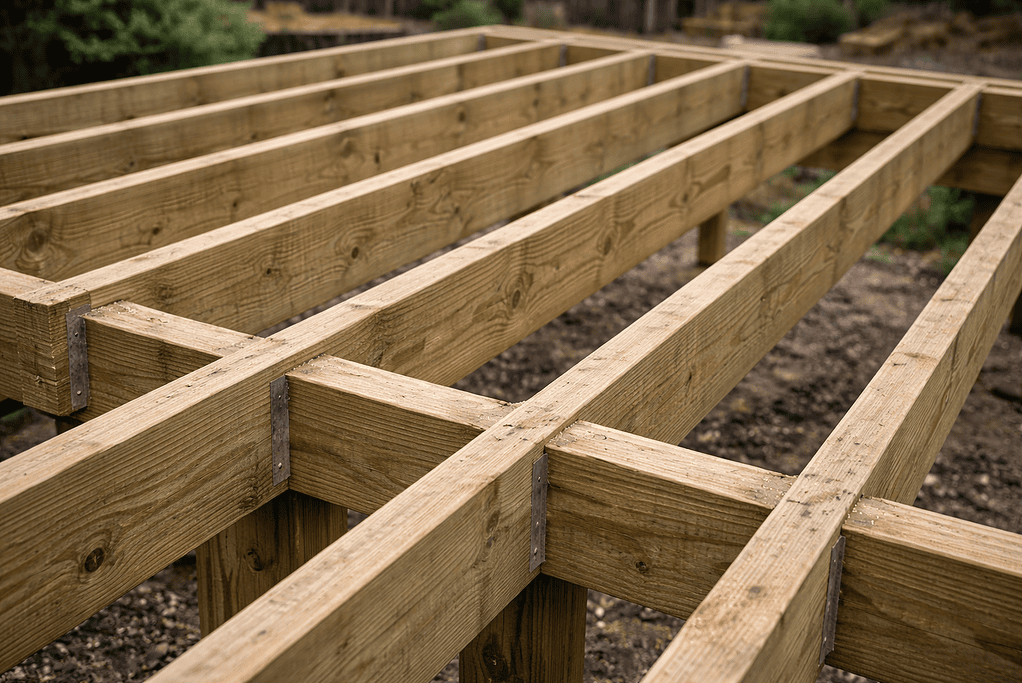
Deck framing is more than just joists and beams. Small structural details like blocking play a critical role in keeping the entire system stable and safe. Proper blocking helps prevent joist twisting, improves the overall rigidity of the deck frame, reinforces rail posts and stair openings, supports deck board seams, and ensures the structure meets applicable building code requirements.
Following deck blocking code guidelines and professional framing practices helps ensure your deck performs the way it was designed to. Even when blocking is not strictly required in every section of a deck frame, it often improves structural stability and reduces movement over time.
If you’re planning a new deck or upgrading an existing structure, understanding how blocking works is one of the easiest ways to improve strength, durability, and long-term performance. For more deck design insights and outdoor project guides, explore additional resources at McFarland Outdoors or share this guide with others planning their next deck build.

Proven business leader with a strong track record of founding, growing, and scaling successful small businesses. Experienced in building companies from the ground up, driving sustainable growth, and leading teams through all stages of development. In the past year, led the delivery of 45+ custom deck projects. Skilled in identifying new business opportunities, developing and mentoring talent, and managing the full scope of daily operations—from sales and pricing strategy to financial oversight and execution. Known for operational excellence, strong financial acumen, and a continuous-improvement mindset that drives performance across every area of the business.